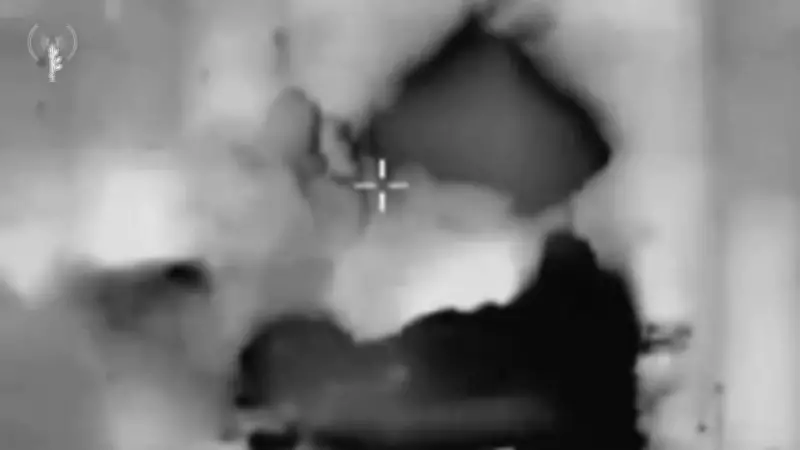
IDF Conducts Extensive Overnight Strikes on Hezbollah Infrastructure in Beirut
The Israeli Defense Forces (IDF) have released footage confirming a major overnight military operation targeting the headquarters of the Hezbollah militant group in Beirut, Lebanon. In a detailed social media post on platform X, the IDF announced the launch of its twenty-sixth wave of strikes in the Dehiya region since the commencement of its ongoing campaign. The operation specifically aimed at Hezbollah's command centers and ten high-rise buildings that housed critical military infrastructure.
Precision Strikes and Civilian Safety Measures
According to an official statement from the IDF, the broad wave of strikes successfully targeted terror infrastructure belonging to Hezbollah, which is designated as a terrorist organization by Israel. The strikes notably hit the headquarters of Hezbollah's Executive Council and a warehouse used for storing unmanned aerial vehicles (UAVs). These drones have been frequently deployed by Hezbollah in attacks against Israeli territory.
The IDF emphasized that the targeted headquarters were instrumental in advancing various terror plots against both Israeli military forces and civilians. Prior to executing the strikes, the IDF implemented several precautionary measures to minimize civilian casualties. These included issuing advance warnings to residents, utilizing precision-guided munitions, and conducting thorough aerial surveillance to ensure accurate targeting.

Intense Barrage and Civilian Impact
Reports from The New York Times indicate that the strikes occurred in a densely populated commercial and residential area of Beirut, a known stronghold of Hezbollah. The assault resulted in a series of violent explosions that rocked the city, representing the most intense barrage since a ceasefire in late 2024 temporarily halted hostilities between Israel and Hezbollah. The explosions caused at least three buildings to collapse, prompting widespread panic and mass evacuations as residents fled for safety.
The attacks persisted into the early morning hours, with more than ten Israeli airstrikes targeting a minimum of five areas in Beirut's southern suburbs before dawn. Additionally, drones were observed hovering over the city throughout the operation, adding to the tension and chaos.
Hezbollah's Response and Escalating Conflict
Hezbollah's involvement has opened a new front in the broader Middle East crisis. The militant group launched projectiles into northern Israel overnight Sunday, marking its first such attack in over a year. The Israeli military swiftly retaliated, declaring that Hezbollah had violated the existing truce agreement.
Hezbollah justified its actions as a response to perceived Israeli violations during the ceasefire period, as well as the recent killing of Iran's Supreme Leader, Ayatollah Ali Khamenei. Khamenei died in a strike on his compound in Tehran the previous Saturday, further escalating regional tensions.
Ceasefire Violations and Humanitarian Toll
The Israeli military has continued to target Hezbollah's infrastructure and capabilities despite the ceasefire, arguing that the Lebanese government has failed to disarm the powerful militant group as required by the truce terms. This ongoing aggression has resulted in significant humanitarian consequences.
Lebanon's health ministry reported late Thursday that the recent Israeli attacks have led to 123 fatalities and 683 injuries. Earlier in the day, chaos erupted on the streets of Beirut after the Israeli military issued warnings for people to evacuate the southern suburbs, fueling fears of an impending large-scale bombing campaign. This follows similar attacks in the Beirut area conducted by the Israeli military on Wednesday night, indicating a sustained escalation in hostilities.
The IDF has reiterated its commitment to acting forcefully against Hezbollah, which it accuses of operating under the auspices of the Iranian terror regime. The military vows to prevent any harm to Israeli civilians and continues to monitor the situation closely as the conflict enters its seventh day, with Iran hinting at the use of 'unseen' weapons and the US-Israel alliance intensifying strikes across the region.