

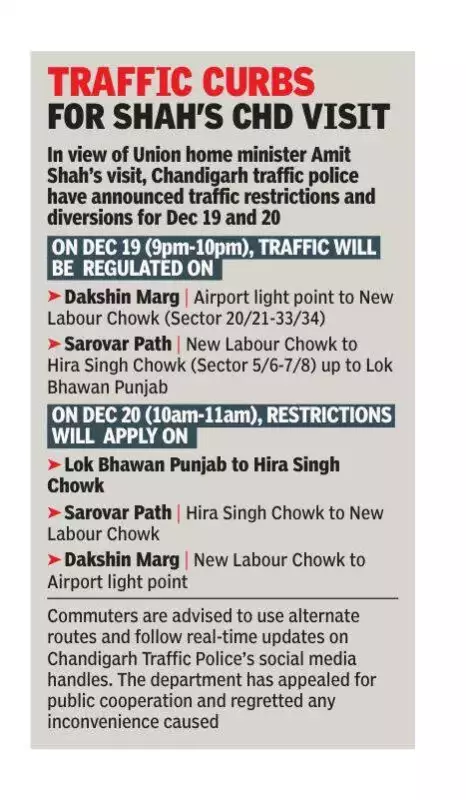
The Chandigarh Traffic Police has announced a detailed plan for traffic regulation on two key days this week. This move comes in anticipation of an official visit by the Union Home Minister to the city. The restrictions are designed to ensure smooth passage and security for the VIP convoy, which will impact several major arteries.
Detailed Schedule of Traffic Regulations
The traffic restrictions will be implemented in two phases on two separate days. The first set of controls will be enforced on December 19, from 9:00 PM to 10:00 PM. During this one-hour window, movement will be regulated on two significant stretches.
On Dakshin Marg, traffic flow will be managed between the Airport light point and New Labour Chowk, which covers the sectors from 20/21 to 33/34. Simultaneously, on Sarovar Path, regulations will be in place from New Labour Chowk to Hira Singh Chowk (Sector 5/6-7/8), extending up to the Lok Bhawan Punjab.

Second Day Restrictions and Advisory
The second phase of traffic management will occur on December 20, from 10:00 AM to 11:00 AM. The restrictions for this day will essentially cover the same routes but in the reverse direction.
The regulated stretches will include the path from Lok Bhawan Punjab to Hira Singh Chowk, followed by Sarovar Path from Hira Singh Chowk back to New Labour Chowk. Finally, the diversion will extend to Dakshin Marg from New Labour Chowk returning to the Airport light point.
Commuters Urged to Plan Ahead
The Chandigarh Traffic Police has strongly advised daily commuters and motorists to seek alternate routes during these specified hours to avoid delays. The department has emphasized relying on real-time information for the latest updates.
Citizens can follow the official social media handles of the Chandigarh Traffic Police for immediate notifications and changes. The police department has also issued a public appeal for cooperation to ensure the visit proceeds without any hiccups. They have expressed regret for any inconvenience caused to the general public due to these essential security measures.






