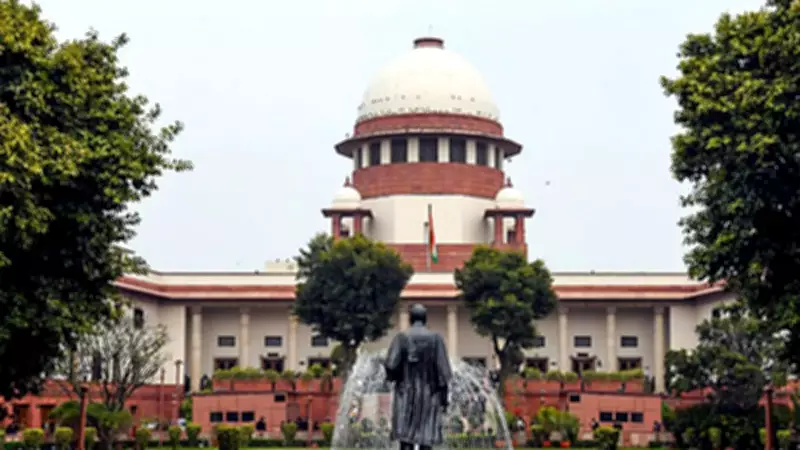
Centre Challenges Landmark Supreme Court Rulings on Adultery and Same-Sex Relationships
NEW DELHI: In a significant legal development, the Centre on Wednesday informed the Supreme Court that its landmark judgments decriminalising adultery and same-sex consensual relationships were based on a "subjective" interpretation of constitutional morality and should be considered "not a good law." The submissions were presented before a nine-judge Constitution bench, led by Chief Justice of India Surya Kant, during hearings on petitions concerning religious freedoms, including the contentious Sabarimala temple issue, as reported by news agency PTI.
Arguments on Constitutional Morality and Judicial Review
Appearing for the Centre, Solicitor General Tushar Mehta contended that the concept of "constitutional morality" is vague and cannot function as a standalone test for judicial review of laws. He emphasised that in a democratic framework, laws inherently reflect the will of the majority, sparking debates over how morality should be precisely defined within this context. Mehta's arguments raised critical questions about the balance between individual rights and societal norms in legal interpretations.
Critique of Past Judgments and Foreign Influences
Referring specifically to the 2018 rulings in the Joseph Shine case, which struck down the adultery law, and the Navtej Singh Johar case, which decriminalised homosexuality, Mehta expressed apprehension over the courts' reliance on foreign legal writings and academic opinions. He argued that such dependencies might not align with India's unique constitutional ethos and could lead to inconsistencies in judicial reasoning.

Concerns Over Separation of Powers
Mehta further asserted that elevating constitutional morality as a legal standard contradicts the principle of separation of powers and the system of checks and balances enshrined in the Constitution. He highlighted potential conflicts with Article 13, which deals with laws inconsistent with fundamental rights, suggesting that an overemphasis on constitutional morality could undermine legislative authority and democratic processes.
Centre's Stance on Legal Precedents
The Centre has urged the Supreme Court to declare the reasoning in the Joseph Shine judgment as "not a good law," while clarifying that it is not challenging the actual striking down of Section 497, which criminalised adultery. This nuanced position indicates a focus on the judicial methodology rather than the outcomes of the cases, aiming to refine legal standards for future rulings.
Broader Context of Religious Freedom Cases
The nine-judge bench is currently examining pivotal questions regarding the scope of religious freedom and the interpretation of morality under Articles 25 and 26 of the Constitution. This inquiry forms part of a batch of cases, including those linked to the Sabarimala issue, where the interplay between religious practices and constitutional rights is under intense scrutiny. The hearings are expected to shape the trajectory of India's jurisprudence on morality and individual liberties.
The ongoing proceedings underscore a deepening legal debate over how courts should navigate complex issues of morality, with implications for future landmark decisions in India's judicial landscape.