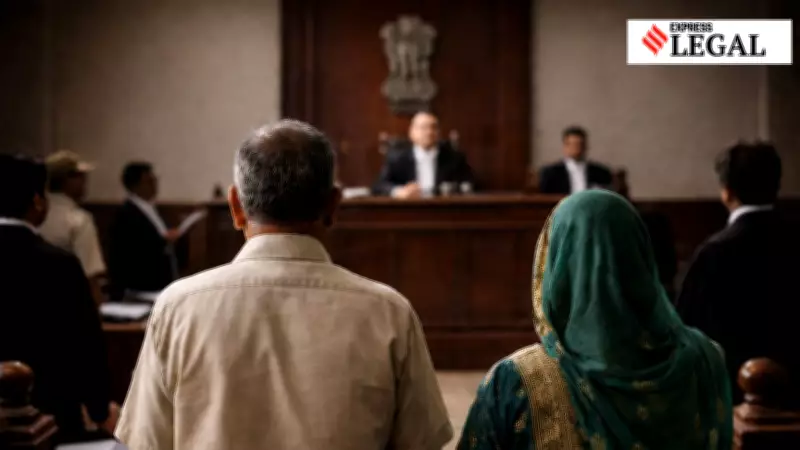
Calcutta High Court Restores Trial Against In-Laws in Dowry Death Case, Laments Persistent Gender Inequality
The Calcutta High Court has delivered a poignant judgment, setting aside the discharge of a woman's in-laws in a tragic dowry death case that claimed the lives of the woman and her one-and-a-half-year-old daughter. Justice Apurba Sinha Ray, while hearing the state's plea, underscored a stark societal contradiction: while the nation celebrates its daughters winning the Cricket World Cup, the fight for complete equality for the girl child is far from over.
Court's Observations on Equality and Cruelty
In a powerful statement, the court remarked, "We are happy and indeed rejoicing that our daughters have won the World Cup in Cricket recently, and they are also making remarkable achievements in different fields. However, the passing away of a child at the age of one and a half years reminds us that we still have to go a long way to achieve complete equality for our girl children." The judgment invoked the celebrated words of Justice Krishna Iyer: "No society is free until the last damsel in distress is free."
The court firmly rejected a narrow interpretation of matrimonial cruelty, asserting that cruelty cannot be defined in a straitjacket formula or with chosen words. This principle emphasizes a broader understanding of gender-based violence, moving beyond rigid legal definitions to address the nuanced realities of abuse.
Case Background and Allegations
The case involves a woman who married in 2018 and resided with her husband in the Andaman and Nicobar Islands. The couple had a young daughter. According to allegations, the in-laws subjected the victim to relentless cruelty, taunting her for giving birth to a girl child and demanding an additional dowry of Rs 5 lakh. Witness statements from relatives revealed that the victim faced torture when she returned to her parental home in Punjab, and that the in-laws were anxious about the gender of her expected child, with the abuse intensifying after the birth of a girl.
The tragic incident occurred in 2021, following an altercation with her husband, resulting in the deaths of both the mother and her infant daughter. The victim's father subsequently filed a complaint alleging dowry demands and cruelty. In 2024, the trial court discharged the in-laws, citing insufficient material to frame charges, and held that only the husband could be charged.
Legal Arguments and Court's Decision
Representing the in-laws, senior advocate Deep Chaim Kabir argued that the FIR was initially lodged by a neighbor, and the accused were not present at the time of the incident. He contended that the case reflected "how cruel a mother can be," suggesting normal matrimonial discord rather than criminal culpability. Kabir emphasized that most allegations were against the husband, with no direct dowry demand from the in-laws, and noted that the husband had taken the bodies to Punjab for last rites, indicating familial concern.
In contrast, advocate Sumit Kumar Karmakar, appearing for the state, highlighted that witness statements provided sufficient material against all accused persons. He argued that the trial court failed to consider these statements with due care, overlooking prima facie evidence of physical and mental cruelty that led to the deaths.
The Calcutta High Court sided with the state, observing that the trial court had neglected vital witness testimonies. The court set aside the discharge order and issued the following directives:
- The discharged accused persons must surrender before the trial court within four weeks.
- Upon surrender, they will be taken into custody and released on bail upon furnishing bail bonds.
- The trial court is directed to frame appropriate charges under the proper sections of law against the accused persons.
Broader Implications
This ruling reinforces the judiciary's role in addressing gender-based violence and dowry harassment. By reinstating the trial, the court sends a clear message that legal technicalities should not overshadow the pursuit of justice in cases involving deep-seated societal issues. The judgment calls for a more empathetic and comprehensive approach to defining and prosecuting cruelty, aligning with ongoing efforts to protect women's rights in India.
As the nation applauds its women achievers in sports and other fields, this case serves as a sobering reminder of the persistent challenges in achieving gender equality, particularly in domestic spheres where traditional prejudices continue to inflict harm.