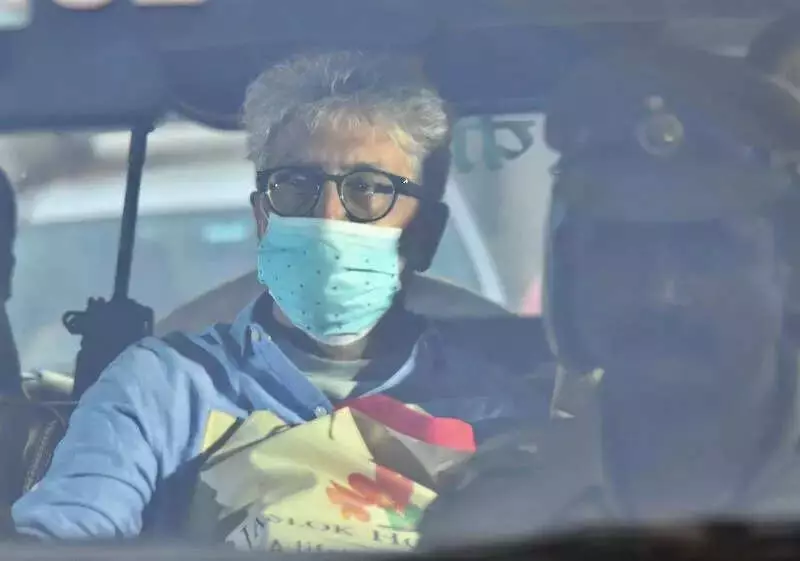
In a significant development, the Bombay High Court has granted permission to activist and accused in the Elgar Parishad-Maoist links case, Gautam Navlakha, to move back to his residence in Delhi. This relief comes ahead of the formal commencement of the trial's framing of charges proceedings.
Court's Decision and Key Conditions
A division bench comprising Justices Bharati Dangre and Shyam Chandak issued the order on Wednesday. The court agreed to modify Navlakha's bail conditions, which were granted in 2023 but had mandated that he stay in Mumbai until the trial's conclusion. The bench noted orally that the 73-year-old activist had not abused his liberty while on bail and did not pose a flight risk.
The permission, however, is laden with strict conditions. Navlakha must surrender his passport and is barred from leaving the national capital without prior approval from the National Investigation Agency (NIA) court. Furthermore, he has been directed to report to the Kalkaji police station in Delhi every Saturday between 9 am and noon to mark his attendance.

Background of the Plea and NIA's Stance
Navlakha's counsel, Yug Chaudhry, had argued before the court that the trial was far from starting. He highlighted the severe personal and financial strain on the elderly accused, who had to rent accommodation in Mumbai away from his hometown. Earlier this year, a special NIA trial court had rejected a similar plea for him to shift to Delhi.
Following a hearing on Tuesday, the NIA, represented by Additional Solicitor General Anil Singh, submitted a list of suggestions to the High Court. The court reviewed these points and agreed to tweak one condition, stating that Navlakha must be physically present when the framing of charge hearing occurs. This step is the final pre-trial procedure before the actual criminal trial begins.
"Not a Free Man": Court's Firm Stance
The High Court made it clear that while it was granting this concession, Navlakha remains on bail and is not yet a free man. Explaining the stricter weekly reporting requirement in Delhi compared to the monthly one in Mumbai, the bench remarked, "since you are out of our jurisdiction." Navlakha's counsel informed the court that no special judge has been assigned to the case yet, and the trial is expected to be protracted.
The other bail conditions require him to remain present physically on all trial dates once proceedings start, unless exempted by the special court. The NIA had filed an additional charge sheet against Navlakha and others on October 9, 2020, invoking serious offences including waging war, sedition, and terror charges under the Unlawful Activities (Prevention) Act (UAPA).
Implications and Next Steps
This order provides interim relief to Navlakha, allowing him to stay in his familiar surroundings in Delhi. However, it underscores the long legal battle ahead in the 2018 Elgar Parishad case. The court's decision balances humanitarian concerns regarding the accused's age and circumstances with the necessity of ensuring his availability for trial proceedings. All eyes will now be on the appointment of a trial judge and the subsequent framing of charges, which will formally set the stage for one of the country's most high-profile cases.