Bombay High Court Issues Stern Warning to Pollution Control Board Over RCF Plant Safety
In a significant development concerning industrial safety and environmental protection, the Bombay High Court has delivered a strong message to the Maharashtra Pollution Control Board (MPCB) regarding the Rashtriya Chemical and Fertiliser Ltd (RCF) plant in Chembur. Despite official assertions that no gas leakage occurred on September 8, 2025, the court has declared it will hold the regulatory body responsible if any future incidents take place.
Court's Direct Warning to Pollution Control Authorities
The bench comprising Chief Justice Shree Chandrashekhar and Justice Gautam Ankhad issued a clear warning during Tuesday's hearing, stating "Tomorrow something happens, we'll fasten liability on you." This stern position emerged during proceedings of a suo motu writ petition initiated based on a Times of India report dated September 9, 2025.
Residents' Health Complaints Trigger Judicial Intervention
The court's involvement stemmed from serious health complaints reported by residents living within a five-kilometer radius of the RCF facility. According to the newspaper report, numerous individuals experienced:

- Breathlessness and respiratory difficulties
- Eye irritation and skin problems
- Nausea and general discomfort
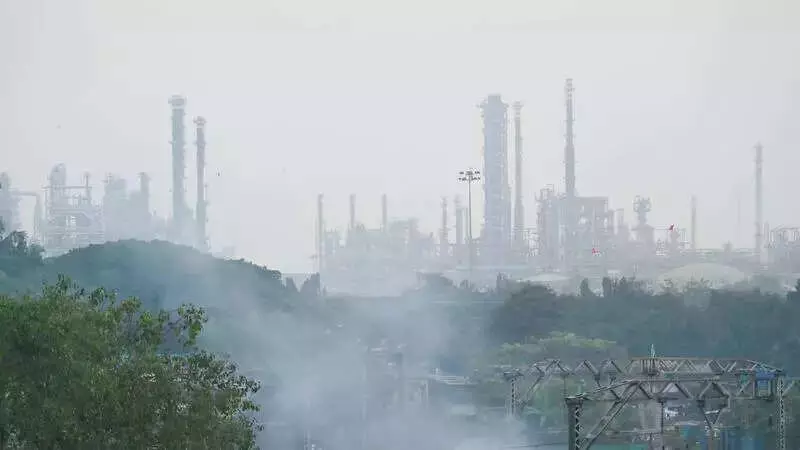
Local residents described witnessing the plant enveloped in a thick haze and reported being affected by a strong chemical odor on the day in question, though RCF officials consistently denied any gas leakage had occurred.
Historical Context and Initial Court Directions
The judicial bench referenced the tragic legacy of the Bhopal gas disaster during proceedings, noting how "the horrors of Bhopal gas leak, which is still continuing and the children of the victims of gas leak are found to have suffered physical deformities." This historical perspective informed the court's proactive approach to the Chembur situation.
On September 9, the High Court had directed multiple actions:
- The Maharashtra Pollution Control Board was instructed to submit a detailed report
- The member-secretary of Maharashtra State Legal Services Authority (MSLSA) was ordered to conduct a site visit and prepare a fact-finding document
Conflicting Reports and Official Positions
The MPCB's affidavit submitted on September 23 presented findings from both RCF and the Directorate of Industrial Safety and Health (DISH), concluding that "there has been no gas leakage or any dangerous incident" at the plant. Advocate General Milind Sathe supported this position, acknowledging that while complaints about a potential gas leak were received, investigations revealed no actual leakage.
Sathe suggested that "There might have been a smell because factories were running," indicating normal industrial operations might have caused the odor concerns without constituting a safety breach.
Contrasting Evidence from Legal Services Authority
Amicus curiae advocate Karan Bhosale presented contrasting information from the MSLSA report, which documented citizen statements describing:
- Persistent breathing difficulties
- Headaches among residents
- Pungent chemical smells in the area
- Significantly elevated benzene levels detected
The judicial bench expressed concern that affected residents were not taken to hospitals for proper medical examination, noting the absence of official medical reports to document their conditions.
Judicial Skepticism and Future Liability Framework
The court demonstrated skepticism toward the conflicting narratives, pointedly questioning "Decide if the [MSLSA] report is fake or the news report is fake." The judges emphasized that the state would face "aggravated" liability if any future incidents occur, establishing a precautionary principle in their approach to industrial safety regulation.
Despite Advocate General Sathe's assurance that "whatever was required to be done, we did," the court maintained its position and adjourned the matter for two weeks, allowing time for further examination of the evidence and reports.

Broader Implications for Industrial Safety Oversight
This case highlights the growing judicial emphasis on preventive environmental protection and public health safeguards. By establishing potential future liability despite current findings of no violation, the Bombay High Court is setting a precedent for more rigorous regulatory oversight and corporate responsibility in industrial zones.
The court's reference to the Bhopal tragedy underscores how historical industrial disasters continue to shape contemporary judicial approaches to environmental safety and public health protection in manufacturing areas.