Bombay High Court Hears Constitutional Challenge to IT Rules and Sahyog Portal
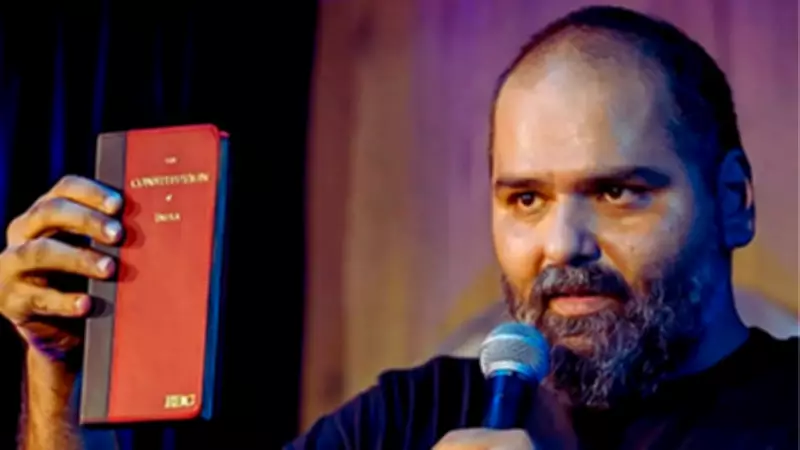
In a significant legal development, the Bombay High Court has taken up petitions filed by senior advocate Haresh Jagtiani and stand-up comedian Kunal Kamra, challenging the legality of recent amendments to India's Information Technology Rules and the government's Sahyog Portal. The petitions, presented before a division bench comprising Justice Ravindra Ghuge and Justice Abhay Mantri, argue that these digital governance mechanisms infringe upon fundamental rights and bypass established legal safeguards.
Core Legal Arguments Against Rule 3(1)(d) and Sahyog Portal
The petitions specifically target Rule 3(1)(d) of the Information Technology (Intermediary Guidelines and Digital Media Ethics Code Amendment Rules, 2023), as amended in October 2025, along with the Sahyog Portal itself. The central contention is that both the amended rule and the portal operate "illegally and beyond the scope of the IT Act", while also contravening the Supreme Court's landmark 2015 judgment in the Shreya Singhal case.
According to the petitioners, represented by advocate Meenaz Kakalia, the lack of proper safeguards renders these mechanisms "illegal and arbitrary" with procedures "patently riddled with bias." Senior counsel Navroz Seervai appeared for Jagtiani, while counsel Arti Raghavan represented Kamra during Friday's hearing.
How Sahyog Portal Functions Versus Legal Requirements
The government developed the Sahyog Portal to automate the process of sending notices from government agencies to intermediaries like social media platforms and websites. Its stated purpose is to facilitate the removal or disabling of access to information or data being used to commit unlawful acts.
However, the petitions argue that Rule 3(1)(d) and the Portal create a parallel takedown regime that operates alongside Section 69A of the IT Act and the Blocking Rules, but crucially without the legally mandated safeguards that accompany those established procedures.
Kamra's petition highlights several critical deficiencies:
- The Portal eliminates the requirement to issue notice to the content's originator
- It removes the obligation to afford a hearing to affected parties
- It bypasses the need for a reasoned order before implementing online blocking
The petition notes that the Portal merely requires an officer to order a takedown, which "can be issued on a mere ipse dixit that such information is unlawful, and violates a law..."
Constitutional Violations Alleged
The legal challenge asserts that these mechanisms constitute violations of:
- Article 19(1)(a) of the Constitution, which guarantees freedom of speech and expression
- Article 19(1)(g), which protects the right to practice any profession or carry on any trade or business
The petitions argue that the current implementation of Rule 3(1)(d) and the Sahyog Portal falls outside the reasonable restrictions that the Constitution permits on these fundamental rights.
Background and Interim Relief Sought
Kamra's petition reveals an important procedural detail: though the Sahyog Portal was established in October 2023—while his litigation against the Fact Checking Unit was pending—its existence was significantly not informed to the High Court at that time.
As interim relief, the petitions seek:
- Suspension of the Sahyog Portal operations
- Directions that no officer of the Central or any state government can order blocking or takedown of any information without following the mandated Section 69A IT Act procedure and Blocking Rules
- A declaration that only these established rules form the legitimate basis for any takedown actions
This legal challenge represents a crucial test for digital rights in India, balancing government efforts to regulate online content against constitutional protections for free speech and due process. The Bombay High Court's eventual ruling could have far-reaching implications for how digital platforms operate in India and how citizens exercise their rights in the online sphere.