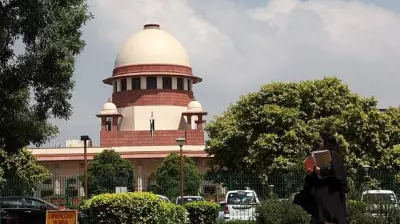
Bombay High Court Upholds Constitutional Rights of Single Mothers and Their Children
In a landmark judgment, the Bombay High Court has ruled that a child raised exclusively by her mother cannot be compelled to carry her father's surname and caste merely because administrative formats once demanded it. This decision came in response to a petition filed by a 12-year-old girl seeking correction of her name in school records and the caste entry from 'Maratha' to 'Scheduled Caste'.
Court's Strong Stance on Constitutional Fidelity
The court's ruling, made available on Wednesday, stated emphatically: "Recognition of a single mother as a complete parent for purposes of a child's civic identity is not an act of charity; it is constitutional fidelity." The judgment, delivered by Justices Vibha Kankanwadi and H S Venegaonkar from the Aurangabad bench on February 2, reflects a significant shift in legal perspective.
The court elaborated: "It reflects the movement from patriarchal compulsion to constitutional choice, from lineage as fate to dignity as right." This powerful statement underscores the court's commitment to evolving societal norms that prioritize individual dignity over outdated traditions.
Background of the Case
The child's request for correction had been rejected by school authorities last year, citing the Secondary School Code. The petitioners—both the minor and her mother—asserted that continuing the father's surname in school records created not just an inaccuracy but "an avoidable social vulnerability for a child who must grow up, learn, and form her identity in a society that often treats names as identity for family history."
The mother is a single parent and the child's natural guardian. She had accused the child's father of sexual assault, and after reaching a settlement, it was agreed that the daughter would remain in the permanent custody of the mother. Despite this, the school records continued to reflect the father's identity, causing distress and potential social stigma for the child.
Court's Critique of Administrative Practices
The Bombay High Court criticized the insistence on paternal visibility in records, stating: "A society that claims to be developing cannot insist that a child's public identity must be anchored to a father who is absent from the child's life, while the mother, who bears the entire burden of upbringing, remains administratively secondary."
The court further emphasized that school records are not private notes but "a public document that follows a child across years, institutions, and sometimes into the professional domain." This makes accuracy and sensitivity in such records crucial for the child's future well-being.
In a pointed observation, the court noted: "If lived guardianship is maternal, the record cannot insist on paternal visibility as a matter of routine, and then call it administrative neutrality." This highlights the need for administrative systems to adapt to real-life family structures rather than enforcing rigid, patriarchal formats.
Implications for Welfare and Identity
The judgment also addressed the role of the state in such matters: "The state's formats must not become moral judgments; they must become accurate instruments of welfare." This principle reinforces the idea that administrative procedures should serve the welfare of citizens, particularly vulnerable groups like single mothers and their children, rather than imposing moral or social norms.
By allowing the correction of the child's surname and caste in school records, the court has set a precedent that could benefit numerous families in similar situations. It acknowledges the practical realities of single-parent households and the importance of accurate identity documentation in fostering a child's dignity and social integration.
Conclusion
This ruling by the Bombay High Court marks a progressive step toward recognizing the rights and realities of single mothers and their children. It challenges outdated administrative practices and aligns legal frameworks with constitutional values of equality and dignity. As society evolves, such judgments pave the way for more inclusive and just systems that respect diverse family structures and individual identities.