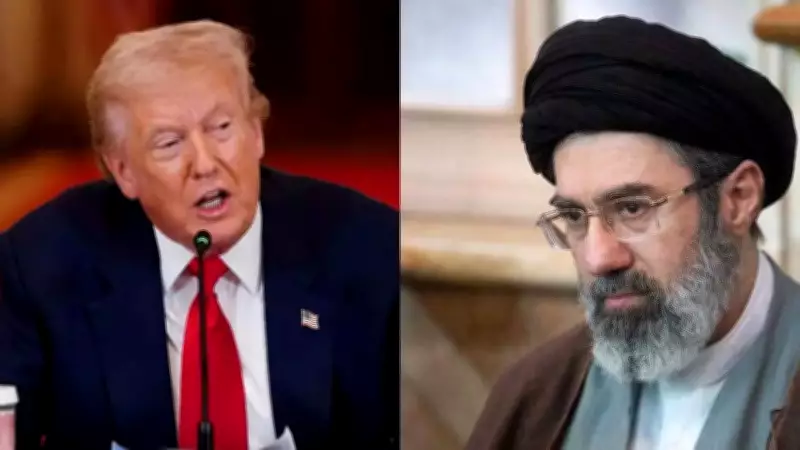
Iran's Asymmetric Tactics Challenge Trump's Military Dominance in Ongoing Conflict
On the 19th day of the war, the United States and Israel continue to showcase military superiority, with significant losses inflicted on Iranian officials, launchers, and command structures. Israel claims deep penetration into Iran's security apparatus, targeting the machinery that sustains the Islamic Republic's power domestically and internationally. From an aerial perspective, Operation "Epic Fury" appears to be operating smoothly, yet the conflict is evolving beyond a simple air campaign.
The Shifting Battlefield: From Military to Strategic Realms
The war has expanded into a broader regional confrontation, impacting Lebanon, the Gulf, global shipping lanes, and energy markets. This shift raises a critical question: while President Donald Trump's forces have achieved military dominance, can he translate this into a political victory? Alternatively, is Iran successfully prolonging and widening the conflict beyond Trump's expectations, increasing its costs?
On the ground, Trump's case seems strong. The initial strike eliminated Iran's top leadership, including Supreme Leader Ayatollah Ali Khamenei, followed by the targeting of key political and military figures. US-Israeli operations have degraded Iranian military infrastructure and internal security forces, pushing Tehran onto the defensive. However, wars are not solely measured by body counts or destroyed assets; they are also evaluated based on endurance, economic impact, alliance cohesion, and the ability to dictate peace terms.

Economic and Diplomatic Strains Emerge
Reuters reports indicate that the Strait of Hormuz remains largely closed, with oil prices surging approximately 45% since the conflict began on February 28. Gulf Arab states have faced over 2,000 missile and drone attacks on US diplomatic missions, military bases, oil infrastructure, and civilian areas. The International Energy Agency has labeled this the worst oil crisis since the 1970s, prompting global airlines to warn of soaring fuel costs, higher fares, and route reductions.
These are not mere side effects; they are central to Iran's strategic approach. According to an analysis by Emile Hokayem in the Financial Times, Iran retains three major advantages: geography, time, and asymmetry. Tehran does not need conventional victory; it only needs to impose sufficient costs on others to transform apparent military success into strategic ambiguity. This poses a significant danger for Trump, as he may win the initial phase while losing control over the conflict's conclusion.
Alliance Fragmentation and Political Isolation
Politico highlights Trump's frustration with allies refusing to assist in restoring shipping through Hormuz. After publicly seeking support, he reversed course, insisting on Truth Social that the US never needed NATO's help. This rhetorical shift underscores a key limitation: despite air dominance, the US struggles to build a coalition for managing the war's consequences.
Germany's defense minister stated, "We did not start this war," while Luxembourg's deputy prime minister described Trump's demands as "blackmail." British Prime Minister Keir Starmer affirmed the UK would not be drawn into a wider war. Senator Lindsey Graham noted Trump's unprecedented anger after discussions. This isolation risks portraying the conflict as a unilateral gamble with global repercussions, rather than a coordinated coalition effort.
Strategic Paradox and Long-Term Implications
In Foreign Affairs, Nate Swanson argues that Trump desires a swift victory declaration but cannot force surrender on a resistant Iranian government. While the first phase has severely damaged Iran, the second phase may favor Tehran due to its incentives and residual capability for a war of attrition. The strategic paradox lies in Trump and Netanyahu's destruction of Iran's immediate capacity without securing capitulation, a new deterrent order, or a stable ceasefire.

Swanson emphasizes that Tehran does not require daily military successes; it only needs to maintain regional instability, keep global markets nervous, and strain the American public. A few drone attacks on tankers, missile strikes to unsettle Gulf states, and continued disruption in Hormuz could transform Trump's campaign into a politically draining conflict without a clear exit.
The FT supports this view, noting that Iran has strategically prioritized vulnerable regional targets and energy chokepoints over direct confrontation with Israel. For Iran, success means keeping adversaries off balance rather than conquering territory.
Internal Dynamics and Regime Resilience
Another potential backfire involves Iran's internal politics. Akbar Ganji suggests in Foreign Affairs that the assassination of Khamenei and external pressure may have solidified Mojtaba Khamenei's position as the sole viable option for regime survival. Thus, a campaign aimed at weakening the regime might have inadvertently strengthened it.
Israel's strategy, as reported by The New York Times, involves strikes on institutions like the Basij and Ministry of Intelligence to spark a popular uprising. However, former Israeli officials and analysts like Vali Nasr question this approach, citing entrenched security services and nationalistic sentiments that may unify Iranians against foreign aggression, suppressing dissent rather than fostering rebellion.
Assessing the Current Scoreboard
Trump faces a dual reality: militarily, the US and Israel lead, with Iran's leadership decapitated, security apparatus hit, and missile operations pressured. Conversely, Iran may still deny Trump a quick, unmistakable victory that reinforces deterrence and stabilizes markets.
In an opinion piece for eKathimerini, Endy Zemenides aptly labels Operation Epic Fury an "Epic Failure." The honest assessment is that Trump is winning the war's initial chapter, but Iran may ultimately dictate the ending. While not backfiring militarily, the conflict shows warning signs in strategic, diplomatic, and economic terms. If it drags on, keeps oil prices high, leaves Hormuz contested, and reveals Trump's inability to rally allies or force Tehran's submission, the focus will shift from whether the war is backfiring to the extent of its repercussions.