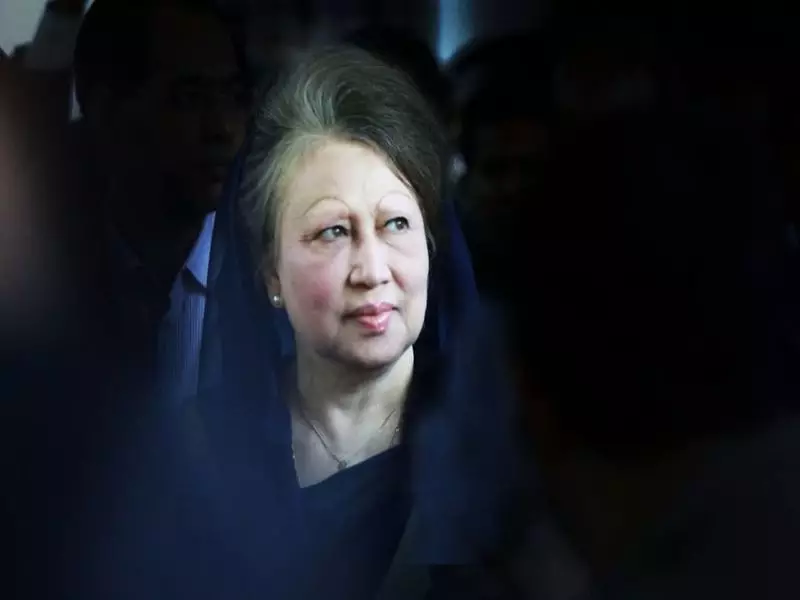
In a sharp and emotional political attack, a senior leader of the Bangladesh Nationalist Party (BNP) has squarely placed the responsibility for the death of former Prime Minister Begum Khaleda Zia on the shoulders of the current Prime Minister, Sheikh Hasina. Nazrul Islam Khan, a standing committee member of the BNP, used strong language, labeling Hasina a "fascist" and asserting she will never be free of blame for the passing of the opposition icon.
A Grave Accusation in a Heated Political Climate
The accusation comes amidst a period of intense political strife in Bangladesh. Khaleda Zia, the 78-year-old former Prime Minister and chairperson of the BNP, passed away on a Wednesday, as confirmed by her personal physician, AZM Zahid Hossain. Her death marks the end of an era in Bangladeshi politics, closing a chapter defined by her long and bitter rivalry with Sheikh Hasina of the Awami League.
Nazrul Islam Khan's statement was unequivocal. He declared that Prime Minister Sheikh Hasina is directly responsible for Khaleda Zia's death. He argued that the government's actions, particularly the denial of Khaleda Zia's right to seek advanced medical treatment abroad, led to the deterioration of her health. "A fascist like Sheikh Hasina will never be free of the responsibility for Khaleda Zia's death," Khan stated, framing the situation as a consequence of deliberate political persecution.
The Context of Medical Treatment and Incarceration
The core of the BNP's grievance lies in the circumstances of Khaleda Zia's final years. The former Prime Minister was convicted in multiple corruption cases, which her party and supporters have consistently denounced as politically motivated. Since 2018, she had been largely confined, either in jail or under strict conditions at her residence in Dhaka's Gulshan area.
A critical point of contention was the government's stance on her medical care. Despite severe health complications, including liver cirrhosis and advanced arthritis, Khaleda Zia's appeals to travel to countries like the United Kingdom or Germany for specialized treatment were repeatedly denied. The government had stipulated that she could go abroad only if she submitted a fresh application, a condition the BNP rejected as an unfair hurdle for a critically ill former head of government.
Her treatment was instead managed at the Evercare Hospital in Dhaka under a special government order. The BNP leadership contends that the local medical facilities, however advanced, were insufficient for her specific needs, and the refusal to let her leave the country amounted to a death sentence.
Political Repercussions and a Deepening Divide
The death of Khaleda Zia and the subsequent accusations from the BNP are set to deepen the existing political chasm in Bangladesh. Nazrul Islam Khan's harsh rhetoric reflects the raw emotions within the opposition camp, which views Khaleda Zia not just as a leader but as a martyr to political vendetta.
This event is likely to galvanize BNP supporters and could become a central rallying point for the party, which has been struggling under government pressure and a leadership vacuum. The characterization of Sheikh Hasina as a "fascist" leader is a severe indictment meant to resonate internationally and paint the Awami League government as authoritarian.
For the ruling Awami League, the challenge will be to manage the narrative. While they have maintained that the legal processes against Khaleda Zia were legitimate and that adequate medical care was provided, the opposition's forceful narrative of responsibility will be difficult to counter in the court of public opinion, especially among BNP sympathizers.
The passing of Khaleda Zia closes one of the most defining political rivalries in South Asia. However, the legacy of her feud with Sheikh Hasina and the circumstances of her death are poised to shape Bangladeshi politics for years to come, potentially fueling further instability and confrontation between the country's two major political forces.