

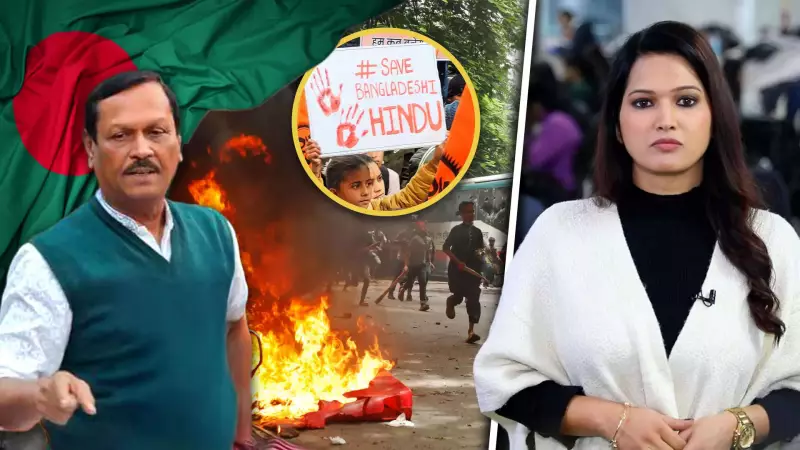
A shocking threat from a political candidate in Bangladesh has sent ripples of alarm through the nation's Hindu minority and drawn condemnation from political observers. The incident, which involves a candidate from the Bangladesh Nationalist Party (BNP), has emerged against a grim backdrop of targeted killings, raising serious concerns about communal safety and electoral violence.
The Controversial Threat and Its Immediate Backdrop
The controversy centers on a statement made by BNP candidate Md. Yunus Ali Sarder, who is contesting from the Satkhira-2 constituency. In a video that has since gone viral, Sarder is heard declaring that Hindus would not be allowed to live in the area if they do not support him. This explicit threat has been widely interpreted as an attempt to polarize voters along religious lines and intimidate a specific community.
This inflammatory rhetoric did not occur in a vacuum. It comes amidst a disturbing series of violent attacks. Just days before this threat surfaced, Ananta Jalil, a local Awami League leader and union parishad chairman, was brutally murdered in the Debhata upazila of Satkhira. Furthermore, in a separate and deeply tragic incident, a Hindu priest, Shyamananda Das, was killed in a temple in Jhenaidah district. These killings have created an atmosphere of fear and tension, making the BNP candidate's threat even more menacing and consequential.

Political Repercussions and Condemnation
The threat has triggered swift and severe backlash from political rivals and civil society. The ruling Awami League has seized upon the statement to accuse the BNP of fostering communalism and violence. Leaders from the Awami League have condemned the remarks, framing them as part of a broader pattern of anti-minority sentiment within the opposition camp. They have called for immediate legal action against the candidate.
For the BNP, this incident presents a significant public relations and ethical challenge. While the party has not officially endorsed the candidate's statement, the event forces it into a defensive position regarding its commitment to secular politics and the protection of minority rights. The episode is likely to be used extensively by the Awami League in its campaign rhetoric to question the BNP's credentials on communal harmony.
Broader Implications for Communal Harmony and Elections
The convergence of a politician's direct threat and actual violence against individuals, including a religious figure, points to a dangerous escalation in Bangladesh's political climate. Analysts fear that such statements, if left unchecked, could legitimize further intimidation and violence against the Hindu community, which constitutes a significant minority in the country.
The situation underscores several critical issues:
- The vulnerability of religious minorities during politically charged periods.
- The use of communal rhetoric as a tool for electoral mobilization.
- The urgent need for authorities to ensure the safety of all citizens and hold those making inflammatory statements accountable.
As Bangladesh moves closer to its next general election, this incident serves as a stark reminder of the fragile state of inter-communal relations. The international community, particularly India which shares a close cultural and geographical bond with Bangladesh, will be watching closely. The response of Bangladesh's institutions—its election commission, judiciary, and law enforcement—to this threat will be a crucial test of the nation's democratic resilience and its commitment to protecting the rights of every citizen, irrespective of faith.






