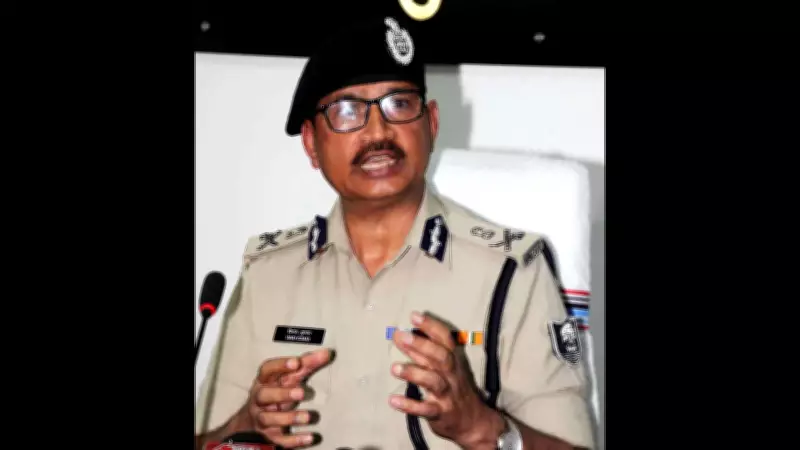
A series of recent violent incidents has brought Bihar's law and order situation under renewed scrutiny. However, the state's police chief, Director General of Police Vinay Kumar, maintains that overall crime trends remain under control and that the nature of crime is evolving. In an interview, he addressed the key challenges facing the force.
Recent Murder Cases: A Closer Look
When asked about incidents such as the chilling murder in Patna's Lalbagh area, the beheading of a pickup van driver in Araria, and a murder inside a municipal office in Sultanganj, DGP Kumar highlighted common patterns. He stated that in both the Araria and Patna cases, the accused had troubled pasts and were drug addicts. The Araria accused was a regular offender who had assaulted his family members, including breaking his grandmother's hand. The Patna accused, a minor, was irregular in school and involved with drugs. The DGP emphasized that these crimes often occur within families or between acquaintances and are spontaneous in nature, making them difficult to prevent.
He contrasted this with organized crime, noting that incidents like gang robberies or contract killings, which were common before 2005, are no longer prevalent. The average number of murders per year has dropped from around 5,000 in the 1990s to approximately 24-25 now, despite a nearly threefold increase in population. He acknowledged that even a few murders generate significant public outcry.

Controversy Over Encounters
Regarding the Sultanganj incident, where a government official was murdered and the accused later died in a police encounter, DGP Kumar clarified that the incident stemmed from a tender dispute and economic supremacy. He noted that the accused had a prior history, having brought a severed head to a police station 26 years ago, and questioned why he had not been convicted despite a chargesheet. On the issue of encounters, he stated that the police arrest an average of 4 lakh people annually, with only 10-15 encounters per year. He defended the use of lethal force only when there is an imminent threat to police personnel, emphasizing the right to self-defense.
Biggest Challenges: Cybercrime and Social Factors
DGP Kumar identified cybercrime as the most challenging task ahead. He explained that with just a laptop and minimal expense, criminals can target anyone globally without needing to travel. He also addressed the rise in rape cases, attributing them to social media exposure and inappropriate content, particularly among teenagers. He expressed concern about a lack of fear among youth who believe they can commit crimes without consequences.
Government Directives and Initiatives
Following a recent law and order meeting chaired by Chief Minister Samrat Choudhary, the DGP outlined instructions to further improve law and order, with a focus on women's safety. He announced the introduction of the 'police didi' initiative, under which 1,000 female personnel will be provided scooters for uniformed patrolling and guarding key areas.
Message to Society
In his concluding remarks, DGP Kumar directed his message not just to criminals but to society at large. He stressed that criminals will always exist, but family and social control are crucial, especially for teenagers. He noted that the police force is designed to regulate only about 0.5% of the population and cannot replace family or social oversight. He urged parents to play a more active role in guiding their children, particularly in preventing juvenile crimes.