From Comfortable Home to Central Prison: A Bengaluru Student's Tragic Descent
She emerged from a background of privilege, with supportive parents, a quality education at a reputable private college, and every outward indication of a bright future ahead. Yet, through a combination of personal relationships, innate curiosity, and the powerful grip of addiction, 21-year-old N Meghana found herself pulled into a shadowy world that ultimately led to her incarceration in Bengaluru Central Prison.
The Shocking Arrest That Rocked India's Tech Capital
The recent detention of Meghana, the only daughter of a local realtor and a BBM student at a Basavanagudi college, has sent shockwaves through Bengaluru. This incident has forcefully reopened a difficult and uncomfortable community conversation: why are an increasing number of youngsters from affluent, well-established families in the city drifting toward dangerous narcotics and criminal activity?
According to senior police officials, Meghana's downward spiral did not begin with intent to commit crimes but rather with personal consumption. "She was a consumer first," a senior officer stated emphatically. "However, to financially sustain her growing habit, she eventually transitioned into becoming a peddler." Investigators report that Meghana was initially introduced to narcotics by her boyfriend, identified as Dileep. He allegedly persuaded her to experiment with smoking ganja before progressively exposing her to more potent substances like MDMA, hashish, and charas.
The Financial Trap and Familial Intervention
"Knowing she came from a financially secure family, he manipulated her into bringing money from home so they could both indulge," the officer explained. When her parents discovered her addiction last year, they immediately intervened, shifting her to a rehabilitation center for treatment. Although she returned home after completing the program, police confirm she suffered a relapse shortly thereafter. In response, her family implemented stricter controls, ceasing to provide her with direct cash and instead assuring her they would manage all her needs directly.
With her personal funds completely cut off, Meghana allegedly fell even deeper into the narcotics trap. This time, however, her role evolved from user to supplier. "Dileep's associates, Aditya and Mithun, pressured her into selling drugs so she could generate income to purchase substances for herself again," the officer detailed. "That marked the critical point where the young woman fully entered the dark and dangerous world of drug trafficking."
Social Media as a Drug Distribution Platform
Meghana is accused of selling narcotics to a network of known contacts, including fellow students and young professionals. She allegedly utilized social media platforms extensively to reach potential customers, arrange discreet meeting points, and collect payments through digital channels. "She would only deliver the drugs after confirming the money had been successfully credited to her bank account," an investigating officer revealed. Forensic analysis of her bank records since December 2025 showed nearly Rs 2 lakh transferred into her account, predominantly through online transactions that are strongly suspected to be payments for illegal narcotics.
The Police Operation and Ongoing Investigation
The operation unraveled when Subramanyapura police, acting on a specific tip-off, arrested Meghana along with Aditya. Aditya was apprehended while carrying ganja, charas, and MDMA tablets with an estimated street value of approximately Rs 4 lakh on a gearless scooter. Meghana is currently held in judicial custody at Bengaluru Central Prison, while law enforcement agencies continue their search for the remaining suspects, Dileep and Mithun.
Her mobile phone has been dispatched for comprehensive forensic analysis to recover deleted data and communication records. "We have strong suspicions that students and young professionals constituted a significant portion of her buyer network," an officer commented. "Once we successfully retrieve the erased data, additional names will likely surface. This will allow us to identify both the broader network of suppliers and the range of consumers involved."
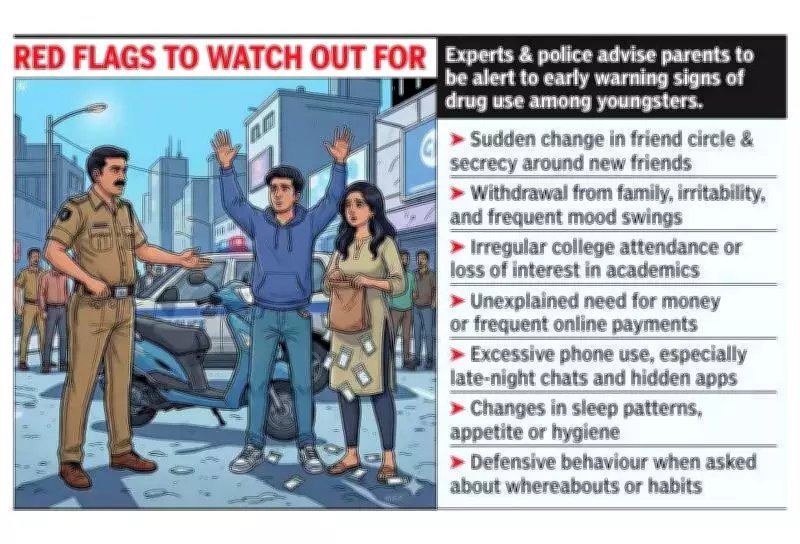
This case underscores a growing and alarming societal issue within urban centers like Bengaluru, where economic privilege does not necessarily shield young individuals from the perils of addiction and crime. It highlights the urgent need for enhanced community awareness, robust parental guidance, and proactive intervention strategies to prevent similar tragedies among the youth demographic.