Bengaluru Traffic Police Transform Wrecked Cars into Road Safety Lessons
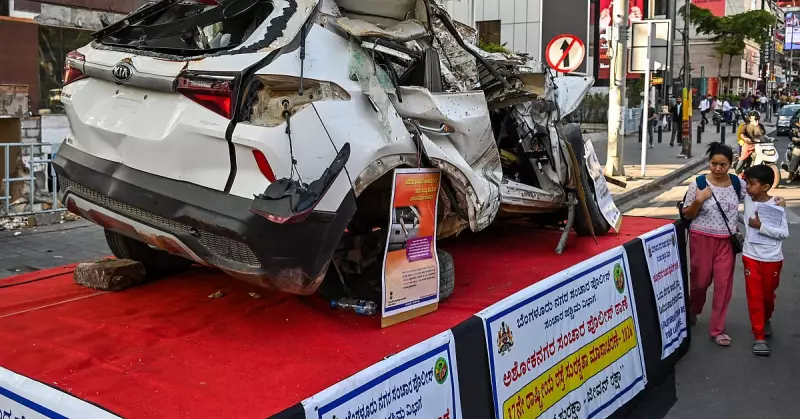
In a unique initiative aimed at enhancing road safety awareness, the Bengaluru Traffic Police have started displaying wrecked vehicles at prominent junctions across the city. These cars, which were involved in serious road crashes, now serve as powerful visual reminders of the consequences of reckless driving.
Stark Reminders at Key Locations
One such wrecked car was placed at the busy Brigade Road–Residency Road Junction on Thursday. This display is part of a broader campaign to educate drivers and pedestrians about the importance of adhering to traffic rules. The initiative focuses particularly on highlighting the dangers of drunk driving, which remains a leading cause of accidents in urban areas like Bengaluru.
The vehicles on exhibit are not just random props; they are real cars that have been damaged in actual road crashes. By showcasing these wrecks, the police aim to create an emotional impact that goes beyond traditional warnings or fines. The visual of a crushed vehicle can effectively convey the potential outcomes of negligence on the road.

Goals of the Safety Campaign
The primary goal of this initiative is to reduce the number of road accidents in Bengaluru by fostering a culture of safety among commuters. According to authorities, such displays can serve as constant reminders for drivers to avoid speeding, drunk driving, and other hazardous behaviors. The campaign also encourages pedestrians to be more vigilant while crossing streets.
This approach aligns with global best practices in road safety education, where real-life examples are used to drive home critical messages. The Bengaluru Traffic Police hope that by making the consequences of accidents more tangible, they can inspire behavioral changes that lead to safer roads for everyone.
As Bengaluru continues to grapple with traffic congestion and safety challenges, initiatives like this highlight the innovative strategies being employed to protect lives. The wrecked car displays are expected to remain at key junctions for an extended period, ensuring that the message reaches a wide audience of daily commuters.