Bangladesh Parliament Swearing-In Marred by Political Boycotts and Reform Rejections
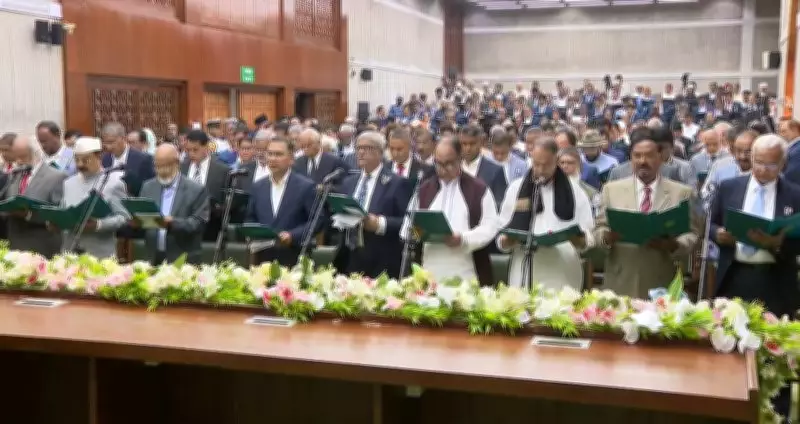
In a dramatic turn of events, the swearing-in ceremony for Bangladesh's newly elected parliament has been overshadowed by significant political dissent. Members of the Jamaat-e-Islami party have opted to boycott the oath-taking process entirely, while the Bangladesh Nationalist Party (BNP) has firmly declined to make a second pledge for political reforms, intensifying the already fraught atmosphere in the nation's legislative body.
Jamaat-e-Islami MPs Stage Oath Boycott
The Jamaat-e-Islami, a key political entity in Bangladesh, has made a bold statement by instructing its elected representatives to abstain from the parliamentary oath ceremony. This move is seen as a direct protest against the current political framework and governance structures. By boycotting the swearing-in, the party aims to highlight its grievances and challenge the legitimacy of the parliamentary proceedings, signaling deep-seated discontent within the opposition ranks.
BNP Rejects Second Reform Pledge, Escalating Tensions
Simultaneously, the Bangladesh Nationalist Party (BNP) has refused to commit to a second round of political reforms, a demand that had been put forward by ruling factions as a condition for smoother parliamentary operations. The BNP's stance underscores its reluctance to engage in what it perceives as coercive measures, potentially stalling efforts towards bipartisan cooperation and legislative efficiency. This rejection is expected to further polarize the political landscape, complicating future dialogues and policy-making processes.
Implications for Bangladesh's Political Stability
The combined actions of Jamaat-e-Islami and the BNP pose serious questions about the stability and functionality of Bangladesh's parliament. With key opposition groups either absent from the oath-taking or rejecting reform initiatives, the government may face heightened challenges in passing legislation and maintaining order. Analysts warn that this could lead to prolonged political deadlock, affecting governance and public trust in democratic institutions.
Key Points:- Jamaat-e-Islami MPs boycott the parliamentary swearing-in ceremony as a form of protest.
- BNP declines to make a second pledge for political reforms, resisting pressure from ruling parties.
- The incidents highlight deepening political divisions and could impact legislative productivity.
- Observers express concern over potential long-term effects on Bangladesh's democratic processes.
As Bangladesh navigates this period of political uncertainty, the actions of Jamaat-e-Islami and the BNP are likely to shape the trajectory of parliamentary dynamics in the coming months. The government's response to these boycotts and rejections will be crucial in determining whether the nation can move towards reconciliation or further entrenchment of partisan divides.