Bangladesh police have made a significant claim in the ongoing investigation into the murder of a young political activist, stating that two key suspects have fled across the border into India. This development adds a complex international dimension to a case that has already stirred considerable public emotion and political tension within Bangladesh.
The Crime and the Victim
The case revolves around the tragic killing of Hadisur Rahman, a 24-year-old student leader affiliated with the Bangladesh Chhatra League, the student wing of the ruling Awami League. The incident occurred on March 8, 2024, in the Sonagazi area of Feni district. According to police reports and local media, Rahman was brutally attacked by a group of assailants. He sustained critical injuries and was rushed to a local hospital, where he was pronounced dead.
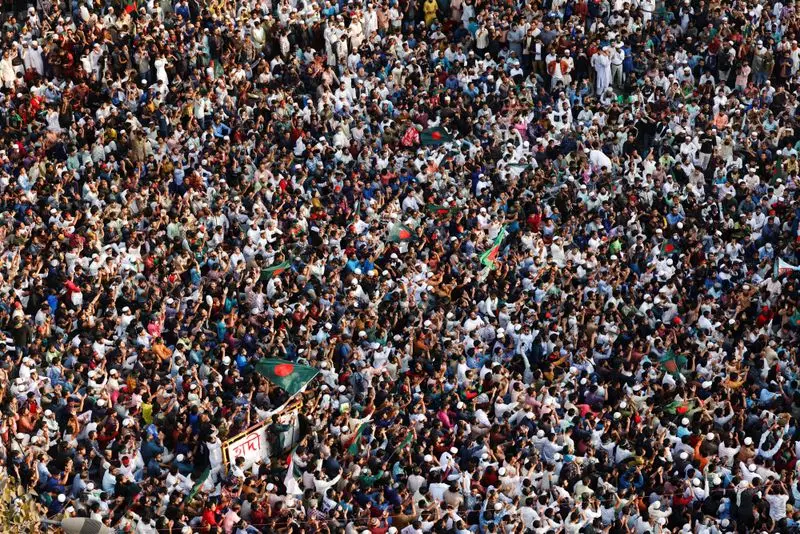
Initial investigations pointed towards a possible political motive, given the victim's active role in student politics. The Bangladesh Chhatra League is a powerful and often controversial organization, and internal conflicts or rivalries are not uncommon. The murder triggered immediate protests and demands for swift justice from fellow students and political groups.
The Cross-Border Escape Claim
In a recent update that has widened the scope of the investigation, Bangladeshi law enforcement officials asserted that two primary suspects in the case managed to escape to India. While the police have not publicly released the full identities of these individuals, they indicated that the suspects crossed the border to evade arrest.
This claim suggests that the investigation has progressed to identifying specific perpetrators. The police's statement implies they have gathered evidence, possibly through witness testimony, digital footprints, or informants, leading them to conclude that the fugitives are now in India. The specific Indian state or city where they might be hiding has not been disclosed in the initial reports.
Implications and Next Steps
This development places the case firmly in the realm of cross-border crime and international police cooperation. Bangladesh police will likely need to initiate formal procedures with Indian authorities through diplomatic channels. This process typically involves sharing evidence and formal requests for assistance under existing bilateral treaties or through Interpol.
The claim also raises questions about border security and monitoring between the two neighboring nations, which share a long and porous land boundary. It highlights the challenges law enforcement agencies face when suspects use international borders as a shield against prosecution.
For the victim's family and the political groups demanding justice, this news may bring a mix of hope and frustration. Hope, because the suspects have been identified; frustration, because their apparent escape to another country could complicate and prolong the legal process. The pressure is now on Bangladeshi authorities to demonstrate effective collaboration with India to ensure the suspects are located, apprehended, and brought back to face trial.
The murder of Hadisur Rahman is more than a criminal case; it is a flashpoint in Bangladesh's volatile political landscape. The handling of this investigation, especially the pursuit of suspects across international borders, will be closely watched as a test of judicial resolve and bilateral cooperation between Dhaka and New Delhi.