Bangladesh Jamaat-e-Islami Files Legal Challenge Over Election Results
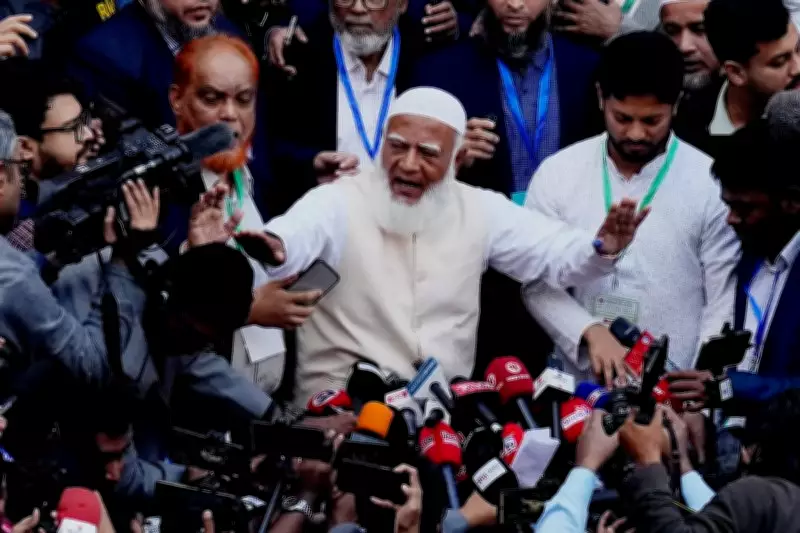
In a significant political development, Bangladesh's Jamaat-e-Islami party has officially challenged the results of the recent national elections. The party has filed a formal legal petition, alleging widespread irregularities and procedural violations during the voting process. This move comes amidst a backdrop of heightened political tension in the country, with opposition groups questioning the legitimacy of the electoral outcome.
Retraction of Welcome Message for BNP
Simultaneously, Jamaat-e-Islami has retracted its earlier welcome message extended to the Bangladesh Nationalist Party (BNP). The party had initially issued a statement congratulating the BNP on its performance in the polls, but has now withdrawn that communication. Sources within Jamaat-e-Islami indicate that this retraction is linked to the party's broader concerns about the election's integrity and its dissatisfaction with the BNP's stance on the matter.
The legal challenge filed by Jamaat-e-Islami details specific allegations of vote manipulation, including claims of ballot stuffing and voter intimidation in certain constituencies. The party is demanding a thorough investigation by the Election Commission and has called for a recount in disputed areas. Legal experts suggest that this petition could prolong the post-election uncertainty, potentially leading to court hearings and further political debates.
Political Implications and Regional Context
This development has significant implications for Bangladesh's political landscape. Jamaat-e-Islami, although not a major electoral force in recent years, remains an influential voice in opposition politics. Its decision to challenge the results publicly underscores the deep divisions within the country's political sphere. The retraction of the welcome message for the BNP further complicates alliances, as it signals a potential rift between opposition parties that could weaken their collective bargaining power.
Regional observers note that such disputes are not uncommon in South Asian democracies, where election results often face scrutiny from losing parties. However, the timing and nature of Jamaat-e-Islami's actions have drawn attention due to the party's historical role in Bangladeshi politics and its current efforts to regain relevance. The situation is being closely monitored by international bodies, including the United Nations and regional diplomatic missions, who have urged all parties to resolve disputes through legal and peaceful means.
In summary, Jamaat-e-Islami's dual actions of challenging the election results and retracting its BNP welcome highlight ongoing political instability in Bangladesh. As the legal process unfolds, the country faces a critical period of negotiation and potential reconciliation, with outcomes that could shape its democratic trajectory for years to come.