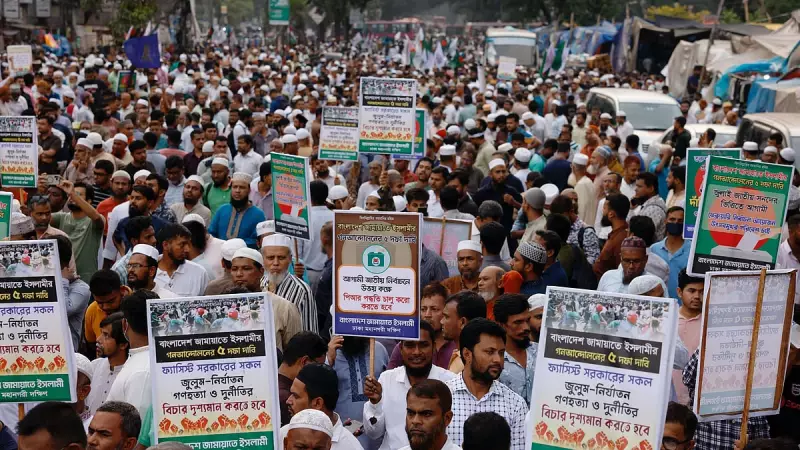
In a significant political development, Bangladesh's largest Islamist party, Jamaat-e-Islami, has expressed its willingness to participate in a national unity government following the country's next general elections scheduled for February 2025. This proposal comes amid a prolonged period of political tension and a crackdown on opposition activities by the current administration led by Prime Minister Sheikh Hasina.
A Conditional Offer for Political Reconciliation
The party's acting chief, Mojibur Rahman Hamidi, outlined the conditions for this unprecedented move. Speaking from an undisclosed location, Hamidi stated that Jamaat-e-Islami would consider joining a unity government only if it is formed under a neutral administration that oversees free and fair elections. The party insists that such a government must be established after the February 2025 polls, not before.
This stance directly links their participation to a fundamental change in the electoral process. The party, along with its principal ally, the Bangladesh Nationalist Party (BNP), has long accused the ruling Awami League of authoritarian practices, including rigging elections and suppressing dissent. They have demanded that the upcoming vote be conducted under a caretaker government, a system abolished by the Awami League in 2011.

Context of Crackdown and Exile
The offer is made against a backdrop of intense pressure on the opposition. Jamaat-e-Islami has been banned from contesting elections since 2013, following a court ruling that deemed its charter unconstitutional. Many of its senior leaders, including Hamidi, are reportedly operating from exile due to fear of arrest. The party claims that over 2,500 of its members and leaders have been detained since October of the previous year, when widespread anti-government protests erupted.
Hamidi alleged that the current government is using state machinery to imprison opposition figures and stifle any challenge. The proposal for a unity government appears to be a strategic move to break the political deadlock and find a constitutional path forward, while also attempting to regain a legitimate political space.
Regional Implications and the Path Ahead
This development is being closely watched in the region, particularly in neighboring India. New Delhi has historically shared a strong relationship with Sheikh Hasina's government, valuing stability and cooperation on security and connectivity. A major political shift in Dhaka could have significant implications for regional dynamics.
The ball now lies in the court of the ruling Awami League and the broader opposition alliance. The BNP, which boycotted the 2014 election and participated unsuccessfully in 2018, has yet to formally announce its strategy for 2025. The acceptance of a neutral election-time government remains the central, unresolved demand.
The coming months will be critical in determining whether this offer for a national unity government becomes a catalyst for dialogue or remains a symbolic gesture in Bangladesh's deeply polarized political landscape. The international community, including major powers, is likely to increase its focus on the electoral process as the February date approaches.