Australian Prime Minister Anthony Albanese has announced a major review of the country's police and intelligence services following a deadly terror attack in Sydney. The shocking incident, which took place on December 14, saw two gunmen open fire at a Hanukkah celebration on the iconic Bondi Beach, killing 15 people.
Details of the Bondi Beach Attack
The attack targeted a family-thronged Jewish festival. The alleged perpetrators are a father and son duo, Sajid Akram, 50, and his 24-year-old son Naveed. Authorities state they were inspired by "Islamic State ideology." During the attack, Sajid Akram was shot and killed by police. He was an Indian national who had entered Australia on a visa back in 1998. His son, an Australian-born citizen, remains hospitalized under police guard and faces multiple charges, including terrorism and 15 counts of murder.
Intelligence Failures and the Path to Radicalisation
In a revelation that has raised serious questions, it was disclosed that the younger suspect, Naveed, was investigated by the Australian Security Intelligence Organisation (ASIO) in 2019 for potential radicalisation. At that time, he was assessed as not posing a threat. His father was also questioned as part of that probe. Despite this scrutiny, the father managed to obtain a gun licence, which allowed him to legally own six firearms.

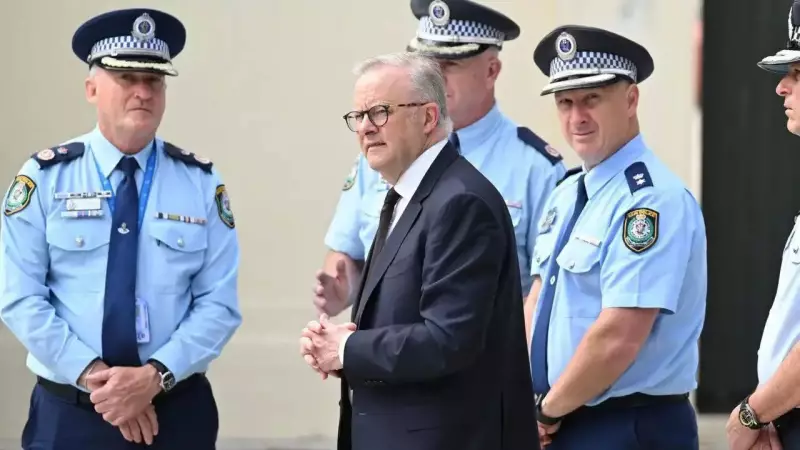
Prime Minister Albanese, addressing the nation, stated the attack "reinforces the rapidly changing security environment." He emphasised the need to examine whether security agencies have the necessary powers, structures, and information-sharing protocols. "We need to look back at what happened in 2019 when this person was looked at, the assessment that was made," Albanese told the ABC.
The Philippine Connection Under Scrutiny
A critical part of the investigation focuses on a four-week trip the pair took to the southern Philippines just weeks before the attack. They stayed in Davao City on the island of Mindanao. Hotel staff reported the men remained holed up in their room for most of their 28-day stay, venturing out only for short periods. Regional police, reviewing CCTV footage, confirmed the father visited a gun shop.
While Mindanao has a history of Islamist insurgencies, Philippine authorities say there is no current evidence to suggest the country is being used to train extremists. Australian criminologist Clarke Jones noted it was "very, very unusual" to have a father and son as suspected perpetrators in such an attack. He suggested their radicalisation may have gone "under the radar" for years after the initial intelligence probe.
The tragic event has prompted a national reckoning on counter-terrorism strategies and community safety, with the government vowing to ensure such a "shocking event" is not repeated.