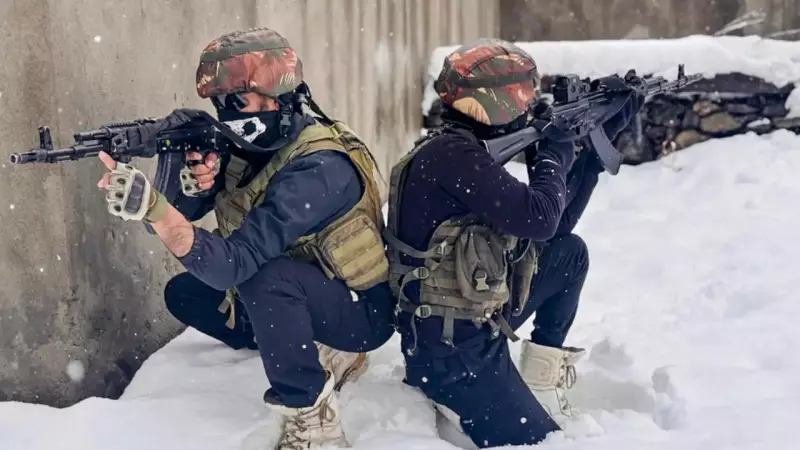
The Indian Army has significantly escalated its counter-terrorism operations in the Jammu region, launching a proactive and integrated campaign during the harsh winter period known as Chillai Kalan. This 40-day bone-chilling phase, spanning from December 21 to January 31, has seen security forces expand their reach into higher, snowbound areas of districts like Kishtwar and Doda to neutralize Pakistani terrorists attempting to use the season for concealment.
Integrated Strategy and Multi-Agency Synergy
This year's winter posture is marked by a highly coordinated, inter-agency approach. The Indian Army is leading a synchronized effort that brings together the Jammu and Kashmir Police (JKP), Central Reserve Police Force (CRPF), Special Operations Group (SOG), civil administration, Forest Guards, and Village Defence Guards (VDGs). Sources indicate that this collaboration ensures seamless intelligence sharing and optimizes resources for sharper operational execution.
Intelligence from all agencies is carefully synthesized to create precise situational pictures of terrorist movement and hideout patterns. Once verified, coordinated joint operations are launched, minimizing overlaps and maximizing impact with tactical precision. This synergy has notably enhanced response times, allowing forces to act the moment actionable intelligence surfaces.

Terrorist Presence and Shifting Tactics
Assessments by various intelligence agencies estimate that approximately 30 to 35 Pakistani terrorists are currently active in the Jammu region. Over recent months, these groups, pressured by successful security operations, have retreated deeper into the higher and middle mountain reaches—areas now largely devoid of habitation.
These terrorists are believed to be seeking temporary winter hideouts to evade detection and avoid direct confrontation. The report adds that these remnants are attempting to coerce or threaten local villagers for shelter and food supplies, although their support among locals and overground workers has sharply declined.
Doctrinal Approach and Specialized Deployment
The winter operations follow a clear doctrinal approach: Surveillance to Swift Operations and then Back to Surveillance. This philosophy emphasizes an unbroken cycle of monitoring, quick response, and sustained watchfulness to prevent terrorists from regrouping. The methodical rhythm allows forces to maintain constant pressure while adapting to severe environmental challenges.
To execute this strategy effectively, the Army has deployed specially trained winter warfare sub-units across key sectors. These troops are adept in high-altitude survival, snow navigation, avalanche response, and combat in snowy conditions, ensuring operational effectiveness continues unabated during the winter surge.
The security forces have established temporary bases and surveillance posts deep within snow-covered areas. This proactive move aims to maintain continuous pressure on potential terrorist hideouts and disrupt any plans to exploit the harsh winter terrain for sanctuary.