Andhra Pradesh Prisons Grapple with Severe Overcrowding and Staffing Crisis
The prison system in Andhra Pradesh is confronting a severe overcrowding crisis, with central jails operating at dangerously high occupancy levels. According to the latest data, more than 70% of the inmate population consists of undertrials, highlighting significant delays in the judicial process and prolonged pendency of criminal cases across the state.
Alarming Occupancy Rates in Central Prisons
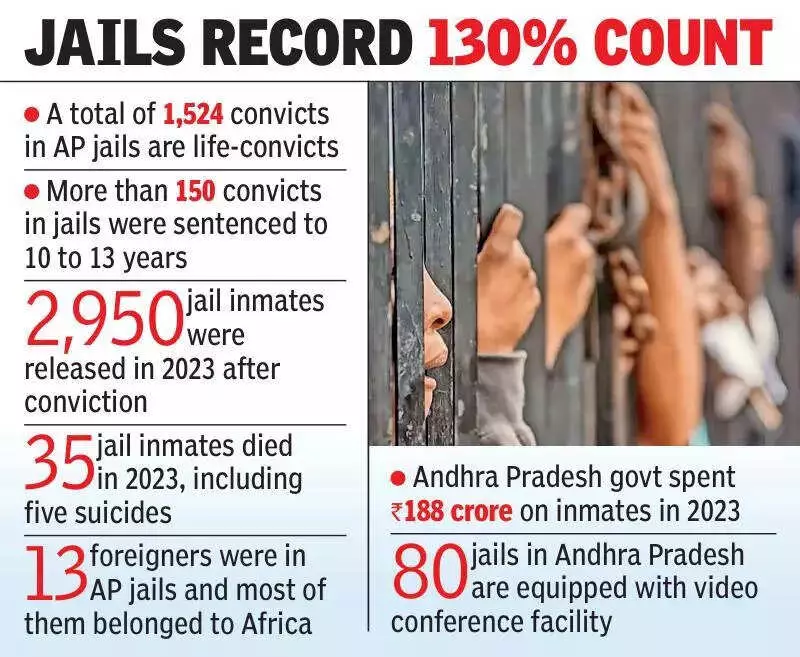
The National Crime Records Bureau's Prison Statistics India (PSI) report for 2023 reveals troubling figures for Andhra Pradesh. The state maintains 106 prisons, including four central jails, eight district jails, 91 sub-jails, two women's jails, and one open jail. While the overall prison population reached 7,889 inmates by the end of 2023 with an occupancy rate of 89.3%, the situation in central jails is particularly dire.
Central prisons alone housed 4,898 inmates, recording an alarming occupancy rate of 130.1%. This means these facilities are holding prisoners far beyond their designed capacity, creating unsafe and unmanageable conditions for both inmates and staff.

Undertrial Population Demographics and Offenses
The breakdown of the prison population shows 2,213 convicts (112 females and 2,102 males) alongside 5,568 undertrials (298 females, 5,261 males, and nine transgender individuals). This means undertrials constitute approximately 70.6% of the total inmate population, underscoring systemic issues in case processing and trial delays.
Notably, more than 2,090 undertrials were booked under the Narcotic Drugs and Psychotropic Substances (NDPS) Act cases, indicating a significant portion of pending cases relate to drug offenses. Additionally, around 100 detenues and other inmates were held under preventive detention or special laws.
The age distribution among undertrials reveals that nearly half (49%) are between 18-30 years old, 43.9% fall in the 30-50 age bracket, and 7.1% are above 50 years. This demographic spread suggests that younger individuals are disproportionately affected by judicial delays.
Visakhapatnam Central Prison: A Case Study in Overcrowding
The Vizag central prison in Visakhapatnam exemplifies the severity of the overcrowding problem. Designed to accommodate 914 inmates including 80 women, the facility currently holds over 1,600 prisoners—far exceeding its intended capacity. Among these, approximately 1,000 are linked to narcotics-related offenses, with around 60 convicts and over 900 remand prisoners.
This extreme overcrowding creates challenging conditions for rehabilitation, security, and basic human rights within the prison system.
Critical Staff Shortages Exacerbate Systemic Challenges
Compounding the overcrowding crisis, the prison department faces severe staffing shortages. The sanctioned strength for prison staff stands at 2,637 positions across five categories: executive, medical, correctional, ministerial, and others. However, the actual strength is only 1,862, leaving 775 posts vacant—nearly 30% of the required workforce.
Notably, Andhra Pradesh has no correctional staff at all, creating a significant gap in rehabilitation and reform programs. Vacancies span critical positions including deputy superintendents, jailors, warders, and medical officers, further straining an already overburdened system.
Systemic Implications and Future Concerns
The combination of severe overcrowding, high undertrial percentages, and critical staff shortages creates a perfect storm of challenges for Andhra Pradesh's prison administration. The prolonged detention of undertrials not only violates principles of justice but also places immense pressure on prison infrastructure and resources.
Without addressing both judicial delays and staffing gaps, the state's prison system risks further deterioration in conditions, potentially affecting inmate welfare, security protocols, and rehabilitation efforts. The situation calls for urgent intervention at multiple levels—from judicial reforms to expedite trials to recruitment drives to fill vacant positions.