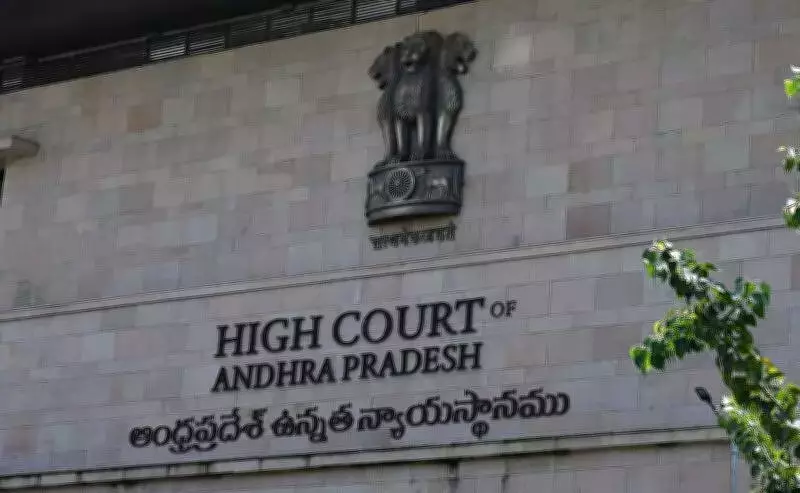
Andhra Pradesh High Court Restricts Use of Look Out Circulars in Matrimonial Disputes
The Andhra Pradesh High Court has delivered a significant judgment, holding that Look Out Circulars (LOCs) cannot be issued in a mechanical or routine manner, particularly in matrimonial cases, without a thorough examination of the accused's conduct. This ruling emphasizes that LOCs should be reserved for severe offenses that pose a threat to national security, involve financial irregularities, or are detrimental to society at large.
Case Background: LV Arun Kiran's Petition
The judgment came in response to a petition filed by LV Arun Kiran, an electrical technician working in Abu Dhabi, seeking to quash an LOC issued against him by the Visakhapatnam police. Kiran's ordeal began when he landed at Visakhapatnam airport on January 14 and was apprehended by airport police due to the pending LOC. This LOC stemmed from a case registered under Section 498-A of the Indian Penal Code (IPC), following a complaint lodged by his wife, S Kavitha.
Kiran detailed that after their marriage encountered difficulties, he filed for divorce, while his wife sought maintenance. Subsequently, she filed a case under Section 498-A of the IPC (which corresponds to Section 85 of the Bharatiya Nyaya Sanhita), leading to his arrest and subsequent bail. While the police filed a charge sheet in this offense, Kiran returned to Abu Dhabi for work. He asserted that he had fully cooperated with the investigation and regularly attended court proceedings in both the divorce petition and the 498-A case.
Legal Arguments and Fundamental Rights Concerns
G Seena Kumar, counsel for Kiran, argued before the court that the LOC had prevented Kiran from returning to Abu Dhabi, forcing him to extend his leave. Kumar contended that if Kiran were not allowed to travel abroad, he would lose his job, which amounts to a curtailment of his fundamental rights guaranteed under Article 21 of the Indian Constitution, which protects life and personal liberty.
In contrast, the assistant government pleader defended the issuance of the LOC, arguing it was necessary to ensure Kiran would not evade the judicial process. However, the court found this reasoning insufficient in light of Kiran's demonstrated cooperation.
Court's Ruling and Guidelines
After considering the arguments, Justice K Srinivas Reddy held that police should issue LOCs only in cases involving grave offenses, not in every matrimonial dispute under Section 498-A, especially when the accused is actively cooperating with the legal proceedings. Justice Reddy cited guidelines issued by the Union Ministry of Home Affairs, which stipulate that LOCs should be used exclusively in cases involving serious threats to the state or significant financial irregularities.
The court emphasized that issuing LOCs in matrimonial cases without proper scrutiny can lead to undue hardship and infringement of individual rights, particularly when the accused is not a flight risk and is participating in the trial. This judgment serves as a reminder to law enforcement agencies to exercise discretion and adhere to established protocols when deploying such restrictive measures.
This ruling is expected to impact future cases, ensuring that LOCs are not misused in personal disputes and are reserved for situations where there is a genuine risk to public interest or national security.