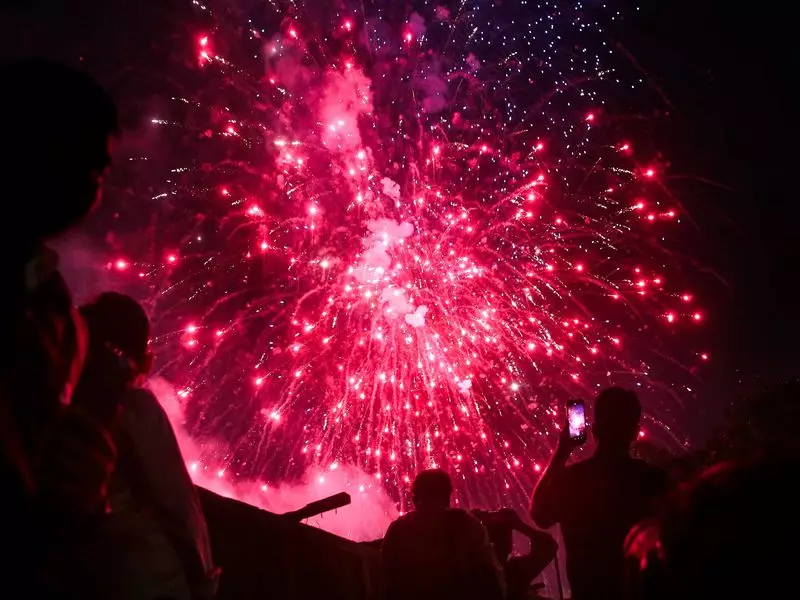
As the world celebrated the arrival of 2026 with fireworks and festivities, two remote Pacific territories held the unique distinction of being the very last inhabited places on Earth to step into the new year. American Samoa and the island nation of Niue welcomed 2026 a full 25 hours after the clock struck midnight in India, marking the end of the global New Year's wave due to their position in the UTC-11 time zone.
The Final Countdown in the Pacific
The celebrations in these islands concluded the planet's day-long transition into 2026. While major cities like Sydney, Tokyo, Dubai, Paris, London, and New York had long since celebrated, the residents of American Samoa and Niue patiently awaited their turn. Their New Year began at 10:30 AM Indian Standard Time (IST) on January 1, 2026. This timing is precisely 25 hours behind the first major inhabited region to celebrate, Kiritimati (Christmas Island) in Kiribati, which is in the UTC+14 time zone.
This annual event highlights the fascinating quirks of the International Date Line, an imaginary line that separates one calendar day from the next. The placement of this line means that while some islands are among the first to see a new day, others, like American Samoa and Niue, are the last.
Notable Absences and Remote Outposts
It is important to note that the last locations *overall* to enter the new year are actually two uninhabited US territories: Baker Island and Howland Island. However, as they have no permanent population, the honour of being the last *inhabited* regions falls squarely on American Samoa and Niue.
American Samoa is a US territory in the South Pacific, while Niue is a self-governing state in free association with New Zealand. Both are located in a region where the Date Line takes a significant zigzag. In fact, American Samoa made a major time zone jump in 2011, moving from the east to the west side of the Date Line. This change was made primarily for economic reasons to align its working days better with its main trading partners, Australia, New Zealand, and Asia, but it cemented its position as one of the final celebrants of the New Year.
A Global Celebration of Time and Geography
The sequential welcoming of the New Year across the globe is a powerful annual reminder of our planet's rotation and the human-constructed systems we use to measure time. From the first fireworks over the Pacific to the final shouts of "Happy New Year!" in American Samoa and Niue, the event connects the world in a 24-hour chain of hope and celebration.
For the residents of these last regions, there is a unique sense of identity tied to this temporal distinction. They watch as the world celebrates before them, knowing their moment will come after all others have finished. It is a quiet claim to fame that places these small Pacific islands on the global map every January 1st.
The next time you celebrate the New Year, remember that the festivities are not truly complete until the sun rises over Pago Pago and Alofi, marking a fresh start for the entire world.