Allahabad High Court Verdict on Private Prayers Receives Warm Welcome in Mumbai Ahead of Ramzan
The Muslim community in Mumbai has expressed strong support for a recent Allahabad High Court verdict that permits religious prayers on private premises without requiring prior police permission. This landmark decision comes just before the holy month of Ramzan, which begins on February 18, providing significant relief to worshippers who engage in special prayers during this period.
Court Order Clarifies Legal Standing for Private Religious Gatherings
In its ruling, the Allahabad High Court explicitly stated that "there is no need to take permission to hold a religious prayer meeting on private property." This clarification has been particularly welcomed by community leaders, clerics, and activists who have long advocated for the protection of religious practices in private spaces.
Community representatives are now urging police authorities to actively discourage any groups that might attempt to harass minorities for conducting prayers in private settings. This call to action stems from concerns that some individuals may misuse legal channels to disrupt peaceful religious observances.
Historical Context and Recent Incidents Highlight Community Concerns
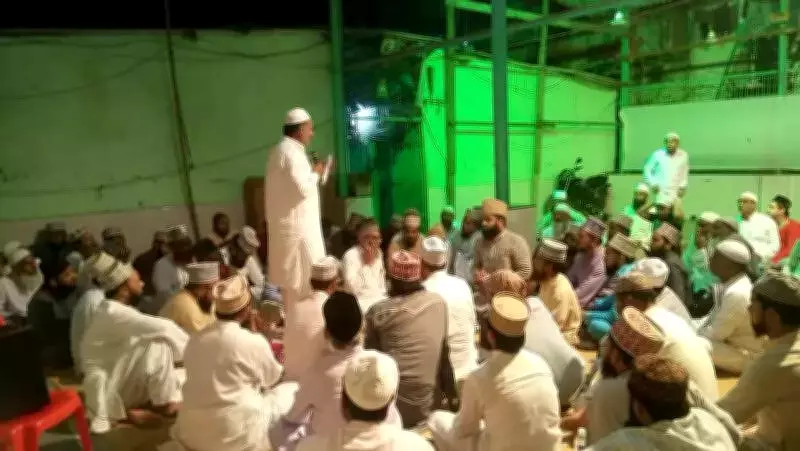
The timing of this verdict is especially significant as Muslims prepare for Ramzan, during which many participate in tarawih prayers held at night. These special prayers typically occur in various locations including:
- Mosques
- Private homes
- Rooftops and terraces
- Parking lots
- Office spaces
Community members have expressed legitimate fears that miscreants might attempt to harass worshippers by filing complaints with police about these gatherings. This concern is not unfounded, as demonstrated by a January incident in Bareilly, Uttar Pradesh, where an FIR was filed against twelve men for praying in an empty house. Police had cited lack of prior permission for holding prayers at a location that was not a designated mosque.
Community Leaders Applaud Judicial Intervention
Maulana Mahmood Daryabadi of the All India Ulema Council emphasized the importance of the court order, stating: "The high court order should serve as a warning to those who try to obstruct prayers at private places." His sentiment reflects a broader community appreciation for judicial protection of religious freedoms.
Nasir Jamal, who has organized tarawih prayers on his office rooftop for nearly three decades, offered additional perspective: "The court order should deter not just those who oppose prayers at private places but even those who use such congregational prayers to harass the community."
Constitutional Rights and Historical Precedents
Many community members have pointed to Article 25 of the Indian Constitution, which guarantees citizens the right "to freely profess, practise and propagate religion." This constitutional provision forms the foundation for their argument that private religious practices should not face unnecessary legal obstacles.
Maulana Burhanuddin Qasmi, director of the Markazul Maarif Education and Research Centre in Andheri, recalled a concerning incident from a couple of years ago when a drone-captured video of tarawih prayers went viral. "There was a fear that Muslim prayers would be monitored and obstructed, but fortunately nothing happened," he noted, highlighting ongoing concerns about surveillance and interference.
Political and Community Voices Unite in Support
AIMIM leader Waris Pathan welcomed the judicial decision, stating: "All citizens have the freedom to practise their religion. It is good that the court has given a positive verdict." This political endorsement underscores the bipartisan nature of support for religious freedom protections.
Bandra resident Asif Farooqui, who regularly hosts tarawih prayers at his office, provided personal context: "During Ramzan, Muslims traditionally become more pious and may offer prayers in groups or with families. Such peaceful and private practices should not warrant unnecessary legal action." His comments reflect the community's desire to observe religious traditions without facing legal harassment.
The Allahabad High Court verdict arrives at a crucial moment as Mumbai's Muslim community prepares for Ramzan observances. By clarifying the legal status of private religious gatherings, the judgment provides both practical protection and psychological reassurance to worshippers who have faced challenges in practicing their faith freely.