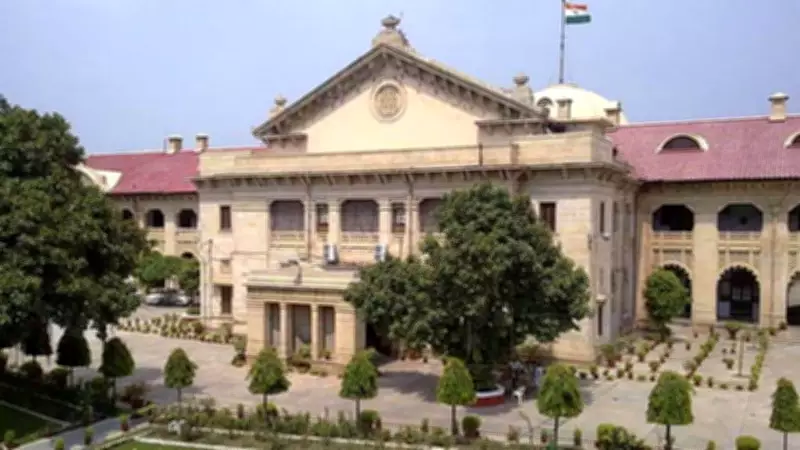
The Allahabad High Court has raised serious concerns about the continuation of punitive demolitions in Uttar Pradesh, highlighting apparent non-compliance with a Supreme Court order that explicitly prohibits such actions. A division bench comprising Justices Siddharth Nandan and Atul Sreedharan made these observations while hearing a petition from a family based in Hamirpur district, who feared their properties would be demolished by local authorities.
Court Questions Separation of Powers and State Authority
The bench emphasized that the demolition of structures violates the fundamental principle of separation of powers, as the authority to punish rests solely with the judiciary. The court noted it has witnessed multiple cases where demolition notices are issued to occupants immediately following criminal offenses, with demolitions carried out after what appears to be mere procedural compliance with statutory requirements.
Five Critical Legal Questions Framed
Recognizing the broad implications of the case involving the state's right to demolish structures versus citizens' constitutional rights under Articles 14 and 21, the court framed five pivotal legal questions:
- Is there non-compliance with the Supreme Court's judgement in Re: Directions in the Matter of Demolition of Structures, particularly paragraphs 85 and 86?
- Does the authority to demolish justify the act, or does the state have a duty as parens patriae not to demolish dwelling places without genuine public need?
- Would demolition actions immediately following criminal offenses constitute a colourable exercise of executive discretion?
- How should the High Court balance conflicting interests between state demolition authority and citizens' fundamental rights?
- Can reasonable apprehension of demolition be valid cause for legal action, and what constitutes such reasonable apprehension?
Petitioners' Case and Government Response
The petitioners, Faimuddin and his parents, sought court intervention to prevent potential demolition of their house, lodge, and sawmill. They claimed that after a relative was booked under rape, POCSO Act, and UP religious conversion law charges in January, a mob colluding with police targeted their property. Although not co-accused, they received a demolition notice immediately after the FIR registration. Their lodge and sawmill (with pending license renewal) have been sealed.
The government argued the petition was premature, stating no cause of action had arisen, the house and lodge remained unsealed, and the sawmill was sealed due to prohibited wood recovery. Additional Advocate General Anoop Trivedi orally assured that no demolition would occur without following established legal procedures and providing petitioners adequate opportunity to present their case.
Court Directives and Future Proceedings
The court ordered police protection for the petitioners' life, limbs, and property to ensure free access. The next hearing is scheduled for February 9, 2026. This case highlights ongoing tensions between state demolition practices and constitutional safeguards in Uttar Pradesh, with the judiciary scrutinizing compliance with higher court directives.