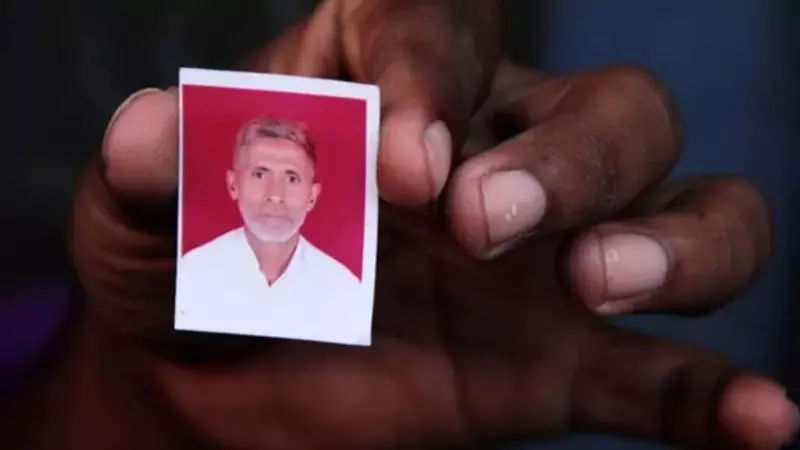
A recent court order in Uttar Pradesh has brought the horrific 2015 lynching of Mohammad Akhlaq back into sharp focus. The Surajpur court's refusal to allow the state government to withdraw prosecution in the case has been hailed as a victory for due process. However, a deeper look reveals that this legal step, while crucial, is merely a palliative in a much larger crisis of state-sanctioned impunity for mob violence against minorities.
A Symbolic Crime and a Routinised Pattern
The brutal killing of Mohammad Akhlaq in Dadri's Bisada village on September 28, 2015, over rumours of cow slaughter, was not an isolated incident. It tragically inaugurated a dark phase in India's recent history, where lynchings became a routinised form of violence. Over the past decade, mob attacks, often triggered by allegations of cow slaughter or interfaith relationships, have followed a disturbingly familiar pattern.
Accusations are amplified in the public sphere, violence is carried out brazenly, and subsequent investigations are frequently stalled or diluted by the police. Even after the Supreme Court's 2018 directives to curb such violence, political figures have continued to openly endorse so-called 'gau raksha' groups, while families of the victims face sustained harassment and intimidation.

Delay as a Tool of Injustice
The near-decade-long delay in advancing the Akhlaq case towards justice is, in itself, a profound injustice. This protracted timeline is not a mere administrative failure but a deliberate mechanism of impunity. With such delays, witnesses can turn hostile, material evidence degrades, and the victim's family is worn down emotionally and financially.
The fact that the court has now had to order daily hearings and specific protection for evidence underscores how much damage the delay has already inflicted on the pursuit of justice. The court's intervention, though welcome, is essentially repairing a process that was allowed to decay.
State Complicity and the Political Frame of Violence
The attempt by the BJP-led Uttar Pradesh government to withdraw prosecution is the most alarming aspect of this case. This move is not an isolated failure but part of a broader, insidious pattern where the state implicitly or explicitly aligns with perpetrators of vigilante violence. When an elected government seeks to abandon prosecution in a clear case of mob lynching, it signals active protection for those accused of heinous acts.
This convergence of political power and vigilante violence poses a grave threat to constitutional governance and the rule of law. Framing such violence merely as episodic crime, rather than a structural form of political violence, limits the remedy to individual court orders. A political understanding, however, exposes lynching as a phenomenon sustained by a culture of impunity where accountability is systemically avoided.
The Path Ahead: Beyond Performative Justice
True justice in the Akhlaq case, and for countless other victims, cannot be achieved through 'social healing' alone without concrete accountability. For the rule of law to be substantive and not just performative, accountability must be both timely and insulated from political pressures. The UP government's action raises a fundamental question about constitutional governance in an era of majoritarian mobilisation: Can the criminal justice system effectively address crimes that carry political incentives?
As long as lynching is treated as random lawlessness instead of a recognised form of political violence, individual court orders—however significant—will remain Band-Aid solutions. They may provide temporary relief but will fail to trigger the transformative change needed to dismantle the infrastructure of impunity that enables such violence to persist. The writer, who teaches at Jamia Hamdard's School of Law, argues that only a political reckoning can lead to lasting justice.