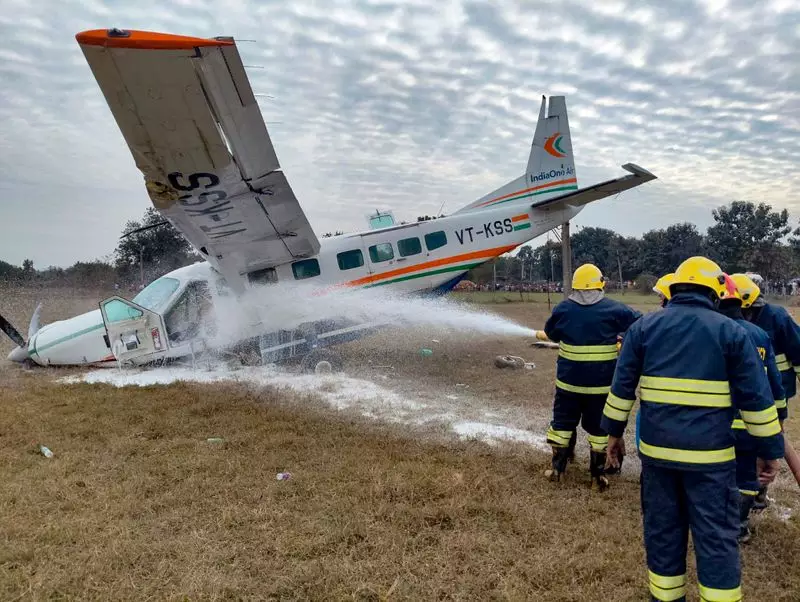
A team from the Aircraft Accident Investigation Bureau (AAIB) has initiated a crucial investigation into the emergency crash landing of a small aircraft near Rourkela in Odisha. The incident, which occurred on a recent Wednesday, involved a Beechcraft King Air C90 aircraft and has raised important questions about flight safety procedures.
Details of the Rourkela Aircraft Incident
The aircraft, identified as a Beechcraft King Air C90, was forced to execute an emergency landing in a paddy field close to Rourkela's steel city. This event took place on Wednesday, May 15, 2024. According to initial reports, the small plane experienced a technical malfunction, compelling the pilot to make a controlled crash landing in the open field to avoid a more catastrophic outcome.
Miraculously, the skilled handling by the pilot ensured that there were no fatalities or serious injuries reported from the accident. This outcome is being hailed as a testament to effective emergency response and pilot training under extreme pressure. The site of the crash landing, the paddy field, likely contributed to absorbing some of the impact, preventing a fire or explosion.
AAIB Investigation Team Springs into Action
Following the incident, a specialized team from the Aircraft Accident Investigation Bureau (AAIB) was promptly dispatched to the crash site. The AAIB, which operates under the Ministry of Civil Aviation, is the premier agency responsible for investigating aircraft accidents and serious incidents in India. Their mandate is to determine the probable cause and contributing factors to prevent future occurrences.
The investigation team's work involves a meticulous, multi-step process. They are tasked with examining the wreckage of the Beechcraft King Air C90, collecting crucial flight data, and interviewing the pilot and any other personnel involved. A primary focus will be on the technical snag that preceded the emergency landing. Investigators will analyze maintenance records, weather conditions at the time of the flight, and air traffic control communications to build a complete picture of the events leading up to the crash.
Safety Implications and Broader Context
While this incident near Rourkela ended without loss of life, it underscores the persistent challenges in aviation safety, particularly for general aviation and smaller aircraft operations. The successful outcome should not lead to complacency but rather reinforce the importance of rigorous maintenance checks, recurrent pilot training for emergency scenarios, and robust regulatory oversight.
The findings of the AAIB probe will be critical. The bureau will issue a detailed report containing safety recommendations aimed at the regulator (the Directorate General of Civil Aviation), the aircraft operator, and potentially the aircraft manufacturer. These recommendations are designed to address systemic issues and enhance safety protocols across the industry. The investigation into the Rourkela crash landing is a standard but vital procedure to ensure that lessons are learned and similar incidents are prevented in the future.
This event also highlights the need for continued investment in aviation infrastructure and safety management systems across India, ensuring that even flights operating in regional areas adhere to the highest global safety standards. The eyes of the aviation community will now be on the AAIB's findings as they work to piece together the final moments of the Beechcraft King Air C90's flight.