Major Maoist Surrender in Bastar Ahead of Government Deadline
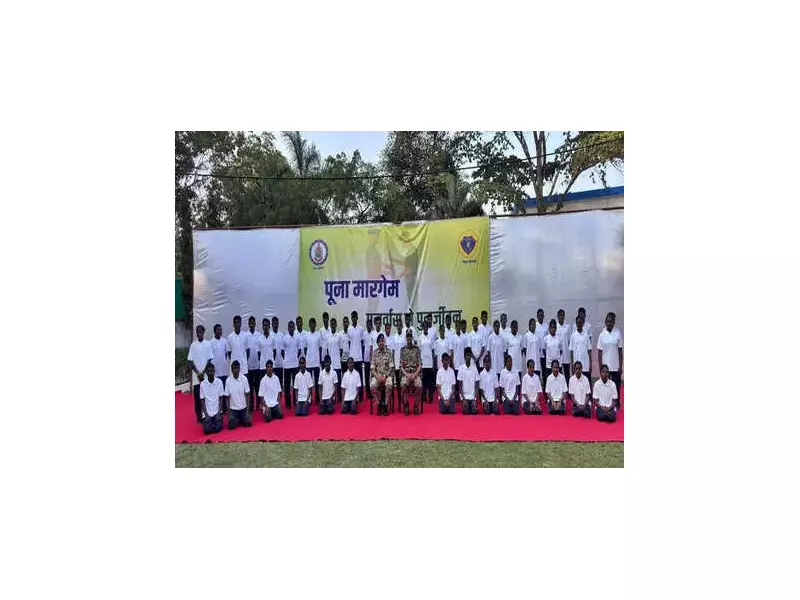
Fifty-two Maoist cadres laid down their weapons in Chhattisgarh's Bijapur district on Thursday. This significant surrender included twenty-one women among the group. The event marks another mass defection in the Bastar region as security forces intensify operations.
High-Value Cadres With Substantial Rewards
Police officials confirmed that forty-nine of the surrendered individuals carried declared rewards. The total bounty amount exceeded ₹1.41 crore, highlighting their operational importance within the Maoist structure. This figure underscores the significance of this surrender for security forces.
The cadres operated under several key Maoist formations. They belonged to the Dandakaranya Special Zonal Committee, the Andhra-Odisha Border division, and the Bhamragarh area committee in neighboring Maharashtra. Their activities spanned multiple districts and states.

Violent Past and Decision to Surrender
Most surrendered cadres participated in serious insurgent activities. Their involvement included improvised explosive device blasts, bomb planting, ambushes against security personnel, extortion operations, and mobilization for People's Liberation Guerrilla Army units. These activities occurred across Bijapur, Sukma, Dantewada, West Bastar, and bordering areas of Odisha and Maharashtra.
The Maoists turned themselves in before senior police and Central Reserve Police Force officials in Bijapur. They expressed faith in the Indian Constitution during the surrender ceremony. Police reported that the cadres vowed to live safe, dignified, and self-reliant lives within the democratic system.
Rehabilitation Process and Immediate Assistance
Bijapur Superintendent of Police Jitendra Yadav detailed the rehabilitation measures. Each surrendered cadre received immediate financial assistance of ₹50,000. They will undergo full rehabilitation according to the state's surrender and rehabilitation policy.
Yadav highlighted the government's Poona Margeim campaign during the surrender event. He stated that this initiative offers a real alternative to violence. The police official appealed to remaining Maoists to abandon violent ideologies and return to mainstream society without fear.
Key Leaders Among the Surrendered
The surrendered group included several high-value leaders with substantial bounties. Lakku Karam, a divisional committee member from the Marh division, carried a reward of ₹8 lakh. Company number 7 platoon party committee members Laxmi Madvi alias Ratna and Chinni Sodhi also surrendered with ₹8 lakh bounties each.
Other significant surrenders included:
- Thirteen cadres with ₹5 lakh bounties each, including area committee members from West Bastar, Bhairamgarh, Konta, Gangloor, and National Park formations
- Nineteen cadres with ₹2 lakh rewards each
- Fourteen cadres with ₹1 lakh rewards each
Recent Surrender Trends in Chhattisgarh
This mass surrender follows similar recent developments in neighboring districts. On Wednesday, twenty-nine Maoists surrendered in Sukma district. Earlier in January, sixty-three cadres laid down arms in Dantewada on January 8, while twenty-six more surrendered in Sukma on January 7.
Police officials estimate that more than 1,500 Maoists have surrendered across Chhattisgarh in 2025. Within Bijapur district alone, police data reveals significant progress since January 1, 2024. The statistics show 876 Maoists joining the mainstream, 1,126 arrests, and 223 killed in various encounters.
Security Strategy and Remaining Challenges
Officials credit the sustained operations of multiple security forces for the increasing surrender rate. The combined efforts of District Reserve Guard, Bastar Fighters, district police, Special Task Force, Commando Battalion for Resolute Action battalions, and CRPF companies have steadily eroded Maoist influence.
Political backing for rehabilitation and development schemes has complemented security operations. The Poona Margeim campaign focuses on providing immediate financial support, legal assistance, housing, education, and livelihood options for surrendering cadres and their families.

Security agencies acknowledge this surrender of fifty-two high- and mid-level cadres as a major psychological blow to the underground organization. However, they admit that pockets of resistance remain in deep forested areas of South Bastar, the Marh division, and inter-state border belts.
Next Steps for Surrendered Cadres
The surrendered cadres will now undergo a detailed process before full rehabilitation. This includes debriefing sessions, verification procedures, and legal processing. Officials emphasized efforts to ensure genuine and durable reintegration into society.
A key concern remains preventing social stigma when these individuals return to their villages. Authorities are working to create acceptance and support systems for former Maoists rejoining mainstream life.
This mass surrender occurs months before the central government's March 31 deadline aimed at eliminating Left Wing Extremism from the country. Security forces continue scouring Bastar's forests to locate remaining hiding cadres as the deadline approaches.