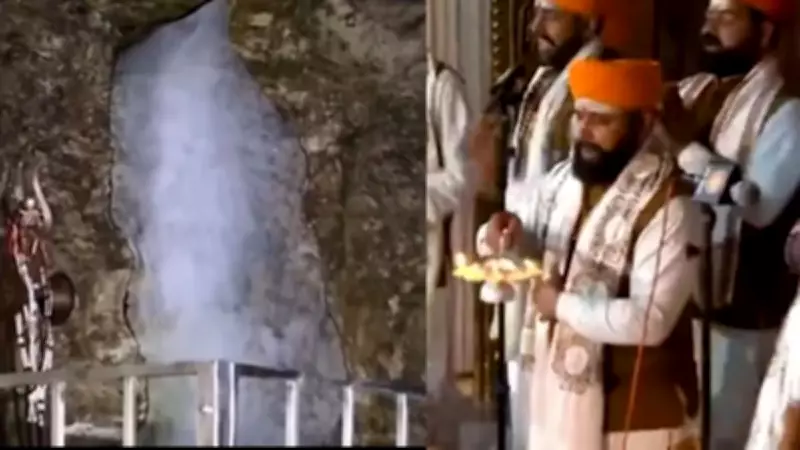
The sacred Amarnath Yatra for the year 2026 officially began on July 3 with the first aarti of Baba Barfani, the ice lingam representing Lord Shiva. The ceremony took place at the holy cave shrine in Jammu and Kashmir, drawing thousands of pilgrims from across India. A video capturing the divine moment has since gone viral on social media, spreading spiritual fervor among devotees.
Inaugural Ceremony Attracts Thousands
The first aarti was performed early in the morning, with priests chanting Vedic hymns and offering prayers. The atmosphere was charged with devotion as pilgrims chanted 'Bam Bam Bhole' and 'Har Har Mahadev.' The Shri Amarnath Shrine Board (SASB) confirmed that over 10,000 yatris (pilgrims) had registered for the first batch of the 62-day pilgrimage. Security arrangements were heightened, with additional paramilitary forces deployed along the route.
Viral Video Captivates Devotees
A video posted by the official SASB Twitter handle showed the aarti in progress, with the ice lingam illuminated by lamps and surrounded by flowers. The clip garnered over 2 million views within hours, with users expressing awe and reverence. "This is the most beautiful sight. Jai Baba Barfani!" commented one user. The video has been shared widely, reinforcing the spiritual significance of the yatra.

Yatra Route and Arrangements
The pilgrimage follows two main routes: the traditional 48-km Pahalgam route and the shorter 14-km Baltal route. The SASB has set up base camps at Nunwan (Pahalgam) and Baltal with medical facilities, free food, and accommodation. Over 40,000 langar (community kitchen) volunteers are serving meals to pilgrims. The yatra will conclude on September 2, coinciding with Raksha Bandhan.
According to a spokesperson for the SASB, "This year, we have introduced an online health screening system for all pilgrims to ensure their fitness for the high-altitude trek. Over 200,000 pilgrims have already registered, and we expect a record turnout." The yatra was temporarily suspended in 2020 and 2021 due to the COVID-19 pandemic but resumed fully in 2022.
Security and Weather Challenges
The yatra takes place in a region that has faced security concerns in the past. This year, the Indian Army, CRPF, and Jammu and Kashmir Police have deployed over 15,000 personnel. Drone surveillance and anti-subversion checks are in place. Additionally, weather conditions remain a challenge, with the India Meteorological Department issuing a warning for possible rain and landslides. Pilgrims are advised to carry warm clothing and rain gear.
Devotee Rajesh Kumar, a first-time pilgrim from Delhi, said, "I have waited years for this moment. Seeing the aarti live was a dream come true. The arrangements are excellent, and I feel blessed." The yatra is not only a religious event but also a boost to the local economy, with thousands of porters, pony wallahs, and shopkeepers dependent on it.
Environmental Measures
The SASB has implemented strict environmental guidelines to minimize the ecological impact of the yatra. Pilgrims are prohibited from using plastic, and designated waste disposal points have been set up. Over 500 sanitation workers are deployed along the routes. The board has also launched a campaign to create awareness about preserving the fragile Himalayan ecosystem.
As the yatra progresses, more batches of pilgrims will embark on the journey, with the number expected to peak during the month of Shravan. The first aarti has set a spiritual tone for the entire pilgrimage, reinforcing faith and devotion among millions.