Just over a month into 2026, a concerning series of plane crashes and close calls has thrust aviation safety back into the global spotlight. While commercial air travel continues to be a widely used and generally safe mode of transportation, a cluster of accidents involving both private and commercial aircraft has marked the beginning of the year, prompting renewed scrutiny from regulators and the public alike.
Recent Incidents Highlight Global Aviation Risks
On Tuesday, 3 February 2026, a ground incident at Mumbai airport involved two passenger aircraft—an Air India plane and an IndiGo Airbus A320—suffering a wingtip grazing while taxiing. Both aircraft had passengers on board at the time, though fortunately, no injuries were reported. A wingtip grazing occurs when the tip of one aircraft's wing makes contact with another plane or the ground, typically during taxiing or low-level maneuvering. Such incidents can lead to structural damage to the wingtip or winglet, necessitating immediate maintenance and inspections.
Fatal Crashes Across Multiple Continents
In a tragic event on 25 January 2026, seven people lost their lives and one crew member was seriously injured when a Bombardier Challenger 600 business jet crashed during takeoff amid heavy snowfall at Maine's Bangor International Airport in the United States. The aircraft, carrying eight individuals, went down around 7:45 PM local time as a severe winter storm affected the region. Preliminary reports from the National Transportation Safety Board (NTSB) indicate that the jet crashed shortly after departure and caught fire.
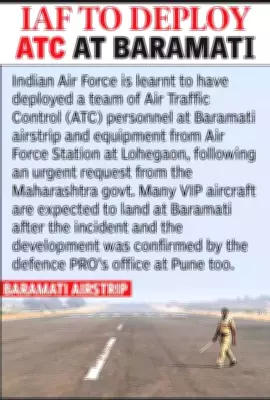
Earlier in January, on the 28th, a chartered Learjet 45XR crashed while attempting to land at Baramati Airport in Maharashtra, India. All five people on board, including former Maharashtra Deputy Chief Minister Ajit Pawar, perished in the accident. According to airport manager Shivaji Taware, the aircraft, registered as VT SSK, veered off the runway side and exploded upon impact.
Additional Aviation Tragedies in Early 2026
On 29 January 2026, a passenger plane operated by Colombia's Satena airlines, a Beechcraft 1900D, crashed in a mountainous area near the Venezuelan border. Authorities in Bogotá confirmed that all 15 people on board, including passengers and crew members, were killed in the crash.
In Indonesia, an ATR 42-500 aircraft operated by Indonesia Air Transport went missing near Makassar on 17 January 2026. The wreckage was later spotted on a mountain, confirming the crash. The turboprop aircraft was en route from Yogyakarta to the capital city of South Sulawesi when it vanished from radar, carrying 10 people—seven crew members and three passengers.
Another incident occurred on 10 January 2026 in Odisha, India, where a small private jet, a nine-seater Cessna Grand C208B operated by India One Air, crashed in Sundargarh district near Rourkela. The aircraft, flying from Bhubaneshwar to Rourkela, had six people on board—two pilots and four passengers. Fortunately, no casualties were reported, though individuals were trapped inside initially.
Implications for Aviation Safety Protocols
These incidents, spanning from wingtip grazes to fatal crashes, underscore the ongoing challenges in maintaining aviation safety across diverse conditions and aircraft types. As investigations continue into each event, aviation authorities worldwide are likely to review safety protocols, especially for private jets and operations in adverse weather conditions. The early months of 2026 serve as a stark reminder of the importance of rigorous maintenance, pilot training, and regulatory oversight in the aviation industry.