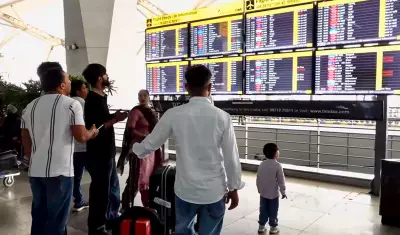
Over 100 International Flights Cancelled in Delhi and Mumbai Amid Middle East Crisis
At least 100 international flights were cancelled at India's two busiest airports, Indira Gandhi International Airport in Delhi and Chhatrapati Shivaji Maharaj International Airport in Mumbai, on Saturday. This disruption occurred as the ongoing crisis in the Middle East continued to severely impact flight operations, according to PTI reports.
Dozens of Departures and Arrivals Affected by Airspace Closures
Officials confirmed that dozens of departures and arrivals were cancelled as airlines urgently adjusted their schedules. These changes were necessitated by widespread airspace closures and restrictions across several countries in the volatile region. Specifically, airport data revealed that 35 departures and 36 arrivals were cancelled at the Mumbai airport, while 22 departures and 17 arrivals faced cancellations at the Delhi airport.
The cancellations primarily affected west-bound international flights, which typically traverse Middle Eastern airspace. Airport authorities have warned that operations may continue to experience significant disruptions. Airlines are closely monitoring the evolving geopolitical situation and are prepared to adjust routes or schedules accordingly to ensure passenger safety.
Delhi Airport Issues Warning for West-Bound Flight Delays
Delhi International Airport Limited (DIAL), the operator of Delhi airport, issued a formal warning regarding potential delays for flights heading west from the capital. In a post on social media platform X, DIAL stated that due to the current situation in the Middle East, some west-bound international flights may experience delays or schedule changes. Passengers have been strongly advised to stay updated on their flight status before travelling to the airport to avoid inconvenience.
Airlines Adapt Operations Amid Ongoing Disruptions
Despite the widespread cancellations, Air India and Air India Express announced they will continue operating scheduled flights to Jeddah and Muscat, destinations assessed as safe for operations. In a statement on X, the airlines emphasized their commitment to passenger travel, noting that additional non-scheduled flights are planned to operate to and from Abu Dhabi, Dubai, Muscat, Ras Al-Khaimah, and Sharjah on March 8 to repatriate stranded passengers back to India.
The airlines cautioned that due to the dynamic situation in West Asia, flight schedules can change at short notice. Passengers are recommended to verify their flight status on the airline's website before leaving home. Air India also confirmed that its services to Europe and North America are operating normally through safe alternative routings, ensuring connectivity despite regional challenges.
IndiGo Resumes Europe Flights and Maintains Middle East Services
Meanwhile, IndiGo announced it will continue operating flights to eight destinations in the Middle East and resume flights to Europe on March 8. In a post on X, the airline expressed understanding of customer concerns and detailed its planned operations. IndiGo highlighted that given the dynamic nature of the situation, flight schedules may change at short notice, urging customers to check their flight status before heading to the airport. The airline pledged to provide ongoing updates via its website and social media channels as the situation develops.
Regional Tensions Escalate, Impacting Global Aviation
These flight disruptions follow escalating tensions involving Iran, Israel, and the United States, which began on February 28. The conflict has significantly affected aviation across the Middle East, with several countries temporarily closing their airspace. Consequently, many airlines worldwide have cancelled flights, rerouted aircraft, or operated limited services while continuously monitoring safety conditions.
Travellers are being advised to check flight updates directly with airlines before travelling to the airport, as schedules may continue to change depending on developments in the region. The situation remains fluid, with authorities and airlines working to minimize impact while prioritizing passenger security.