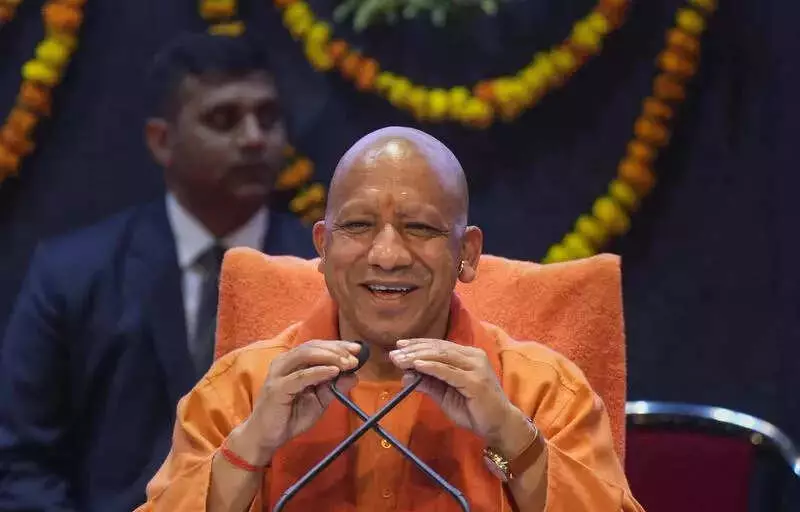
In a significant political and policy move, Uttar Pradesh Chief Minister Yogi Adityanath on Tuesday unveiled the VB-G-RAM-G scheme, positioning it as a transformative initiative for rural infrastructure and employment. Addressing a press conference at Lok Bhavan in Lucknow, the CM described the program as a milestone curated under the leadership of Prime Minister Narendra Modi.
A Visionary Scheme to Replace a "Corrupt" MNREGA
Chief Minister Yogi Adityanath launched a scathing critique of the Congress-led UPA's Mahatma Gandhi National Rural Employment Guarantee Act (MNREGA), labeling it a program infested with corruption, weak social audit, and low administrative efficiency. He presented VB-G-RAM-G as its robust successor.
The CM detailed a litany of complaints received from all districts and every gram panchayat regarding MNREGA, including the issuance of fake job cards, fake attendance, irregular wage payments, and the construction of incomplete infrastructural units. "Labourers did not get work when they needed it the most. And if they got the work, there was a problem of timely payment of wages," Adityanath stated.

Key Features and Enhanced Guarantees of VB-G-RAM-G
The new scheme promises a substantial upgrade over MNREGA's provisions, focusing on transparency, asset creation, and worker welfare. The CM outlined several core improvements:
- Increased Employment Days: The guarantee has been raised from 100 days to 125 days of employment per year.
- Weekly Wage Payments: Wages will be disbursed weekly, with interest payable in case of delays.
- Lawful Unemployment Allowance: It is now a legal right if employment is not provided.
- Harvest Season Flexibility: The state government can suspend the scheme during harvest to ensure farmers have adequate labour.
The scheme's priorities are formalized into four key areas: water conservation projects, rural infrastructure like roads and drainage, community assets like playgrounds and village markets, and works suitable for inclement weather.
Technological Transparency and Federal Balance
Adityanath emphasized that technology is integral to VB-G-RAM-G's design to eliminate fraud. The system will incorporate biometric attendance, geo-tagging, satellite imagery, real-time mobile monitoring, artificial intelligence, and digital payments. "The game of pilfering money using fake names will come to an end," he asserted.
The CM also highlighted a major MNREGA scam that came to light during the previous Samajwadi Party regime in Sonbhadra, noting that a CBI probe is still ongoing. To ensure accountability, the new Act mandates a social audit every six months, digital complaint redressal, and the appointment of a Lok Pal in every district.
Financially, the scheme establishes a federal balance with the Centre and state sharing costs in a 60:40 ratio. This structure is intended to ensure that less developed states with a larger labour force receive more funds while protecting workers' rights.
Political Show of Strength and Accusations
The press conference was also a display of political unity within the National Democratic Alliance (NDA). Allies including Apna Dal (S), SBSP, NISHAD Party, and RLD were present on stage.
Adityanath accused opposition parties of deliberately opposing VB-G-RAM-G to hide their own "agenda of corruption." He claimed they fear being asked why they never introduced a similar scheme during their tenures. "The opposition indulged in 'looting' national resources, ignoring the welfare of the poor and forcing migration of unemployed youth," he charged, adding that they are trying to stoke confusion to misguide people.
Concluding his address, the CM linked the scheme to national development. "Now, employment will not only be a means of providing relief, but it will also become the foundation for development and self-reliance," he said. He positioned VB-G-RAM-G as a cornerstone for achieving a Viksit Bharat (Developed India) by strengthening the rural economy, making farmers self-reliant, and providing social security to labour.