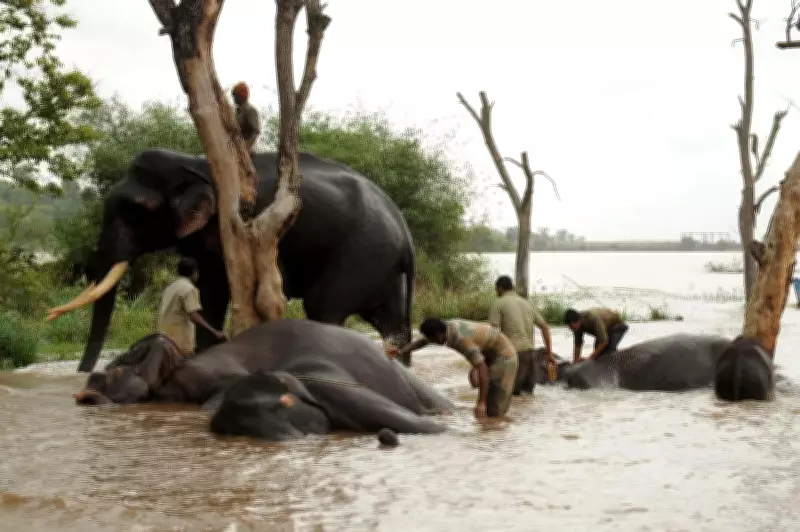
Shivamogga: The Sakrebailu Elephant Camp, situated on the banks of the Tunga River along the Shivamogga-Thirthahalli highway, is undergoing a major safety and administrative overhaul following a directive from Forest Minister Eshwar B Khandre.
Background of Incidents
Over the last five years, the camp witnessed three major scares where elephants Manikanta (twice) and Ale (once) ran rampant in tourist areas. While no casualties occurred, authorities have actively reviewed past mistakes to prevent potential tragedies.
Layout Advantage and Management Changes
Unlike the Dubare camp, where the bathing area, resting zones, and kraal (enclosure) are interconnected, Sakrebailu's layout naturally separates the kraal from the main visitor zones. Building on this advantage, camp management has stopped keeping problematic elephants with histories of infighting together, ensuring that tuskers in musth (a state of high aggression) are strictly isolated from tourists.

Current Measures for Musth Elephants
Currently, a tusker named Bahadur, which is in musth, is being safely kept in a distant kraal. Camp veterinarian Dr. Muruli Manohar emphasized, “We have strictly instructed our staff to keep musth elephants separate to eliminate any risk.” To further avoid logjams and tension among the animals, authorities have regulated the bathing routine. Out of the camp's 22 elephants, only 15 are brought to the Tunga River at any given time. Some elephants are held back in deeper waters until the preceding group vacates the area, after which they are moved to designated resting zones.
Changes for Visitors
The biggest immediate change for visitors concerns the elephant bathing activity, which previously carried an additional fee of Rs 100. Following the minister's order to restrict or halt close-contact tourist bathing for safety reasons, the Sakrebailu management is currently revising its tariff list. While forest officials acknowledge that banning or limiting tourist interaction will impact the camp's revenue, they have overwhelmingly welcomed the move, stating that prioritizing animal welfare and human safety over income is the right step forward.
Expert Opinion
Even after years, captive jumbos don't lose their natural instincts, said noted wildlife conservationist Sanjay Gubbi. He said wild animals can often be unpredictable. “Even though they may have been kept in captivity for many years, their natural instincts and traits do not disappear. There are several instances of captive elephants killing mahouts,” he said. “We must keep wildlife away from excessive tourism. Our tourism activities are often overcrowded. In such situations, whether it is tourists or elephant mahouts, it becomes very difficult to follow regulations and proper protocols. Therefore, this kind of tourism should be stopped immediately.”