New Delhi: With just two months remaining until the award period of the 15th Finance Commission concludes on March 31, a significant Rs 8,000 crore allocated for a performance-based challenge fund aimed at developing eight new cities has remained entirely unutilized for the past five years. This substantial financial resource, intended to foster planned urbanization and alleviate pressure on existing metropolitan areas, has seen no progress despite initial recommendations and proposals.
Challenge Fund Stalls Amid Evaluation Delays
Following the recommendation by the 15th Finance Commission, chaired by NK Singh, to establish a challenge fund for incubating new cities as a pilot initiative, the Ministry of Housing and Urban Affairs invited proposals from states. A total of 28 proposals were received from 23 states, reflecting widespread interest. However, the ministry has failed to finalize even a single city for development, as the evaluation process remains incomplete. An expert familiar with the matter noted, "This is one of the areas where the desired targets have not been met," underscoring the bureaucratic and procedural hurdles hindering this ambitious urban project.
Shift in Focus Towards Existing Urban Areas
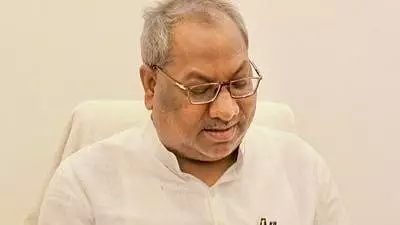
In light of these delays, attention is increasingly turning toward improving existing cities rather than creating new ones. An expert privy to the deliberations of the 16th Finance Commission, led by Arvind Panagariya, emphasized this shift, stating, "We have understood well that we need to improve our existing cities and urban areas rather than creating new ones. Naya Raipur is a live example for all of us." The recommendations of the 16th Finance Commission, which will cover the period from 2026-27 to 2030-31, are scheduled to be tabled in Parliament on Sunday, potentially signaling a renewed focus on urban rejuvenation over expansion.

Air Pollution Control Measures Lag Behind
Parallel to the challenge fund issues, progress on air pollution control in cities with populations exceeding one million has been minimal. The 15th Finance Commission designated the housing and urban affairs ministry as the nodal agency for grants to these cities, intended for initiatives such as deploying mechanical sweeping machines, promoting non-motorized transport like pedestrian and bicycle pathways, and paving road sides to facilitate water percolation. Despite these allocations, the outcomes of these measures are still awaited, with a report expected to be presented in Parliament soon, highlighting ongoing environmental challenges in urban centers.
City Bus Scheme Faces Implementation Hurdles
Further complicating urban development efforts, a scheme announced six years ago to improve city bus availability has yet to deploy a single bus. In February 2020, the government announced an Rs 18,000 crore scheme designed to facilitate the deployment of innovative public-private partnership (PPP) models, aiming to enable private sector players to finance, acquire, operate, and maintain over 20,000 buses. However, implementation has stalled, raising concerns about public transportation infrastructure.
Recent Initiatives and Persistent Gaps
The Economic Survey presented in Parliament this week highlighted the launch of the PM e-Bus Sewa scheme, which aims to strengthen city bus operations by introducing 10,000 electric buses under a PPP model. According to the survey, official status notes for FY25 report that 7,293 e-buses have been approved across 14 states and four union territories, with Rs 983.75 crore sanctioned for depots and power infrastructure, and Rs 437.5 crore already disbursed. Despite these measures, significant gaps in mass transit services persist.
The survey pointed out that the housing and urban affairs ministry recommends 40-60 buses per one lakh population, yet many cities fall far short of this benchmark. Nationally, only about 47,650 buses serve urban residents, with nearly 61% concentrated in just nine megacities. This low bus availability, combined with high private vehicle usage, reduces person throughput per lane kilometer, leading to increased congestion and longer door-to-door travel times, exacerbating urban mobility challenges.

As the 15th Finance Commission's term nears its end, the unutilized funds and stalled projects underscore the complexities of urban planning and implementation in India. With the 16th Finance Commission's recommendations on the horizon, stakeholders are hopeful for more effective strategies to address these pressing urban issues, balancing new developments with the imperative to enhance existing infrastructure for sustainable growth.