From Legal Right to Discretionary Scheme: The Rozgar Mission's Fundamental Shift
The British sitcom Yes Minister famously portrayed economic policy as being more about improving statistics than enhancing people's lives, with any negative consequences dismissed as temporary inconveniences. This cynical approach appears to have found resonance in India's recent policy shift, where the Mahatma Gandhi National Rural Employment Guarantee Act (MGNREGA) has been replaced by the Viksit Bharat Guarantee for Rozgar and Ajeevika Mission (Gramin).
Rather than representing genuine reform, this transition marks a systematic dismantling of legal protections for workers through what can only be described as death by a thousand cuts. While MNREGA certainly had administrative shortcomings that could have been addressed, the government has instead introduced a new framework that fundamentally weakens workers' rights and destabilizes state finances.
The Five Critical Flaws in the New Rozgar Mission
1. The Erosion of Legal Guarantees
Section 5 of the new legislation promises up to 125 days of employment, creating an appearance of continuity with MNREGA. However, Section 22(4) grants the Central government authority to determine state-wise budgetary allocations, fundamentally altering the nature of the program.

MNREGA operated as a demand-driven, legally enforceable right where the government was obligated to provide employment or pay unemployment allowances. The Rozgar Mission transforms this into a discretionary scheme where employment availability depends entirely on budgetary ceilings established by the Centre.
This shift becomes particularly concerning when viewed alongside the Centre's historical pattern of withholding funds from Opposition-ruled states. Previous instances include delayed Samagra Shiksha Abhiyaan allocations for Delhi, Punjab, West Bengal, Kerala, and Tamil Nadu, blocked MNREGA funds for West Bengal, and postponed National Health Mission grants for Punjab.
2. Mandatory Employment Suspension Periods
Section 6(1) of the new law introduces a mandatory 60-day suspension period each year, during which no new works can be initiated and ongoing projects must be halted. This provision has drawn criticism from international experts including the UN Special Rapporteur on Extreme Poverty and Human Rights, along with economists Joseph Stiglitz and Thomas Piketty, who have characterized it as structural sabotage of the right to work.
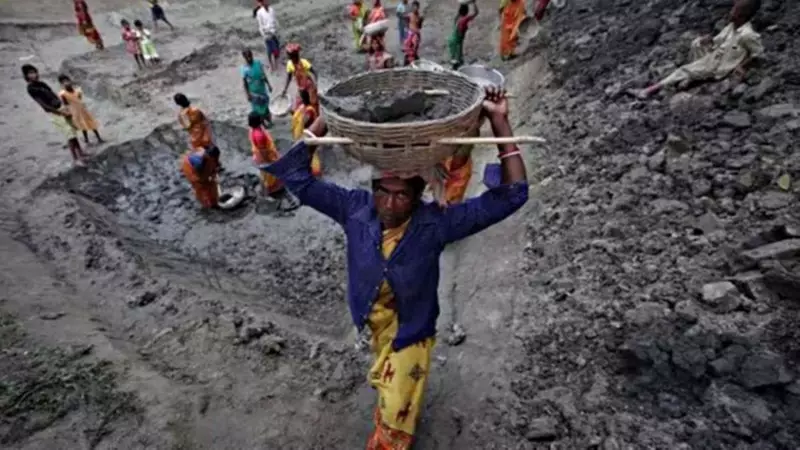
MNREGA wages previously served as a crucial wage floor that compelled private employers and contractors to offer better compensation and working conditions. The annual suspension period weakens workers' bargaining power precisely when alternative employment opportunities are scarcest, leaving them vulnerable to exploitation.
3. Financial Burden Shifting to States
The new legislation transfers significant financial responsibility to state governments, requiring them to bear 40 percent of wage costs. This translates to an additional national burden of approximately Rs 55,000 crore, imposed without adequate consultation, transition planning, or compensatory mechanisms.
The impact varies significantly across states:
- Uttar Pradesh faces an additional annual burden exceeding Rs 5,000 crore
- Bihar, West Bengal, and Madhya Pradesh each confront shocks of over Rs 4,000 crore
To contextualize these figures, the entire annual budget allocation for Ayushman Bharat stands at just over Rs 9,000 crore. This erosion of fiscal space directly compromises states' capacity to invest in critical infrastructure, healthcare, and development initiatives.
4. Coercive Federalism and Political Leverage
With states now dependent on discretionary financial packages to offset their new liabilities, the Centre gains substantial political leverage. The criteria determining which states receive relief and under what terms remain ambiguous, creating conditions where welfare considerations in Opposition-ruled states could easily be subordinated to political calculations.
This dynamic undermines constitutional balance and reduces states to administrative extensions of the central government, eroding the foundational principles of cooperative federalism that have traditionally guided Centre-state relations in India.

5. Hasty Legislative Process and Lack of Consultation
The manner of enactment raises serious procedural concerns. A two-decade-old statute affecting millions of rural workers was repealed and replaced within just three days of parliamentary debate, with no meaningful consultation with state governments, policy experts, or workers' organizations.
Such haste reflects a troubling disregard for parliamentary scrutiny and public participation in law-making processes, particularly for legislation with such profound implications for vulnerable populations.
Rebranding Policy Shifts: Substance Versus Semantics
As official narratives attempt to frame this overhaul as progressive reform, it's worth recalling another insight from Yes Minister: in government, a disaster can be transformed into a "robust realignment of priorities" through strategic renaming. In this instance, what represents a significant erosion of workers' protections has been rechristened as the Viksit Bharat Guarantee for Rozgar and Ajeevika Mission (Gramin) Act, 2025.
The transition from MNREGA to the Rozgar Mission represents more than mere administrative restructuring. It signifies a fundamental philosophical shift from rights-based entitlements to discretionary benefits, from cooperative federalism to centralized control, and from worker protections to financial expediency. The cumulative impact of these changes disproportionately affects India's most vulnerable workers, particularly Dalits, Muslims, and women, while simultaneously weakening the constitutional framework of federal governance.