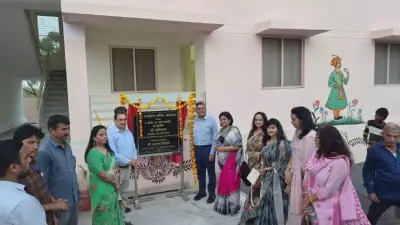
Odisha Forges Historic Partnership for Marine Spatial Planning
In a landmark development for coastal governance, the Odisha government on Thursday entered into a Memorandum of Understanding (MoU) with the Union Ministry of Earth Sciences to implement a comprehensive Marine Spatial Plan (MSP). This pioneering initiative represents the first state-level rollout of such a program in India and aims to revolutionize how marine and coastal resources are managed while simultaneously boosting the state's blue economy.
Signing Ceremony and Key Participants
The formal agreement was signed at Lok Seva Bhavan in Bhubaneswar between the Odisha Science and Technology Department and the National Centre for Coastal Research (NCCR), which operates under the Ministry of Earth Sciences. The ceremony was graced by the presence of Chief Minister Mohan Charan Majhi, who emphasized the transformative potential of this collaboration.
The official signatories were Additional Secretary of Science and Technology Pooja Mishra representing the state government and NCCR Director R S Kankara representing the central research institution. Senior officials from both governments, along with representatives from the Norwegian government, witnessed this significant moment in Odisha's environmental and economic planning.

Chief Minister's Vision for Coastal Development
Chief Minister Majhi described the Marine Spatial Plan as a "game changer" for coastal governance that would establish new benchmarks in integrated marine planning. "MSP will not only strengthen the blue economy but also set a new benchmark in integrated coastal and marine planning," he declared during the ceremony.
The chief minister outlined how this initiative would promote diverse economic activities including:
- Fisheries development and management
- Coastal and marine tourism expansion
- Port infrastructure optimization
- Ocean energy exploration and utilization
Majhi emphasized that Odisha's 480-kilometer coastline and rich marine biodiversity play a critical role in supporting livelihoods and driving economic growth. However, he noted that increasing development pressures and competing sectoral demands have made scientific, coordinated planning absolutely essential for sustainable progress.
Strategic Context and International Collaboration
Officials revealed that the Marine Spatial Plan initiative is part of a broader sustainable ocean planning program that represents a collaborative effort between India and Norway dating back to 2019. While the first phase was implemented in Puducherry and Lakshadweep, Odisha has now become the first state to launch the program during its second phase of expansion.
Chief Minister Majhi specifically thanked the Norwegian government for providing crucial technical support and acknowledged the central government's role in facilitating Odisha's inclusion in this important international program. Deputy Ambassador of the Royal Norwegian Embassy Arvinn Gadgil affirmed Norway's commitment to supporting Odisha through technology-driven resource management, citing the state's extensive coastline and rich maritime trade heritage as ideal conditions for implementing advanced marine planning.
Complementary Initiatives and Long-Term Vision
The chief minister connected the Marine Spatial Plan to the previously launched Odisha Marine Biotechnology Research and Innovation Corridor (OMBRIC), which was established in August of last year. He explained that OMBRIC would complement MSP by promoting marine biotechnology applications for both environmental protection and economic development, creating a comprehensive approach to marine resource management.
Looking toward the future, Majhi linked this initiative to Odisha's broader development goals, stating that strong coastal economic development combined with robust environmental safeguards would be crucial to achieving the state's vision of a prosperous Odisha by 2036 and contributing to India's goal of becoming a developed nation by 2047.

Expert Perspectives on Marine Planning
Science and Technology Minister Krushna Chandra Patra highlighted the NCCR's reputation as a premier institution in marine research that has developed significant economic models for marine conservation and resource utilization. "The department will extend full support for the successful implementation of MSP," he pledged, underscoring the state government's commitment to the program's success.
Chief Secretary Anu Garg characterized MSP as a significant step toward optimal utilization of marine resources while simultaneously addressing climate and environmental challenges that threaten coastal ecosystems.
Earth Sciences Secretary M Ravichandran emphasized that sustainable growth aligned with India's Vision 2047 would require climate-resilient planning across all sectors, with Marine Spatial Planning playing a pivotal role in shaping a sustainable blue economy that balances economic development with ecological preservation.
This comprehensive approach to marine governance represents a forward-thinking strategy that positions Odisha at the forefront of sustainable coastal development in India, potentially serving as a model for other coastal states seeking to balance economic growth with environmental stewardship.