Namo Bharat RRTS Revolutionizes Travel Between Meerut and Delhi
The inauguration of the complete 82-kilometer Namo Bharat Regional Rapid Transit System (RRTS) corridor has dramatically transformed the commute between Meerut and Delhi, reducing travel time to a mere 55 minutes. This significant infrastructure achievement is fundamentally altering how residents plan their lives, work, and leisure activities, effectively collapsing a distance that has historically influenced urban living patterns for decades.
Immediate Impact on Daily Commutes and Lifestyle Choices
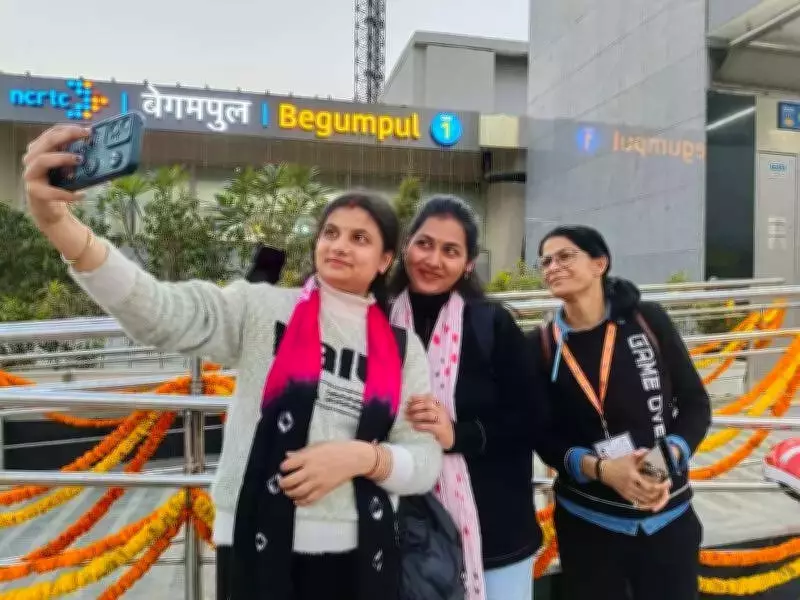
As the Namo Bharat train departed from Begumpul station, the transition was instantaneous. The doors closed seamlessly, and the urban sprawl of Meerut quickly gave way to expansive fields and modern flyovers. Inside the train, passengers acclimated to a system they had observed under construction for seven years, marked by dust, detours, and the monumental task of lifting heavy concrete spans into position.
Sanyukta Tyagi, a 39-year-old passenger traveling from Dorli to Muradnagar for a family event, reflected on the prolonged building phase. "There was dust, incessant digging, and blockades as cranes lifted tonnes of material to erect this infrastructural giant. Today, I am traveling on it. It's a dream come true," she expressed. With her son preparing for Class X board exams, Tyagi noted that she would not have considered this trip previously. "My son is taking Class X boards; if it was not for the train, I wouldn't have taken this trip. I will return in about 1 or 2 hours after spending time at my parents' home. It all happens in the blink of an eye," she added.

Enhanced Safety and Convenience for Students and Professionals
Surrounding Tyagi, first-time riders compared ticket prices while office-goers calculated the additional time they could now spend at home. For many, the commute between Meerut and Delhi—long characterized by traffic congestion and unreliable bus services—has become more structured and predictable.
Gargi Singh, a 22-year-old pursuing a master's degree in philosophy from Miranda House in Delhi's north campus, highlighted how the train addressed persistent safety issues. "I traveled using a carpool where I shared rides with strangers. Safety was always a concern, and I had to remain alert constantly. But now, that's a thing of the past. This is a much faster, secure, comfortable, and classy ride," she stated.
Deepanshi Kansal, a 24-year-old IT professional, shared that she had been contemplating a move to Delhi due to the strenuous daily commute. "Even for Delhiites, traveling to work within the capital takes at least an hour, navigating through red lights and traffic jams. The same amount of time—55 minutes—I take to reach Delhi from Meerut, so why will I pay for rented accommodation? It saves both time and money," she explained, echoing sentiments expressed by Prime Minister Modi during the corridor's flag-off ceremony.
Fare Concerns Among Long-Time Commuters
Despite the benefits, some regular commuters raised concerns about affordability. Kuldeep Sharma, a 54-year-old lawyer residing in Meerut and practicing at Patiala Court in Delhi, compared the new fares with the Indian Railway daily passenger train he had used for 28 years. "The monthly pass for the old train comes at a nominal price of Rs 355. In contrast, the Namo Bharat will cost a little over Rs 400 for a round trip per day. Spending close to Rs 10,000 a month is simply not affordable for a daily commuter," he remarked. Sharma suggested that even with a 10% discount on monthly cards, the expense remains high, and reducing it to around Rs 3,000 monthly could encourage broader adoption.
Expanding Leisure and Social Opportunities
Beyond work-related travel, riders also discussed enhanced leisure possibilities. Tyagi mentioned planning a kitty party in Delhi next month, coupled with shopping at Rajouri Market once her son's board exams conclude. Pasil Mirza, a 24-year-old self-employed individual, noted that outings to Delhi previously required dedicating an entire day. "Now things are different. You can leave Meerut at 5 pm and easily board a 10 pm train to return," he said, underscoring the newfound flexibility.

The Namo Bharat RRTS represents a pivotal shift in regional connectivity, offering faster, safer, and more reliable transportation. While it promises to reshape daily routines and economic dynamics, addressing fare affordability will be crucial to ensuring its long-term success and widespread usage among all commuter segments.