Sharp Decline in MNREGS 100-Day Employment Recorded in Uttar Pradesh
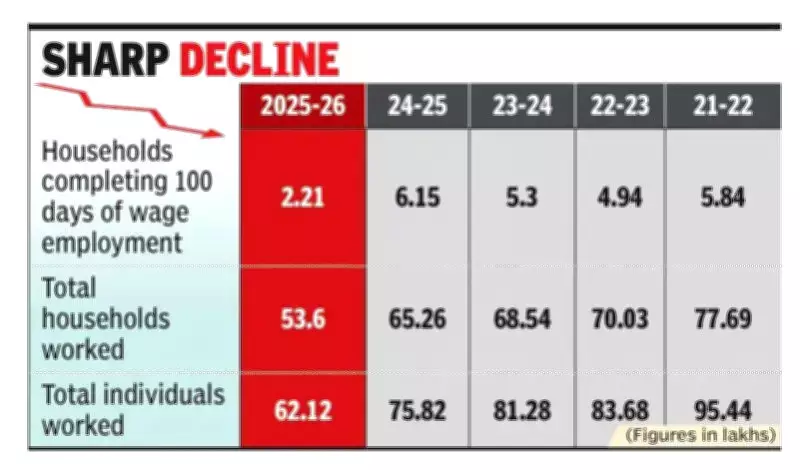
Data from the rural development department reveals a concerning trend in Uttar Pradesh's employment landscape. The number of households completing 100 days of work under the Mahatma Gandhi National Rural Employment Guarantee Scheme (MNREGS) has plummeted by nearly 65% during the 2025-26 fiscal year.
Five-Year Low in Employment Figures
According to statistics current as of March 31, the count of households achieving the full 100-day employment quota dropped dramatically from approximately 6.15 lakh in 2024-25 to just over 2.21 lakh in 2025-26. This represents the lowest figure recorded across the past five fiscal periods, signaling a significant contraction in the scheme's reach and effectiveness.
The decline occurs during a pivotal transition period as the program undergoes restructuring under the Viksit Bharat — Guarantee for Rozgar and Ajeevika Mission - Gramin (VB-G RAM G) framework. This new initiative promises to expand guaranteed employment from 100 to 125 days per household, yet current implementation challenges appear substantial.

Broader Employment Contraction Beyond Full Quota
A detailed examination of the numbers indicates the problem extends beyond just households completing the maximum work duration. The total number of households accessing any employment under MNREGS fell by approximately 18%, declining from 65.26 lakh in 2024-25 to 53.6 lakh in 2025-26.
Similarly, the number of individual workers engaged dropped from 75.82 lakh to 62.12 lakh, reflecting a comparable reduction in overall participation. This downturn occurred despite an increase in notified daily wages from Rs 237 to Rs 252 during the fiscal year.
"The wage hike appears to have had minimal impact on participation levels," noted employment analysts. "This suggests that availability of work opportunities, rather than wage rates, remains the primary constraint affecting rural employment under the scheme."
Funding Delays Disrupt Employment Cycle
A senior official from the rural development department attributed the sharp decline primarily to delays in the release of central government funds, which severely disrupted the execution cycle of employment generation activities.
"Administrative priorities shifted toward ensuring timely wage payments rather than generating additional man-days," the official explained, highlighting how financial constraints reshaped operational focus.
Sources familiar with the implementation process revealed that funds arrived in fragmented tranches, creating liquidity stress at the state level. This financial pressure forced implementing agencies to prioritize clearing pending wage liabilities to avoid legal complications, including compensation claims for delayed payments mandated under the MNREGS Act.
Cautious Approach Limits New Work Generation
The funding constraints directly impacted employment generation capacity. Field-level functionaries, operating under tight financial conditions, reportedly adopted a cautious approach when sanctioning new work projects.
Consequently, while many households continue accessing the scheme, they receive shorter work durations that reduce the likelihood of completing the full 100-day entitlement. Analysts emphasized that the decline in 100-day employment reflects administrative constraints rather than improvements in rural prosperity.
"The data reveals a widening gap between policy intent and actual delivery," observed rural development experts. "As the scheme transitions to the VB-G RAM G framework with expanded employment guarantees, addressing these implementation challenges becomes increasingly urgent."