India's flagship rural employment guarantee scheme, a critical safety net for millions, is undergoing a significant transformation. Originally launched in 2006 when the nation's economy was under $1 trillion, the program is being re-launched with a new name and structure for an India that is now a $4 trillion economy. While the revised version promises more work days, concerns are mounting that its foundational principle of universality could be compromised by proposed changes.
The Core Promise: Universality at Risk
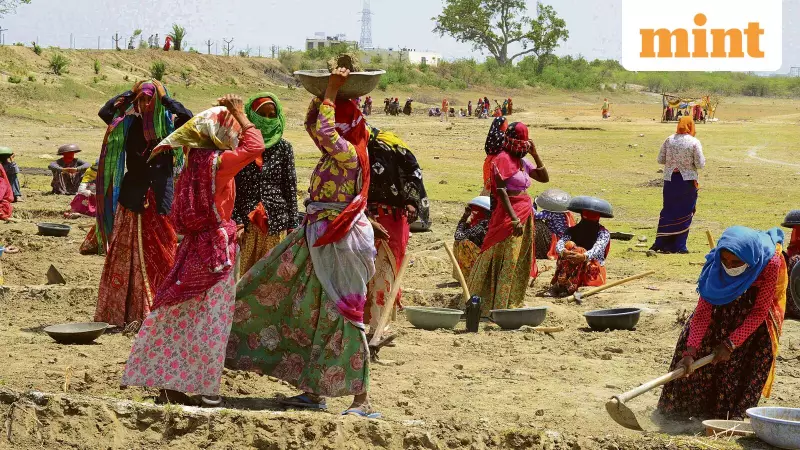
The Mahatma Gandhi National Rural Employment Guarantee Act (MGNREGA) was designed as a powerful tool for poverty alleviation. Unlike direct food aid, its genius lay in offering an open-ended job guarantee, putting money directly into the hands of rural households by providing a legal right to 100 days of wage labor per year on demand. The rejigged scheme is set to increase this annual limit to 125 days. However, analysts argue that for the scheme to truly uphold its universal mandate, it should ideally have no cap at all. This universality has been its biggest conceptual strength, turning the state into an employer of last resort and setting a nationwide floor for wages.
The 60-Day Calendar Gap: A Step Backward?
One of the most debated changes is the proposed enforcement of a 60-day suspension during farming seasons. This policy, intended to ensure labor availability for agricultural work, is now facing calls for a serious rethink. The original scheme's year-round operation played a crucial role in stabilizing rural wages. By providing a constant, centrally-funded alternative, it prevented the exploitation of farm laborers and forced private employers to offer competitive, fair wages. Introducing a two-month gap risks eroding this gain and could create a window where the national labor code's minimum pay standards are more easily violated.
Funding and the Burden on States
Another potential pitfall lies in the revised funding mechanism. The new model envisages a more diffused burden-sharing with state governments. While fiscal federalism is important, critics warn that this approach could weaken the all-India promise of a job on demand. If state coffers run dry or allocations become patchy, the guarantee—which is the scheme's backbone—could become unreliable, varying from one state to another. This undermines the uniform social security net it was meant to be.
The government's efforts to rework the social safety net are acknowledged, and the increase in work days is a positive step. However, as India aims for a 'Viksit Bharat' (Developed India), the debate on welfare must intensify alongside GDP growth. The evolution of such a pivotal scheme should be guided by a broad national consensus, ensuring its core promise of universal employment security is not diluted. The need of the hour is to strengthen the architecture of rural job assurance, not create conditions that may fracture its foundational guarantee.