The Mizoram government has completed work on a crucial draft for a new rural employment scheme that promises more work days for households. The draft, named the 'Mizoram Viksit Bharat – Guaranteed Rozgar & Ajeevika Mission (Gramin) Scheme, 2026', is now set to be presented before the state legislative assembly during its upcoming budget session in February.
Minister Announces Final Draft
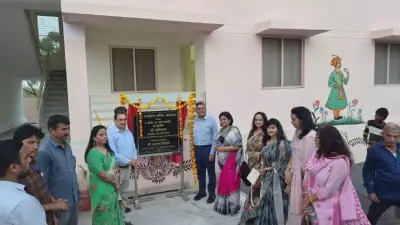
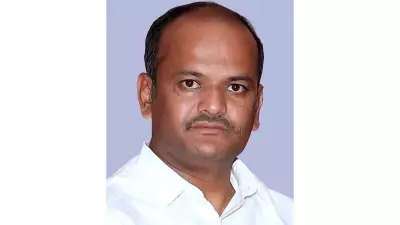
State Rural Development & Administration Minister, Prof. Lalnilawma, made the announcement on Tuesday. He revealed the information while speaking at a consultation and training program focused on the recently enacted Viksit Bharat – Guaranteed Rozgar & Ajeevika Mission (Gramin) Act, 2025 (VB–G RAM G Act 2025). This new national law, passed by Parliament, replaces the older Mahatma Gandhi National Rural Employment Guarantee Act (MGNREGA) from 2005.
Key Upgrades and Provisions
Additional Secretary of the RD&A department, V. Lalengmawia, detailed the significant improvements in the new legislation. He stated that while the previous MGNREGA guaranteed 100 days of wage employment per rural household each year, the new VB–G RAM G Act raises this entitlement substantially. Households will now be guaranteed 125 days of work annually.

A major shift is also happening in how the wages are funded. Under the old MGNREGA, the central government provided 100% of the wage component. Now, the cost will be shared between the Centre and the state in a 90:10 ratio, with the central government bearing the larger share.
New Planning and Allocation Framework
Lalengmawia explained that the central government will decide on state-specific fund allocations every financial year. These decisions will be based on objective criteria that are yet to be formally prescribed. The Act also introduces specific safeguards for the agricultural sector.
Provisions are included to ensure enough farm labor is available during critical harvesting seasons, for a period of up to 60 days in a financial year. This move aims to prevent labor shortages that could impact farmers' livelihoods.
The planning process under the new scheme will be more integrated. Proposed employment plans must first be made a part of the Viksit Gram Panchayat Plan. These plans then need approval at both the block and district levels before finally receiving the state government's nod.
Only after clearing all these stages will the employment plans be incorporated into the central Viksit Bharat National Rural Infrastructure Stack, Lalengmawia added, highlighting the streamlined but multi-layered approval process designed for the new regime.