Official data presented to a parliamentary committee has revealed a significant gap in the implementation of the Mahatma Gandhi National Rural Employment Guarantee Act (MGNREGA). The information shows that less than 8% of households that received any work under the scheme managed to get the full quota of 100 days of employment in the last three financial years.
Key Findings on Employment Days and Beneficiaries
The government presentation stated that the average days of employment provided per household hovered around 50 days over the last three fiscal years. For the ongoing financial year (2024-25), the average currently stands at 36 days, a figure expected to rise as the year concludes.
In terms of absolute numbers, an estimated 5.8 crore families received employment in 2024-25, nearly 6 crore in 2023-24, and 6.2 crore in 2022-23. However, the number of households that actually secured 100 days of work was starkly lower: roughly 40.7 lakh (7%) in 2024-25, 45 lakh (7.5%) in 2023-24, and 36 lakh (5.8%) in 2022-23.

High Participation from SC/ST and Women Workers
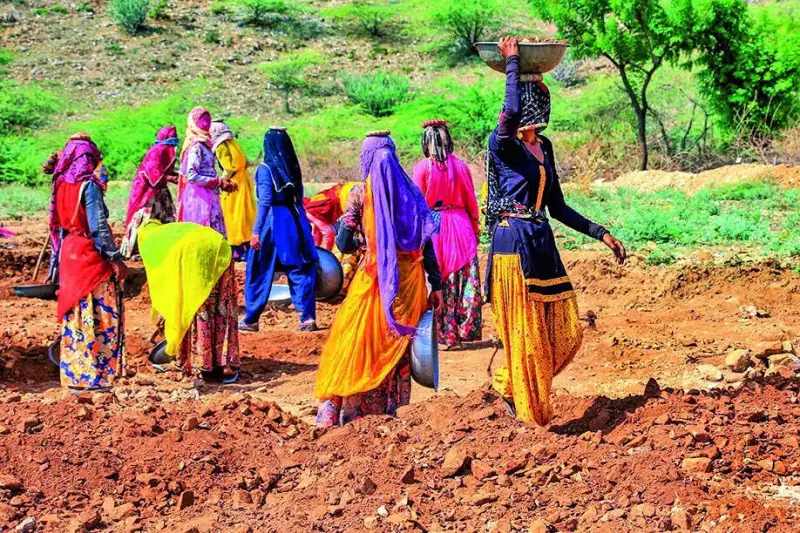
A positive highlight from the data is the high participation rate of marginalized communities and women. The share of Scheduled Caste and Scheduled Tribe workers in the scheme is over 36%, while women constitute more than 56% of the workforce in the current fiscal year. These figures are notably higher than their respective shares in the general population and have remained consistent over the past three years.
Parliamentary Debate and Implementation Gaps
The deliberations in the committee, chaired by Congress MP Saptagiri Ulaka, saw political differences surface. Congress members attributed the shortfall to reduced funding and delays in releasing money. BJP members, on the other hand, raised concerns about financial irregularities in certain states.
The government, while piloting the discussion on the new VB-G RAM G Act, acknowledged monitoring gaps in MGNREGA. These included instances where work was not found on the ground, expenditure did not match physical progress, machines were used in labour-intensive works, and digital attendance systems were frequently bypassed. The government stated that the new legislation aims to address these issues with a comprehensive reset of the implementation framework.
In a separate meeting, the parliamentary committee on defence, chaired by BJP MP Radha Mohan Singh, reviewed resettlement and healthcare for ex-servicemen. Leader of Opposition in Lok Sabha, Rahul Gandhi, highlighted the difficulties retired personnel face in accessing medical care at private hospitals due to pending government dues. He also advocated for increasing the financial assistance for ex-servicemen battling serious diseases like cancer.