Solar Industry Raises Alarm Over Maharashtra's New Rooftop Capacity Restrictions
The solar energy sector in Maharashtra has voiced strong objections to what it describes as new and arbitrary restrictions on rooftop solar capacity approvals. Industry representatives warn that this policy shift will disproportionately affect domestic and small consumers while potentially stalling future expansion of renewable energy across the state.
Formal Complaint Filed with Central Ministry
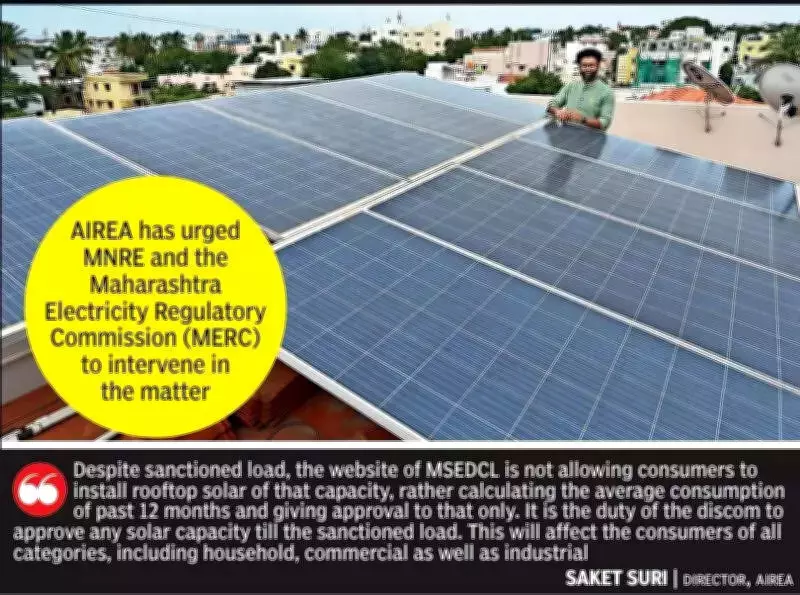
In a formal representation, the All India Renewable Energy Association (AIREA) has written to the Ministry of New and Renewable Energy (MNRE), seeking urgent intervention regarding what it calls an "arbitrary" policy change implemented by the Maharashtra State Electricity Distribution Company Limited (MSEDCL). According to industry sources, since February 13, solar vendors have been unable to obtain approvals for higher rooftop solar capacities that match consumer demand.
How the Approval Process Has Changed
Previously, households could install solar systems based on their sanctioned electrical load, which was approved by MSEDCL itself, along with anticipated future requirements. However, approvals are now reportedly restricted based solely on the average electricity consumption of the previous 12 months. The industry claims this significant change was introduced without any official circular or stakeholder consultation.

"This new rule is affecting 50-60% of booked residential solar projects across Maharashtra," stated AIREA representatives. The decision particularly impacts small households and middle-class consumers who plan to increase their electricity usage in the future by purchasing electric vehicles, air conditioners, or other appliances. Many families that previously limited consumption due to high power tariffs now find themselves unable to install larger solar systems to meet their expected needs.
Industry Leaders Voice Concerns
AIREA director Saket Suri expressed frustration with MSEDCL's approach, noting that the state-owned utility already charges among the highest power tariffs in the country. "Despite having a sanctioned load, MSEDCL's website is not allowing consumers to install rooftop solar of that capacity. Instead, it calculates only the average consumption of the past 12 months and grants approval based on that alone," Suri explained. "It is the duty of the distribution company to approve any solar capacity up to the sanctioned load. This will affect consumers across all categories, including household, commercial, and industrial."
Multiple Consumer Groups Impacted
The association highlighted that newly-constructed homes are among the worst-affected groups. With minimal consumption history, such households are granted approvals for very small capacities despite having sufficient rooftop space and sanctioned load for larger installations. AIREA warned this could discourage solar adoption at a time when rooftop solar is gaining significant momentum in Maharashtra.
Power and solar expert Sudhir Budhay noted that the new restriction contradicts existing regulatory principles. "For billing purposes, demand charges are levied on sanctioned load, but for solar approvals, only past consumption is being considered. This goes against net metering provisions and the Electricity Act, which allows consumers to generate power for their own use," he explained. Budhay added that the move effectively punishes energy-efficient households, as families that reduced usage through efficient appliances now risk receiving smaller solar approvals, limiting their ability to scale up their renewable energy generation.
Additional Concerns and Industry Demands
The association also expressed concern over reports that multiple solar installations on a single rooftop are being discouraged in some areas, affecting joint families living on the same premises with separate electricity meters.
AIREA has urged both MNRE and the Maharashtra Electricity Regulatory Commission (MERC) to intervene immediately. The association stated that the sudden cap on capacity expansion will:

- Slow rooftop solar adoption across Maharashtra
- Impact vendors' business commitments and investments
- Increase dependence on costly grid power for domestic and small consumers
- Potentially undermine India's renewable energy targets
Official Response and Next Steps
Senior officials from MSEDCL have told media outlets that they will look into the issues raised by industry stakeholders. However, no timeline has been provided for resolving the concerns, leaving thousands of solar projects in limbo across Maharashtra as the state's renewable energy sector faces this unexpected regulatory hurdle.