Maharashtra Secures Highest Disaster Grant Under 16th Finance Commission
In a significant development, Maharashtra has been allocated the highest disaster-related grant under the Sixteenth Finance Commission, amounting to Rs 39,492 crore over the next five financial years. This substantial allocation underscores the state's elevated Disaster Risk Index, which measures potential losses from calamities such as floods, droughts, heatwaves, and lightning.
Understanding the Disaster Risk Index
The Disaster Risk Index is a composite metric that evaluates how severely a state might be impacted by disasters. It is calculated based on three key factors: the hazard level of various disasters, the exposure of populations to these hazards, and the vulnerability of people and assets, often assessed through per capita income. A higher DRI indicates a greater risk of damage and loss during extreme events.
Maharashtra's DRI stands at 182.2, ranking it third nationally, behind Bihar at 224.2 and Uttar Pradesh, which leads with a DRI of 413.2. Within Maharashtra's score, the hazard component is 11.91, exposure is 14, and vulnerability is 1.093, highlighting the significant risk to its population and assets despite relatively higher income levels.

Why Maharashtra Received the Largest Allocation
Interestingly, even though Uttar Pradesh has a much higher DRI, Maharashtra secured the top grant due to the allocation formula used by the Sixteenth Finance Commission. The commission allocated 70% of funds based on a state's average disaster-related expenditure from 2011-12 to 2023-24, excluding the Covid-19 years, and 30% based on the Disaster Risk Index. Maharashtra's consistent high spending on disaster response, driven by recurrent floods, droughts, and urban climate events, played a crucial role in this outcome.
Following Maharashtra, other states received allocations as follows: Uttar Pradesh with Rs 20,428 crore, Bihar with Rs 18,153 crore, Madhya Pradesh with Rs 15,596 crore, Rajasthan with Rs 12,281 crore, and Odisha with Rs 11,866 crore.
Distribution and Use of Funds in Maharashtra
Of Maharashtra's total grant, Rs 31,597 crore, or 80%, will be directed to the State Disaster Response Fund, while the remaining Rs 7,895 crore, or 20%, will go to the State Disaster Mitigation Fund. The annual allocation is set to increase by 5% each year, starting from Rs 7,147 crore in 2026-27 and rising to Rs 8,689 crore by 2030-31. These funds can be used flexibly for immediate disaster response, relief, recovery, and reconstruction efforts.
Expanded Scope of Disaster Risk Assessment
The Sixteenth Finance Commission has broadened the hazards considered in the Disaster Risk Index calculation. While the previous commission focused on four calamities—floods, droughts, cyclones, and earthquakes—the current one includes ten types, such as landslides, hailstorms, cold waves, and cloudbursts. It also factors in state-specific disasters like heatwaves and lightning, recommending their inclusion in the national list of notified disasters under the SDRF framework.
Past Utilization of Disaster Funds
In determining allocations, the commission reviewed how states spent disaster funds in the previous cycle. Data from the National Disaster Management System shows that between 2019-20 and 2023-24, the largest share of expenditure across states was on floods, followed by droughts, state-specific disasters like heatwaves and lightning, and cyclones. In Maharashtra, official data indicates that Rs 4,176.80 crore was utilized under the SDRF in 2025-26, with Rs 3,978 crore released in 2024-25.
Rising Climate Stress in Maharashtra
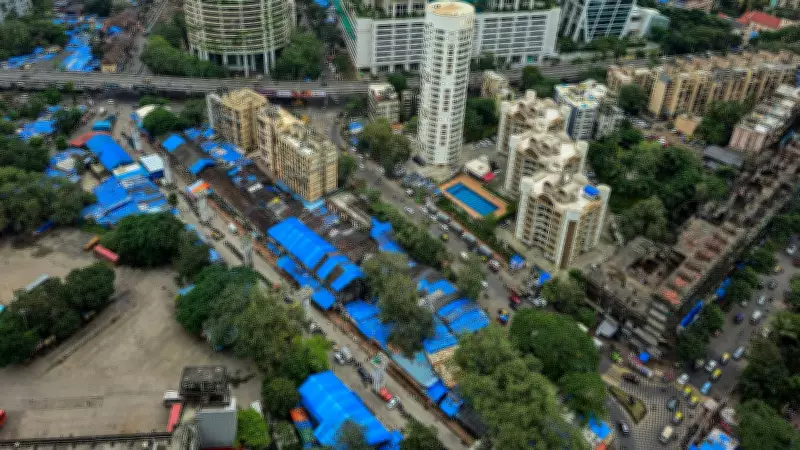
The high DRI and corresponding grant allocation come amid intensifying extreme weather events in Maharashtra, especially in urban areas like Mumbai. Recent years have seen challenges such as high-intensity rainfall causing urban flooding and prolonged heatwaves. Data from the Brihanmumbai Municipal Corporation reveals that over the past six years, the average intensity of heavy rainfall increased to 182 mm, up from 131 mm in the previous five-year period.

The Mumbai Climate Action Plan, released in 2022, notes a clear warming trend in the city from 1973 to 2020. Projections by NOAA and Climate Lab estimate that by 2040, nearly 60% of days in Mumbai could be high heat days, increasing risks to public health, infrastructure, and livelihoods.
These trends highlight why Maharashtra, despite not having the highest DRI, has become the largest recipient of disaster grants. The Finance Commission's approach aligns historical spending patterns with the growing reality of climate-driven risks, ensuring preparedness and resilience in the face of escalating disasters.