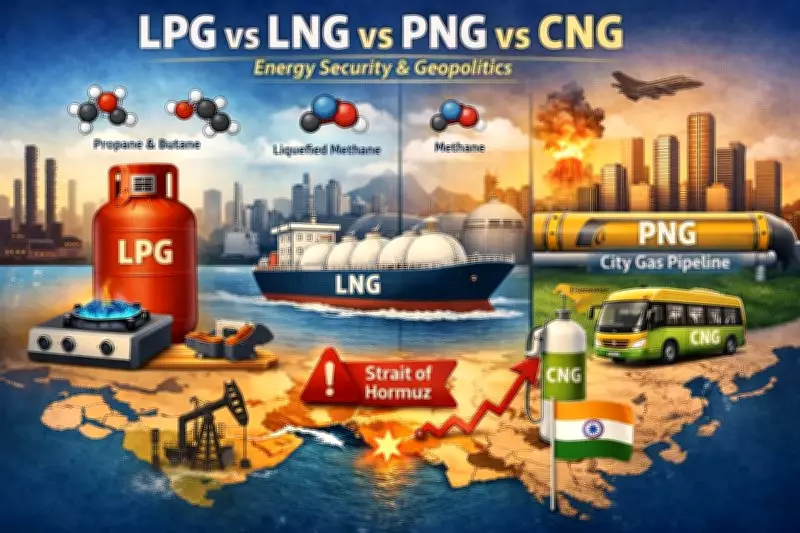
LPG vs LNG vs PNG vs CNG: A Comprehensive Guide to Gaseous Fuels
In today's volatile global landscape, understanding the key gaseous fuels—Liquefied Petroleum Gas (LPG), Liquefied Natural Gas (LNG), Piped Natural Gas (PNG), and Compressed Natural Gas (CNG)—is crucial for energy security and economic stability. This analysis delves into their scientific composition, diverse uses, cost implications, and strategic importance, particularly in the context of India's energy scenario and geopolitical tensions.
Scientific Composition: The Fundamental Differences
LPG (Liquefied Petroleum Gas): Primarily composed of propane (C₃H₈) and butane (C₄H₁₀), LPG is derived as a byproduct during crude oil refining. It is stored in liquid form under moderate pressure for easy transport and use.
LNG (Liquefied Natural Gas): Consisting mainly of methane (CH₄), LNG is natural gas that has been cooled to an extremely low temperature of −162°C to convert it into a liquid state. This liquefaction process reduces its volume, making it efficient for long-distance shipping and storage.

PNG (Piped Natural Gas): Also based on methane (CH₄), PNG is supplied in gaseous form directly to consumers through an extensive network of pipelines. It eliminates the need for cylinders and offers a continuous supply for domestic and industrial applications.
CNG (Compressed Natural Gas): Like PNG, CNG is primarily methane (CH₄), but it is compressed to high pressures of 200–250 bar and stored in cylinders. This form is specifically designed for use as a fuel in vehicles, providing a cleaner alternative to traditional petrol and diesel.
Key insight: While LNG, PNG, and CNG all originate from natural gas and share methane as their base component, they differ significantly in their physical states—liquid versus gas—and delivery mechanisms, which dictate their specific applications and infrastructure requirements.
Usage Spectrum: Where Each Fuel Dominates
LPG: The Household Energy Anchor
- Widely utilized for cooking in both rural and urban households across India and other developing nations.
- Its portability and independence from pipeline networks make it accessible in remote areas.
- Also used in heating, refrigeration, and as a fuel for certain industrial processes.
LNG: The Backbone of Global Energy Trade
- Primarily employed in power generation plants, fertilizer production, and heavy industries.
- Enables international natural gas trade via specialized tankers, connecting producers with consumers worldwide.
- Serves as a flexible energy source that can be transported across oceans, reducing regional supply dependencies.
PNG: The Convenience Fuel for Urban Areas
- Supplied through underground pipelines for domestic cooking, heating, and industrial use.
- Eliminates the logistical challenges and safety concerns associated with cylinder handling and storage.
- Promotes energy efficiency and reliability in densely populated urban centers.
CNG: The Clean Transport Fuel
- Extensively used in vehicles such as cars, buses, auto-rickshaws, and trucks.
- Plays a critical role in reducing urban air pollution by emitting fewer pollutants compared to conventional fuels.
- Supports public transportation systems and personal mobility with a lower environmental footprint.
Economic Comparison: Cost, Efficiency, and Infrastructure
LPG: Involves moderate costs but requires extensive logistics for cylinder distribution, often supported by government subsidies to ensure affordability for households.
LNG: Demands high upfront investments in liquefaction facilities, specialized shipping vessels, and regasification terminals. However, it offers cost-efficiency for bulk, long-distance transportation and trade.
PNG: Provides cost-effective energy for consumers once the pipeline infrastructure is established, though it necessitates significant capital expenditure for network development and maintenance.

CNG: Generally cheaper than petrol and diesel, making it an economical choice for daily commuters and fleet operators. The infrastructure includes compression stations and dispensing units at fuel stations.
Bottom line: CNG is the most economical option for transportation, PNG offers the lowest costs for piped household energy, LNG is the most tradable fuel globally, and LPG remains the most universally accessible due to its portability.
Energy Security: Strategic Importance in a Volatile World
Energy security, defined as uninterrupted, affordable, and sustainable energy access, is bolstered by each of these fuels in distinct ways:
LNG: A Geopolitical Game-Changer
- Allows countries to diversify their energy suppliers, reducing reliance on pipelines controlled by specific nations.
- Acts as a transitional fuel toward cleaner energy sources, supporting global climate goals.
- Enhances flexibility in energy procurement, mitigating risks from regional conflicts or supply disruptions.
LPG: A Tool for Social Security
- Ensures access to clean cooking solutions, particularly in developing regions, thereby reducing health hazards associated with traditional biomass fuels.
- Supports energy equity by providing a reliable fuel source for households without pipeline access.
PNG: A Mechanism for Urban Stability
- Offers a continuous and reliable energy supply, minimizing logistical risks and enhancing resilience in urban infrastructure.
- Contributes to energy efficiency and reduces the carbon footprint of cities through direct pipeline delivery.
CNG: A Lever for Environmental Security
- Significantly cuts vehicular emissions, helping nations meet their climate commitments and improve air quality.
- Promotes sustainable transportation systems, aligning with global efforts to combat pollution and climate change.
Geopolitical Disruptions: Impact of Conflicts Like Iran Tensions
Geopolitical tensions, such as those involving Iran, have profound implications for global energy markets:
Strategic Chokepoint Risks: The Strait of Hormuz handles a substantial portion of global oil and gas shipments. Any disruption in this region can impede LNG shipping routes, leading to increased global energy prices and supply uncertainties.
Price Volatility: Surges in LNG prices directly affect the costs of PNG and CNG, while rises in crude oil prices elevate LPG expenses. This volatility impacts consumer budgets and industrial operations worldwide.
Supply Diversification Pressure: In response, countries are increasingly shifting toward alternative LNG exporters, investing in renewable energy sources, and enhancing domestic production capabilities to reduce dependency on volatile regions.
India's Energy Scenario: Direct and Indirect Impacts
As a major energy importer, India faces specific vulnerabilities and strategic responses:
Rising Energy Bills: Higher LNG prices increase electricity and fertilizer costs, while LPG subsidies place a growing burden on government finances. This, in turn, affects household and industrial expenses.
Impact on Consumers: Prices for PNG and CNG rise due to India's dependency on imported natural gas, leading to increased transport and household costs. This underscores the need for diversified energy sources.
Strategic Responses: India is actively expanding its City Gas Distribution (CGD) networks to boost PNG and CNG availability, signing long-term LNG contracts to secure stable supplies, and accelerating investments in renewable energy capacity, such as solar and wind power.
Long-Term Energy Security: Efforts include diversifying energy suppliers, building strategic petroleum reserves, and promoting innovations like green hydrogen to ensure sustainable and resilient energy access for the future.
Why This Topic Matters for Civil Services Aspirants
This analysis is highly relevant for UPSC and other competitive exams:
General Studies (GS Paper III): Covers critical themes such as energy security, economic development, environmental sustainability, and infrastructure planning. It links static scientific concepts with dynamic global events, providing a holistic understanding.
Essay Relevance: Useful for essays on topics like "Energy Security in a Geopolitically Unstable World" or "Clean Energy Transition and India's Future," offering factual depth and interdisciplinary insights.
Answer Writing Edge: Helps aspirants build comprehensive and nuanced answers by integrating scientific, economic, and geopolitical perspectives. It enhances current affairs knowledge and analytical skills.
Probable UPSC Mains Questions:
- Differentiate between LPG, LNG, PNG, and CNG in terms of composition, usage, and economic viability. Discuss their role in India's energy security.
- How do geopolitical tensions in West Asia influence global natural gas markets? Analyze the implications for India's economy and energy strategy.
In conclusion, a thorough grasp of LPG, LNG, PNG, and CNG is essential for navigating the complexities of modern energy systems. As global dynamics evolve, these fuels will continue to play pivotal roles in ensuring energy security, economic stability, and environmental sustainability, both in India and worldwide.