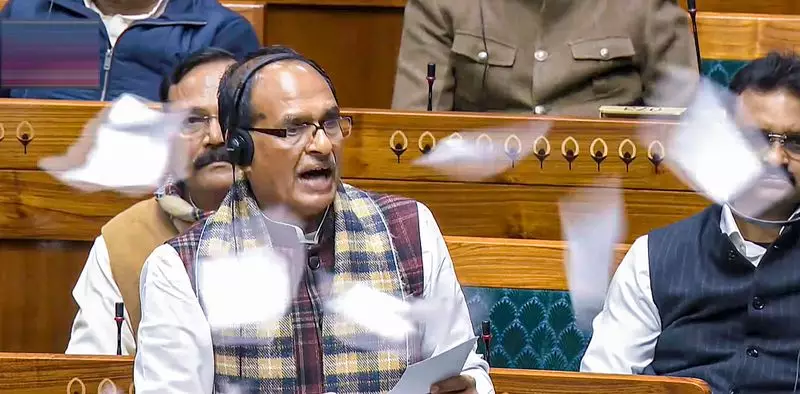
The Lok Sabha witnessed a tumultuous session on Wednesday as it passed a landmark piece of legislation aimed at overhauling India's flagship rural jobs scheme. The G. Ram G Bill, formally known as the Gramin Rojgar Guarantee Bill, 2024, was approved, paving the way to replace the two-decade-old Mahatma Gandhi National Rural Employment Guarantee Act (MGNREGA). The passage occurred amidst significant uproar and protests from opposition members, who voiced strong objections to the proposed changes.
A Contentious Legislative Move
The introduction and passage of the bill were marked by high drama. Rural Development Minister Shivraj Singh Chouhan tabled the bill, arguing that the new legislation was necessary to address the shortcomings of the old MGNREGA framework and to better align with contemporary economic and rural development goals. He emphasized that the G. Ram G Bill would enhance transparency, increase efficiency in fund utilization, and expand the scope of work to include more skilled-based asset creation.
However, the opposition, led by members from the Congress, Trinamool Congress, and DMK, among others, staged vehement protests. They contended that the new bill would dilute the fundamental guarantee of 100 days of work and weaken the legal entitlement of rural households to employment. Opposition leaders accused the government of attempting to dismantle a critical social safety net that has provided a lifeline to millions of rural poor, especially during economic distress and agricultural lean seasons.

Key Provisions and Proposed Changes
The G. Ram G Bill introduces several structural changes to the existing rural employment guarantee program. While the government asserts these are reforms, critics label them as regressive steps. Key highlights of the new bill include:
- Consolidation of Schemes: The bill proposes to merge several smaller rural development and employment initiatives under the umbrella of the G. Ram G program, aiming for a more unified implementation mechanism.
- Focus on Asset Creation: A greater emphasis is placed on creating durable community assets that contribute to rural infrastructure, such as water conservation projects, land development, and rural connectivity.
- Modified Funding Pattern: Changes are proposed in the funding sharing mechanism between the central and state governments, a point of major contention for many states that fear increased financial burden.
- Digital Monitoring: The legislation mandates a more robust digital infrastructure for tracking attendance, wage payments, and project completion to reduce leakages and delays.
The government has stated that the minimum guarantee of 100 days of unskilled manual work per household per year remains, but the opposition argues that the fine print and conditionalities attached could effectively reduce this guarantee.
Political Fallout and the Road Ahead
The passage of the bill in the Lok Sabha, where the ruling NDA holds a clear majority, was a foregone conclusion, but the political reverberations are significant. The opposition has vowed to challenge the bill vigorously in the Rajya Sabha and take the issue to the public. They have framed it as an attack on the rights of the rural poor and a betrayal of the legacy of the MGNREGA, which was enacted by the UPA government in 2005.
Congress leader Rahul Gandhi and TMC's Sudip Bandyopadhyay were among the vocal critics during the debate, calling the move "anti-poor" and "anti-farmer." The government, however, maintained that after 20 years, a review and modernization of the scheme were imperative to make it more outcome-oriented and effective in the current economic landscape.
The bill will now move to the Rajya Sabha for discussion and voting. Given the numbers in the Upper House, its passage there is also likely, but the debate is expected to be even more heated. The eventual enactment of the G. Ram G Bill will mark one of the most significant shifts in India's social welfare policy in recent years, with profound implications for rural livelihoods and the political narrative surrounding poverty alleviation.

As the debate shifts from Parliament to the public sphere, the implementation and on-ground impact of the new law will be closely watched by policymakers, economists, and, most importantly, the millions of rural households for whom employment guarantee is not just a policy but a crucial means of survival.