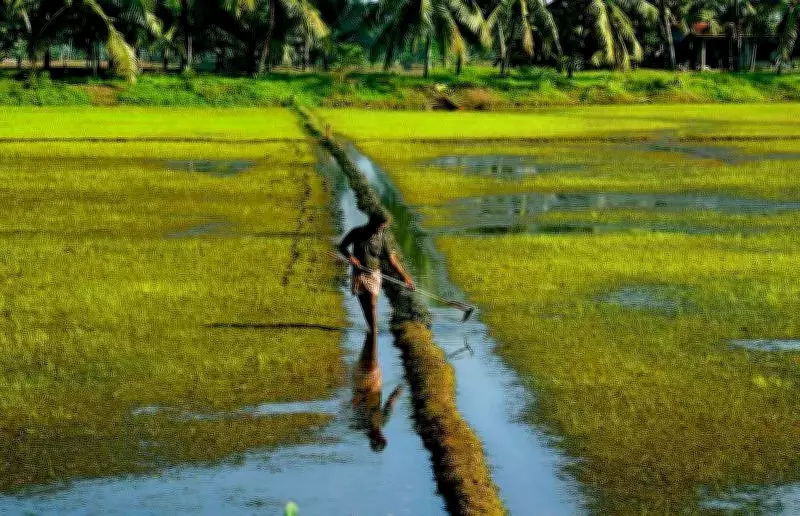
Kerala's NAWO-DHAN Scheme Aims to Transform Fallow Agricultural Land into Productive Farms
In a significant move to boost agricultural productivity, the state of Kerala has officially launched the innovative NAWO-DHAN scheme. This collaborative farming model is designed to address the critical issue of thousands of hectares of fallow agricultural land lying unused across the state. The agriculture department is optimistic that this initiative will not only enhance land fertility but also unlock new economic opportunities for stakeholders.
An Integral Part of the KERA Project with World Bank Support
NAWO-DHAN is a key component of the Kerala Climate Resilient Agriculture (KERA) project, which is being implemented by the state agriculture department. This ambitious initiative receives substantial financial and technical assistance from the World Bank, ensuring robust backing for its execution. The scheme represents a strategic effort to modernize Kerala's agricultural sector while promoting sustainability and resilience against climate challenges.
Core Model: Collaborative Partnerships Without Land Ownership Transfer
The essence of the NAWO-DHAN scheme lies in its unique collaborative partnership framework. It enables landowners to partner with skilled farmers, investors, or agricultural experts without any transfer of land ownership rights. This model is particularly attractive as it allows participants to engage in farming activities while maintaining legal ownership of their land, thereby reducing risks and fostering trust among all parties involved.

Targeting Major Commercial Farming Opportunities
This scheme opens up substantial commercial farming prospects for a diverse range of participants, including:
- Investors with financial resources but no farmland
- Farmer collectives seeking to expand operations
- Agri-startups looking for scalable models
- Non-Resident Keralites (NRKs) with agricultural expertise and capital
By leveraging the skills and capital of these groups, the scheme aims to transform idle land into thriving agricultural enterprises.
Addressing the Fallow Land Crisis in Kerala
Official data reveals a pressing issue: approximately 1 lakh hectares of cultivable land in Kerala are currently lying unused. In response, the NAWO-DHAN scheme has set an ambitious initial target to bring at least 30% of this fallow land—equating to around 30,000 hectares—under productive cultivation. This target underscores the state's commitment to revitalizing its agricultural landscape and maximizing resource utilization.
Operational Framework: Service Level Agreements (SLAs)
The scheme operates based on formal Service Level Agreements (SLAs) between stakeholders. Under these agreements:
- Landowners permit the use of their unused land for farming for a predetermined period.
- Investors or farmer groups take responsibility for end-to-end agricultural operations, including crop planning, cultivation activities, adoption of modern farming technology, and overall farm management.
This structured approach ensures clarity and accountability, facilitating smooth collaboration.
Revenue Sharing and Profit Distribution
As per the agreed terms, landowners receive a pre-agreed share of the revenue generated from the farm produce. The remaining profit is retained by the investor or farmer group responsible for cultivation. This model offers multiple benefits:
- Landowners earn an assured passive income with zero risk, as they are not involved in day-to-day operations.
- Investors can generate profits by leveraging their capital and technical expertise, making it a win-win scenario for all parties.
Current Progress and Stakeholder Interest
The scheme has already garnered significant traction. As per the latest updates, 4,700 acres of farmland have been registered and made available for cultivation under NAWO-DHAN. Furthermore, approximately 220 farmers and investor groups have submitted their expressions of interest to participate, indicating strong enthusiasm and potential for rapid expansion. This early response highlights the scheme's relevance and the urgent need for such innovative agricultural solutions in Kerala.

The NAWO-DHAN scheme represents a forward-thinking approach to agriculture, combining traditional land ownership with modern investment and management practices. By fostering collaboration and leveraging external resources, Kerala aims to set a benchmark for sustainable and productive farming in India.