

Jammu & Kashmir's Solar Energy Drive Gains Momentum
The Jammu and Kashmir government is making a determined push for solar power across the Union Territory. This strategic move aims to transition away from heavy reliance on hydropower and an erratic electricity grid. Officials confirm the shift is now accelerating to tackle recurring winter power shortages and soaring energy costs.
Addressing Winter Power Crises and High Costs
J&K faces severe winter power shortages annually. Delayed snowfall reduces hydropower generation drastically. During harsh winters, combined output from all hydropower projects drops to just 600-650 megawatts. This falls far short of the daily requirement of approximately 1,800 MW.
The Union Territory's annual electricity bill stands at a staggering Rs 9,500 crore. To cut costs and ensure reliable supply, the administration is investing heavily in solar infrastructure. Secretary of the Department of Science and Technology, Shahid Choudhary, emphasized the necessity of this shift given the high demand and low winter production.

Government Buildings Lead the Solar Transition
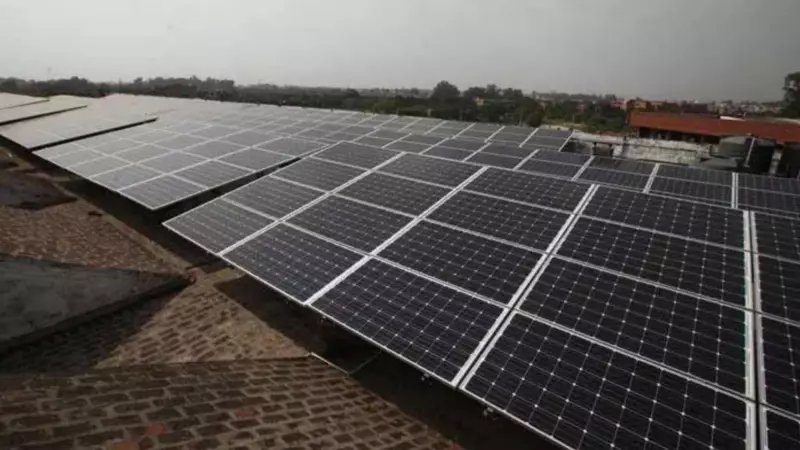
The government has begun its solar journey by installing rooftop panels on its own infrastructure. Of over 12,900 government buildings, 7,816 have been successfully "solarized" as of January. These installations boast a total capacity of 74.5 megawatts.
With an investment of Rs 120 crore, authorities target completing all government building installations by March this year. This initiative is expected to significantly reduce power bills for these facilities.
Expanding Solar Access to Rural and Agricultural Sectors
The solar push extends beyond government offices. The administration is installing solar lights in rural households, with a special focus on tribal areas, border regions, and below-poverty-line families. Over 52,000 solar street lights are being installed across J&K this year.
In the energy-intensive agriculture sector, progress is already visible. Officials report the installation of 3,900 solar pumps so far. These pumps benefit 27,000 hectares of agricultural land and have an installed capacity of 10.86 MW.
Tackling High Transmission Losses and Future Projects
J&K's Aggregate Technical and Commercial (AT&C) losses currently exceed 50 percent. Former Chief Minister Omar Abdullah has highlighted the need to reduce these losses to under 30 percent, aligning with other states that have achieved 10-17 percent. To this end, the UT is pushing for widespread installation of smart meters.
Future projects include developing solar power facilities at tourist locations. The Jammu and Kashmir Economic Development Authority is utilizing its own sandbank to establish the first 'Solar Park' in Jammu. This park will have a planned capacity of 15 MW and will combine hybrid solar-wind energy through a Public Private Partnership model.
The comprehensive solar strategy aims to provide cleaner, more reliable power while reducing dependence on the unstable grid. It represents a crucial step in J&K's energy transition, addressing both economic and environmental concerns.






