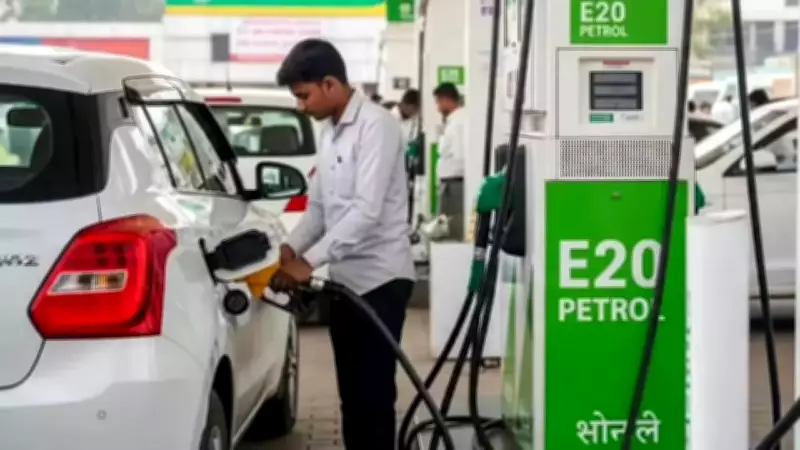
India's Clean Mobility Leap: E20 Petrol Becomes National Standard Fuel
India has taken a monumental stride toward cleaner transportation with the nationwide implementation of E20 petrol as the standard automotive fuel, effective from April 1, 2025. This sweeping mandate requires all petrol pumps across the country to supply fuel blended with up to 20 percent ethanol, marking a significant shift in the nation's energy landscape.
Government Directive and Implementation Framework
The directive, formally issued by the Ministry of Petroleum and Natural Gas, applies uniformly to all states and Union Territories without exception. Oil marketing companies have received explicit instructions to ensure that the E20 fuel complies with Bureau of Indian Standards (BIS) specifications, guaranteeing consistent quality and performance standards across every region of India.
Understanding E20 Fuel Composition and Benefits
E20 fuel represents a carefully engineered blend of conventional petrol with 20 percent ethanol content. Ethanol serves as a renewable biofuel derived primarily from agricultural crops including sugarcane, maize, and various grains. This biofuel component burns considerably cleaner than pure petroleum and possesses a superior octane rating.

While standard petrol in India typically maintains an octane rating between 91 to 92 RON (Research Octane Number), E20 fuel boasts a minimum rating of 95 RON. This enhanced octane level facilitates smoother combustion within engines, potentially improving overall vehicle performance while reducing harmful emissions.
Vehicle Compatibility and Performance Considerations
For automobile owners, the transition to E20 fuel brings varying implications depending on vehicle age and specifications. Most modern vehicles manufactured and sold in India during recent years have been specifically engineered for compatibility with higher ethanol blends. Automotive manufacturers have proactively updated engine designs and fuel system components to accommodate E20 fuel while maintaining optimal performance and reliability standards.
Regarding older vehicles, both government authorities and automobile manufacturers confirm that E20 fuel remains suitable for use. However, some vehicles might experience marginal reductions in fuel efficiency under certain operating conditions. Conversely, the higher octane rating of E20 fuel can potentially enhance engine smoothness and responsiveness in various driving scenarios.
Strategic National Objectives Behind the Transition
This comprehensive shift toward ethanol-blended petrol extends far beyond individual vehicle performance considerations. The initiative forms a crucial component of India's broader energy security strategy, specifically targeting reduced dependence on imported crude oil—a substantial financial burden on the national economy.
By substantially increasing utilization of domestically produced ethanol, the government anticipates achieving multiple strategic benefits:
- Foreign Exchange Conservation: Significant reduction in petroleum import expenditures
- Energy Independence: Enhanced national energy security through domestic biofuel production
- Agricultural Support: Creation of additional revenue streams for farming communities
- Environmental Protection: Meaningful reduction in vehicular emissions and carbon footprint
The nationwide implementation of E20 petrol represents a transformative moment in India's journey toward sustainable mobility, balancing technological advancement with strategic economic and environmental objectives.