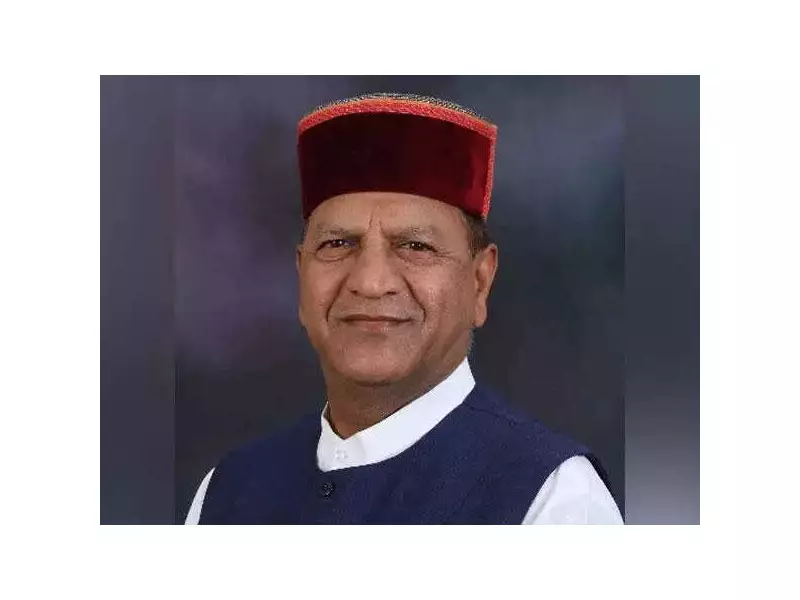
In a significant announcement, the Bharatiya Janata Party's Himachal Pradesh President, Dr Rajeev Bindal, declared on Wednesday that job creation in the hill state has witnessed a dramatic upswing under the leadership of Prime Minister Narendra Modi. He credited the Central government's focused policies for this growth, which he said underscores a deep commitment to rural development.
A Historic Step for Rural Employment
Addressing the media in Shimla, Dr Bindal highlighted the recently passed Viksit Bharat Guarantee for Employment and Livelihood Mission (Gramin) Act, or VB–G RAM G, as a landmark legislation. He described it as a transformative move that directly ties employment generation to comprehensive development.
"While earlier initiatives such as the MGNREGA primarily offered wage employment, the new VB–G RAM G scheme provides a legal guarantee of 125 days of work," Dr Bindal explained. The key differentiator, he noted, is that this work will be intrinsically linked to village-level development plans. These plans will be formulated by the gram sabhas themselves and will be integrated into the national PM Gati Shakti platform to ensure synchronized and holistic growth of rural areas.

Tech-Driven Implementation and Funding Boost
Dr Bindal emphasised that the scheme is designed to be fully technology-driven, minimising delays and ensuring transparency. Its features include:
- Biometric attendance systems for workers.
- Digital monitoring of projects and progress.
- Time-bound payment mechanisms.
- Compensation provisions in case of payment delays.
In a major financial incentive for Himalayan states, the Centre has set a highly favourable funding ratio. For Himachal Pradesh, the Centre–state funding share is fixed at 90:10, meaning the Union government will bear 90% of the scheme's cost.
Doubling of Work Days and National Vision
To illustrate the progress made, Dr Bindal presented a comparative analysis of work generation. He stated that during the previous Congress regime, Himachal Pradesh generated 16.52 lakh mandays of employment. This figure, he claimed, has now jumped to 32.6 lakh mandays under the current Modi government, effectively marking a doubling of employment generation.
With an ambitious national outlay of approximately Rs 1.5 lakh crore, the VB–G RAM G scheme aims to create sustainable rural infrastructure. Its focus areas encompass critical sectors like:
- Village infrastructure development.
- Water conservation and harvesting projects.
- Environmental protection initiatives.
- Strengthening rural livelihoods.
Dr Bindal concluded by asserting that this comprehensive mission is set to herald a new era of prosperity and self-reliance for rural India, moving beyond mere wage provision to creating durable community assets and long-term economic opportunities.