The ambitious Rs 5,700-crore 'Water Secure Haryana' project, backed by World Bank funding, has officially kicked off with the initiation of detailed project report (DPR) preparation. This marks a significant step forward in the state's efforts to overhaul its water management infrastructure and ensure long-term sustainability.
Project Overview and Timeline
Approved by the World Bank, the comprehensive project is scheduled to span from 2026 to 2032. Its primary objective is to modernize Haryana's water infrastructure through a multi-faceted approach that includes large-scale canal upgrades, expansion of micro-irrigation systems, strengthening of drainage networks, groundwater recharge initiatives, and the reuse of treated wastewater.
DPR Preparation and Tender Process
The irrigation and water resources department has recently invited expressions of interest from qualified agencies to prepare the detailed project report along with comprehensive cost estimates for the proposed works. Applications are set to be shortlisted by February 23, after which the actual drafting of the DPR will commence. Based on the final report, tenders for project execution will be floated, ensuring a systematic and transparent implementation process.

Canal Restoration: A Core Component
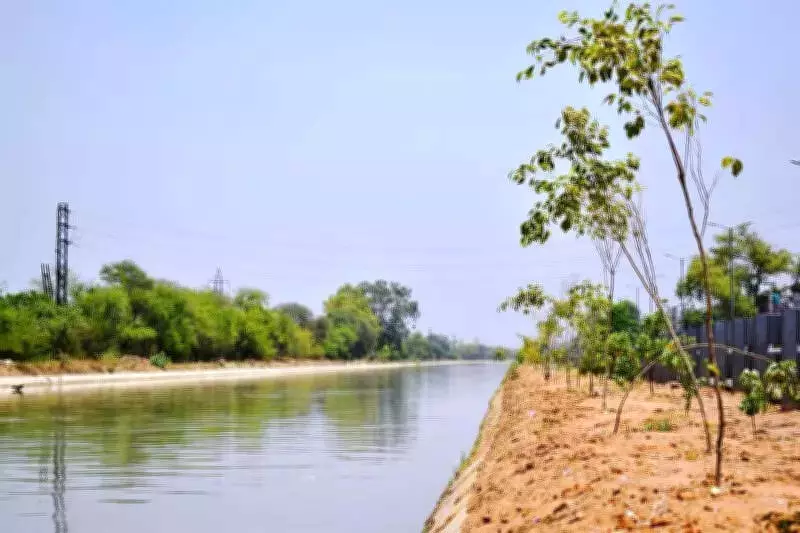
A central element of this initiative involves the complete restoration of Haryana's remaining 678 canals out of the total 1,570. This ambitious target is planned to be achieved within five years through a collaborative funding model:
- 115 canals will be revived with Rs 2,325 crore in World Bank support
- 284 canals will be restored with Rs 2,230 crore from the state budget
- 279 canals will be rehabilitated with Rs 2,880 crore through NABARD funding
Additionally, the project includes plans to restore 1,961 canal minors under the MICADA framework, with specific allocations:
- 400 minors covered with Rs 450 crore in World Bank funds
- 1,500 minors addressed with Rs 1,250 crore from state resources
- 61 minors restored with Rs 402 crore via NABARD support
Micro-Irrigation and Waterlogging Solutions
The project envisages expanding micro-irrigation systems across nearly 70,000 acres at an estimated cost of Rs 900 crore. To tackle persistent waterlogging issues, the initiative will implement tubewell-based and surface drainage networks covering approximately 2 lakh acres. Furthermore, the promotion of water-efficient agricultural practices such as crop diversification and direct-seeding of rice will be supported by Rs 886 crore in World Bank assistance.
Groundwater Recharge and Wastewater Reuse
In a bid to strengthen groundwater resources, the project plans to create around 80 new water bodies in southern Haryana. An innovative component involves reusing treated water from four major sewage treatment plants (STPs) located in Jind, Kaithal, and Gurugram. This treated water will be utilized for irrigating approximately 28,000 acres, supported by Rs 600 crore in World Bank funding.
Government's Vision and Past Achievements
Chief Minister Nayab Saini, while chairing a meeting with officials on January 24, emphasized that this initiative—formally termed the 'Jal Sanrakshit Haryana' project—represents a "paradigm shift" in the state's water management approach. He highlighted that 892 canals and 4,487 minors have already been restored over the past two decades, and the new project will ensure the complete restoration of the state's entire canal network.
Expected Outcomes and Long-Term Benefits
Upon completion, all canals will be fully lined and modernized, with the infrastructure expected to operate efficiently for the next 25 years without requiring major restoration. The project is projected to expand irrigation coverage by 2 lakh acres, conserve freshwater for drinking purposes, and provide long-awaited relief to farmers in waterlogged areas.
Chief Minister Saini stated that this comprehensive program would serve as a milestone in making Haryana water-secure and reflects the government's commitment to ensuring a safe, inclusive, and sustainable water future for coming generations.